
Cronartium pyriforme
Cronartium pyriforme
Description
Symptoms
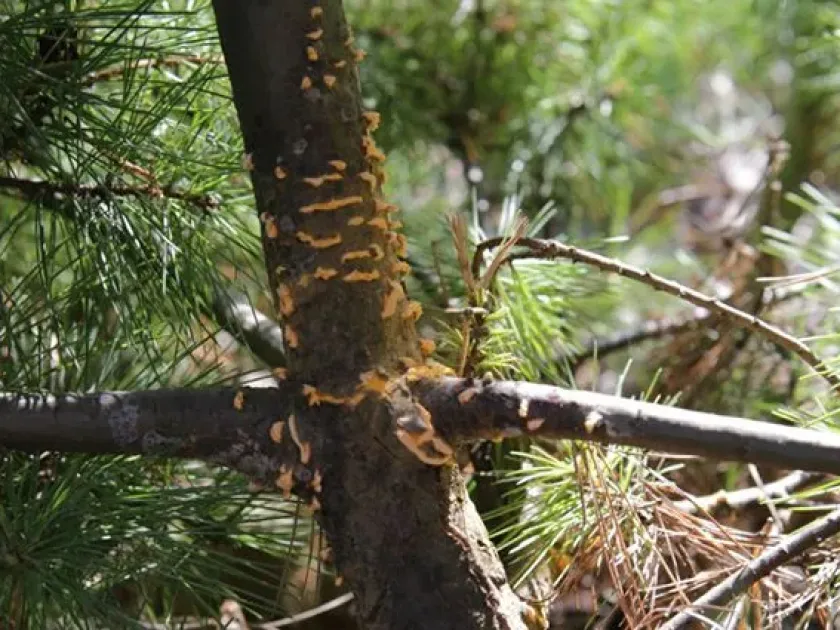
The primary symptom of infection is the development of distinct swellings, galls, or cankers on the pine stems and branches. These deformations are often the first sign that the tree is under attack.
During the spring, bright orange or yellow aecia rupture through the bark, releasing large masses of spores. These eruptions are visually striking and indicative of the fungus entering its reproductive phase.
Affected trees often show signs of premature needle yellowing and drooping. As the rust girdles the stem or branch, the flow of nutrients is cut off, leading to the gradual dieback of the terminal parts of the plant.
The bark in the infected zone becomes cracked and rough, eventually dying off and exposing the wood beneath. This makes the affected trees extremely susceptible to drought, cold, and wood-boring insects.
In young trees, the trunk often becomes deformed, bent, or stunted. This structural damage renders the timber worthless for commercial use and significantly diminishes the overall vigor of the plantation.
Pathogen
Cronartium pyriforme is a heteroecious rust fungus that requires two different hosts to complete its complex life cycle. The aecial stage develops on the stems and branches of pine trees, while the uredinial and telial stages occur on herbaceous plants.
The fungus produces aeciospores that are dispersed by wind over long distances. This method of dissemination makes it a highly invasive and difficult pathogen to manage within coniferous forests.
The mycelium of the fungus penetrates deep into the bark and cambial tissue, establishing a perennial infection. This systemic presence enables the fungus to continuously extract nutrients from the host over many years.
Pathological changes occur at the cellular level as the fungus disrupts the normal flow of sap and photosynthetic products. By colonizing the woody tissues, the pathogen essentially hijacks the tree's resources for its own reproduction.
As the infection matures, the fungus expands its coverage area, systematically weakening the tree and predisposing it to secondary infections and structural failure.
Conditions for development
The development of Cronartium pyriforme is heavily dependent on environmental factors, particularly high humidity and moderate temperatures during the spring months. These conditions are ideal for spore germination and infection.
Dense plantations with poor air circulation are highly prone to outbreaks. Moisture remaining on needles and bark surfaces provides the perfect medium for the fungus to establish its primary infection sites.
The presence of alternate hosts, specifically various species of herbaceous plants in the Scrophulariaceae family, acts as a primary reservoir for the rust. Managing the vegetation in the understory is crucial for disease suppression.
Tree health status plays a significant role; trees weakened by nutrient deficiencies, pest attacks, or drought are more susceptible. Robust trees with thick, intact bark exhibit greater natural resilience.
Wind direction and speed are critical for the long-range dispersal of spores. Regions with consistent wind patterns during the sporulation season are at a higher risk of epidemic spread across the landscape.
Why it matters
The disease causes significant economic loss by inducing high mortality rates among young pine seedlings and saplings. It effectively disrupts forest regeneration efforts and reduces the volume of viable timber.
Structural weakness in the infected wood increases the risk of trees snapping during storms or under heavy snow loads, leading to further management challenges and safety hazards.
Beyond timber loss, the disease reduces the aesthetic value of forests and parks, and negatively impacts local biodiversity by altering the composition of the plant community.
- Significant reduction in timber quality and volume.
- Increased risk of forest fires due to the accumulation of dry, dead branches.
- Higher costs associated with sanitary thinning and replanting.
- Destabilization of forest ecosystems.
Protection
The most effective strategy is the spatial separation of pine plantations from areas known to harbor alternate host plants. Establishing buffer zones can significantly reduce infection rates.
Strict phytosanitary monitoring in nurseries is essential. Early identification and immediate removal of any diseased seedlings are critical to preventing the spread of the rust to healthy blocks.
Sanitary thinning operations should prioritize the removal of infected trees to lower the overall inoculum load in the forest. All removed infected materials should be burned or buried immediately.
Chemical control using fungicides is typically reserved for nursery settings or high-value forest stands during peak spore discharge periods to protect young, vulnerable tissue.
Long-term management focuses on silvicultural practices such as maintaining optimal stand density, improving soil nutrient profiles, and selecting rust-resistant genotypes for future planting programs.
Discussion
No discussions yet — be the first.