
Crocynia gossypina
Crocynia gossypina
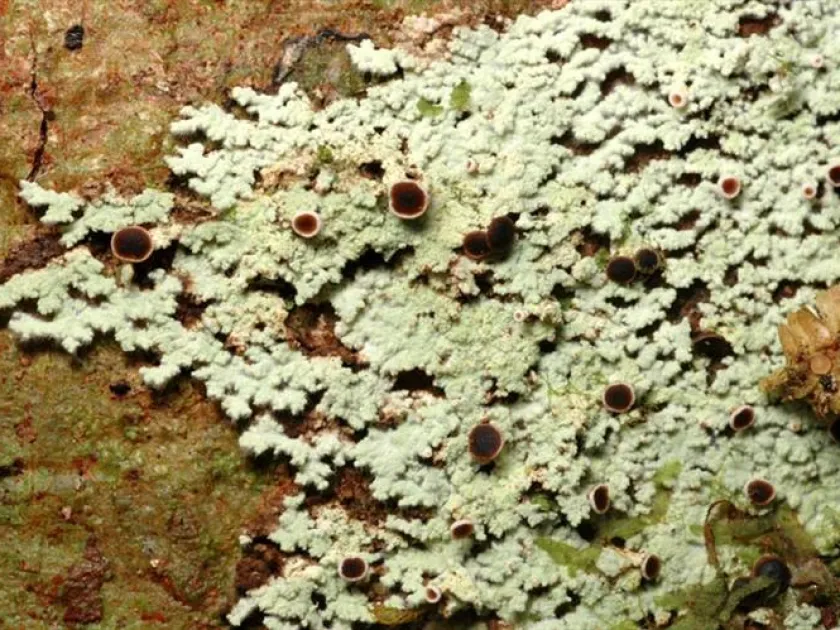
Description
Symptoms
The primary symptom of infestation is the appearance of light, fluffy patches on trunks and main branches that look like cotton wool. These patches can merge into larger colonies, covering significant portions of the bark surface.
The texture of the growth is soft to the touch and can be easily scraped off the bark without damaging the underlying tissue. Unlike other lichen species, Crocynia gossypina lacks rigid scales, giving the trunk a disorganized and neglected appearance.
Initial colonization usually occurs in deep bark cracks where moisture and organic debris accumulate. Over time, the colony expands across smoother areas of the trunk, especially in high-humidity environments.
Beneath the lichen layer, the bark often appears darker or consistently moist. This is because the lichen mat acts as a sponge, retaining water and preventing the bark from drying out between rain events.
Under close inspection, the thallus displays a fine-grained structure, differentiating it from molds. The signs of infestation become most prominent during cool, rainy seasons when the organism is in its active growth phase.
Pathogen
Crocynia gossypina is a type of crustose lichen often mistaken by gardeners for a fungal infection due to its unique appearance. This organism is a symbiotic complex of a fungus and algae that grows primarily on the surface of tree bark.
From an agronomic perspective, this object is classified as an epiphyte, using the tree merely as a substrate for attachment. Unlike parasitic fungi, Crocynia does not penetrate deep into the plant tissues; however, its presence creates a microhabitat for other potential pests.
Biologically, this lichen exhibits high resistance to atmospheric pollutants, which allows it to thrive even in areas with poor air quality. Its common name reflects its white, cotton-like, or fuzzy appearance on the bark.
Reproduction occurs mainly through vegetative fragmentation of the thallus. Small particles are dispersed by wind, rain, or insects to new areas of bark, where, given sufficient moisture, they rapidly establish themselves.
It is important to distinguish this lichen from true infectious bark diseases like necrosis. Although it is not a primary pathogen, excessive accumulation of the lichen thallus can hinder gas exchange through the bark lenticels, indirectly affecting tree health.
Conditions for development
The main factor promoting Crocynia development is prolonged high air humidity. In orchard settings, this is often caused by dense planting, lack of pruning, and poor air circulation, which prevents the canopy from drying efficiently.
The lichen prefers shaded areas of the orchard where direct sunlight is limited. Trees with rough, damaged, or aging bark are the most susceptible, as these surfaces provide a perfect microclimate for the lichen to gain a foothold.
Weakened trees, suffering from nutrient deficiencies or poor management, are colonized faster than healthy ones. As the growth rate of the tree slows, the bark surface remains static for longer periods, providing a stable substrate for the lichen.
The temperate climate allows for active growth throughout most of the growing season, with peak expansion occurring during spring and autumn when precipitation is frequent and temperatures are moderate.
Failure to implement basic sanitary measures, such as cleaning the trunks of old bark and removing decaying plant debris, contributes to the rapid spread of lichen spores throughout the garden area.
Why it matters
While Crocynia gossypina is not a direct killer of trees, it poses significant risks to tree physiology. Dense colonies block the bark's lenticels, which are essential for gas exchange, thereby reducing the tree's ability to "breathe" through the trunk.
The cottony structure serves as a safe harbor for pests, including scale insects, mealybugs, and mites. Under this layer, these pests can overwinter safely, protected from extreme cold and chemical spray applications.
The persistently damp surface beneath the lichen creates an ideal environment for pathogenic fungi spores to germinate. Thus, Crocynia acts as a precursor to more severe bark diseases like cytospora or black rot.
In terms of orchard management, heavy lichen growth diminishes the aesthetic value and can mask early signs of more serious disease problems. Overall vigor may decline if the infestation is severe and left unmanaged for many years.
Neglected trees require more intensive maintenance, as they must be cleaned of lichen before effective fungicidal treatments can be applied to target underlying infections.
Protection
The primary method of control is the mechanical cleaning of trunks and large branches using brushes or scrapers during the dormant season (late autumn or early spring). This must be done carefully to avoid damaging the live cambium layer.
After cleaning, trunk whitewashing with lime or special orchard paints is highly recommended. This practice disinfects the surface and alters the bark's pH, making it significantly less hospitable to lichen re-establishment.
Applying copper-based fungicides, such as Bordeaux mixture or copper sulfate, to cleaned surfaces helps eliminate remaining spores and prevents regrowth. These treatments should be applied during dry weather for maximum efficacy.
Maintaining high horticultural standards is key: regular pruning to open the canopy improves ventilation and light penetration, effectively creating an environment that is too dry for Crocynia colonization.
Providing balanced fertilization and appropriate irrigation helps strengthen the tree’s natural defenses. A healthy, rapidly growing tree with vigorous bark expansion is much better at preventing the establishment of epiphytes.
Discussion
No discussions yet — be the first.