
Cristulariella depraedans
Cristulariella depraedans
Description
Symptoms
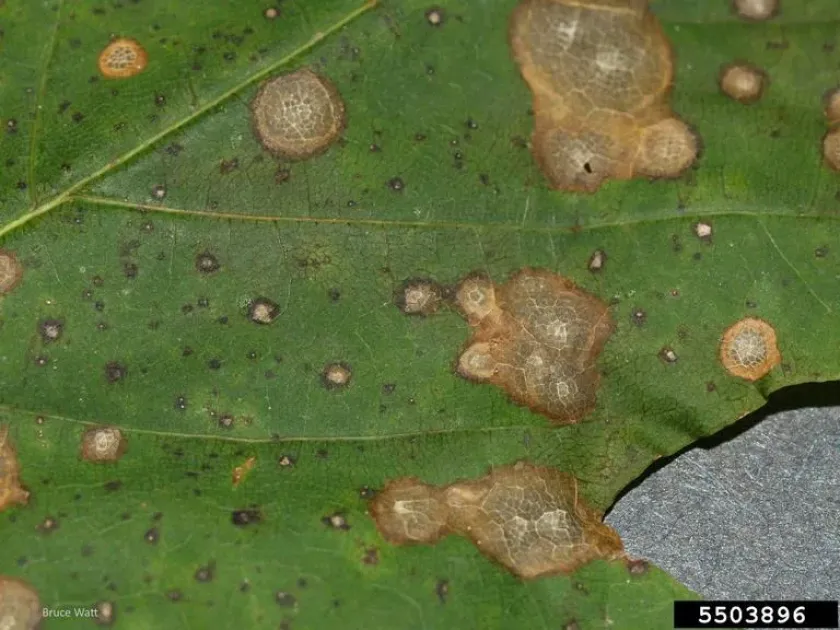
Initial symptoms are characterized by small, water-soaked spots on the foliage that rapidly turn brown or black as the tissue cells collapse.
A distinct, often yellow-colored margin typically surrounds the necrotic spot, indicating the host's physiological reaction to the invading fungus.
Under high humidity conditions, minute white or cream-colored fungal structures become visible on the underside of the infected leaves.
As the disease progresses, these spots expand and coalesce, leading to severe leaf curling, distortion, and early abscission of the foliage.
Trees affected by this disease often show an early autumn appearance, with significant canopy thinning occurring long before the actual frost season.
Pathogen
The causative agent of this disease is the imperfect fungus Cristulariella depraedans, a pathogen specialized in attacking various maple species.
This fungus overwinters in fallen leaves as mycelium or sclerotia-like structures, waiting for favorable spring conditions to resume its activity.
During the spring, the fungus produces spores (conidia) which are disseminated by rain splash and wind, landing on susceptible young leaves.
Once it colonizes the host tissue, the fungus breaks down the leaf structure, causing localized necrotic areas that serve as sources for secondary infection.
The pathogen's life cycle is highly dependent on environmental moisture, which is necessary for both spore germination and the development of the vegetative mycelium.
Conditions for development
Prolonged cool and wet weather during the leaf expansion phase is the primary driver for the initial outbreak of Cristulariella depraedans.
High relative humidity and stagnant air within the tree canopy prevent leaves from drying, providing an ideal microenvironment for fungal colonization.
Poorly managed landscapes with dense tree spacing inhibit air circulation, significantly increasing the duration of leaf wetness and disease spread.
The failure to remove leaf litter during the autumn season ensures a large pool of primary inoculum is present for the following spring cycle.
Stress factors such as drought or nutritional deficiency compromise the tree's natural defenses, making the foliage more susceptible to infection.
Why it matters
The primary damage is the extensive premature defoliation, which severely reduces the tree's photosynthetic capacity throughout the growing season.
Reduced carbon assimilation leads to a failure in carbohydrate storage, which is critical for the tree’s winter hardiness and bud development.
Repeated yearly infections cause stunted growth of branches and twigs, gradually leading to the decline of the tree's overall vigor and aesthetics.
In ornamental nurseries and urban parklands, the visual impact of defoliation is severe, necessitating costly management and maintenance interventions.
Chronic infestation makes the maple trees more susceptible to opportunistic secondary pests and environmental stressors, accelerating long-term decline.
Protection
Rigorous sanitation remains the most critical control strategy, involving the removal and destruction of all fallen leaves to break the disease cycle.
Pruning of the lower canopy to increase airflow and sunlight penetration helps to create a drier environment that is unfavorable for fungal growth.
Fungicidal treatments, particularly copper-based or systemic products, applied early in the season can effectively protect young leaves from infection.
Integrated management should prioritize proper fertilization and irrigation to maintain tree health, as vigorous maples are better equipped to resist infection.
Monitoring for early signs of leaf spot is essential; proactive measures taken as soon as symptoms appear can prevent a full-scale canopy infestation.
Discussion
No discussions yet — be the first.