
Cristulariella
Cristulariella
Description
Symptoms
Early symptoms include the appearance of small, water-soaked spots that progressively enlarge into necrotic, brown-colored lesions on the leaves.
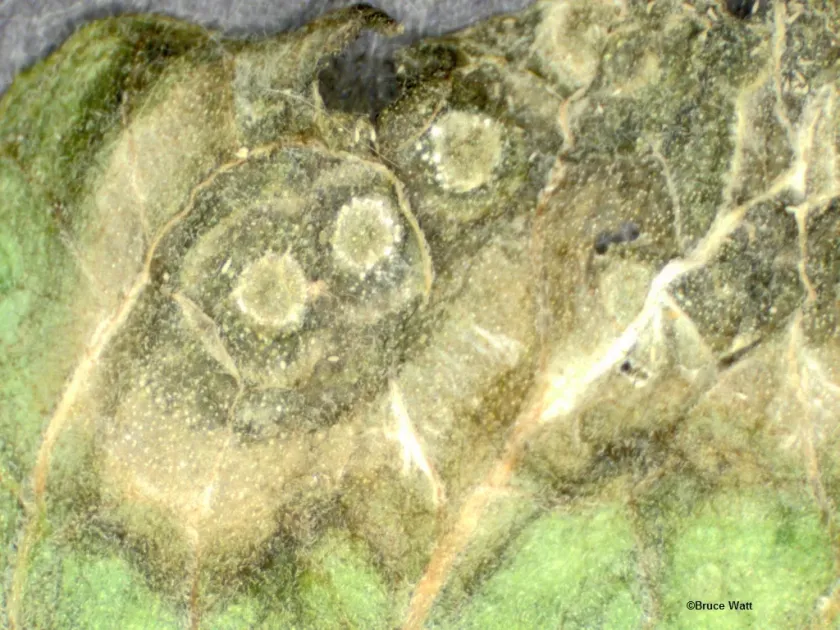
A distinctive feature of the disease is the presence of concentric ring patterns within the spots, which are often visible even to the naked eye.
Under humid conditions, one may observe tiny, cream-colored, pyramid-shaped fungal structures on the undersides of the affected leaf surfaces.
As the disease advances, the necrotic tissues often dry out and detach, leading to a shot-hole appearance where small holes form across the leaf blade.
In cases of severe infection, leaves turn yellow and drop prematurely, leading to significant defoliation of the host plant by mid-summer.
Pathogen
The causative agent of this disease is the fungus Cristulariella moricola, which is classified as an imperfect fungus that primarily targets plant foliage.
The pathogen is noted for its distinctive biological development, producing small, pyramid-shaped fruiting bodies that serve as a diagnostic feature.
The fungus overwinters in infected plant debris, such as fallen leaves and twigs, which serve as the primary reservoir for new infections in the spring.
After finding a suitable host, the fungus colonizes the leaf tissue using its mycelium, which invades cells and secretes enzymes that cause localized necrosis.
Spore dispersal occurs primarily through rain splashes and wind, allowing the disease to spread rapidly through a plant canopy or an entire orchard.
Conditions for development
The disease thrives in warm, wet conditions, particularly when high humidity persists for extended periods of time during the growing season.
Dense, overcrowded planting configurations prevent airflow, creating a stagnant microclimate that is highly favorable for fungal spore germination.
Frequent rainfall, persistent morning fogs, and heavy dews provide the necessary moisture for the rapid spread of the pathogen from leaf to leaf.
Leaving fallen leaves on the ground around susceptible plants facilitates the buildup of inoculum, significantly increasing the risk of infection the following year.
Poorly pruned plants with thick, interior foliage are more susceptible to attack because they do not dry out quickly after rain events.
Why it matters
The primary impact of the disease is the reduction of the plant's total photosynthetic surface area, which hinders energy production and growth.
Premature defoliation puts stress on the plant, weakening its reserves and making it more susceptible to environmental factors like winter frost.
In commercial orchards, severe infections can lead to reduced fruit yield and lower quality produce, affecting the overall productivity of the operation.
For nursery crops, the disease is particularly damaging as it ruins the cosmetic appearance of plants, rendering them unsellable.
Continuous infection cycles over several years can result in the decline and eventual death of sensitive plant species or younger trees.
Protection
The most effective strategy is sanitation; all fallen leaves and infected plant material should be raked up and destroyed at the end of the season.
Implementing proper pruning techniques to increase light penetration and air circulation within the canopy helps to create a less hospitable environment for the fungus.
Applying copper-based fungicides early in the season can provide a protective barrier and prevent the initial establishment of the pathogen.
Using drip irrigation instead of overhead watering helps to keep foliage dry, thereby inhibiting the conditions required for spore germination.
In cases of heavy infestation, systemic fungicides may be necessary to suppress the fungus and protect new growth throughout the season.
Discussion
No discussions yet — be the first.