
Cristinia helvetica
Cristinia helvetica
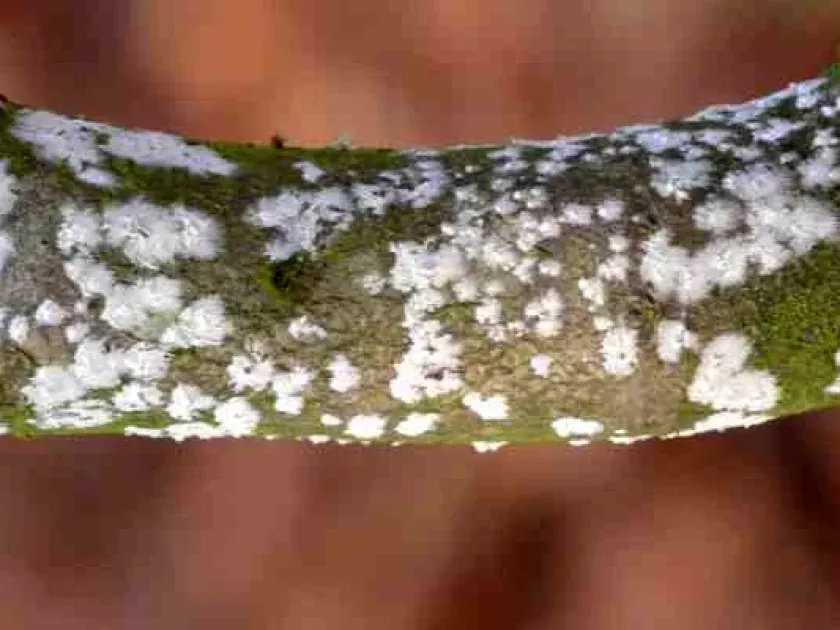
Description
Symptoms
The primary symptom of infection is the appearance of a thin, membrane-like fungal growth on the bark or exposed wood. This growth typically ranges in color from cream to pale ochre.
Infected wood exhibits signs of structural degradation, specifically a change in coloration and a loss of density. The material may become brittle and, in advanced stages, develop a fibrous or pulpy texture.
Often, white or cream-colored mycelial cords can be found beneath the loosened bark. The separation of bark from the underlying sapwood is a common indicator of significant fungal colonization.
Tree decline symptoms, including chlorosis (yellowing of foliage) and dieback of the upper branches, may occur if the root system or the base of the trunk is severely compromised by the pathogen.
The visibility of the fruiting bodies varies throughout the year, being most prominent during periods of high humidity and rainfall, which facilitate the development of the spore-bearing surface.
Pathogen
Cristinia helvetica is a basidiomycetous fungus classified within the order Corticiales. It is recognized as a decay-causing agent that typically manifests as a saprotrophic or weakly parasitic organism on woody substrates.
The fungus develops a mycelial network that penetrates the internal structures of the wood. It utilizes extracellular enzymes to break down structural components such as lignin and cellulose, which are essential for the mechanical integrity of trees.
The sexual cycle involves the production of basidiospores on a hymenial layer, which appears as a thin, crust-like coating on the surface of the infected wood. These spores are essential for the long-distance dispersal of the pathogen.
Biologically, the organism thrives in environments where moisture is abundant. Its survival strategy depends on colonizing dead or dying wood, but it can aggressively invade tissues of trees that are under biotic or abiotic stress.
Classification of this species often relies on microscopic analysis of basidia and cystidia to distinguish it from other morphologically similar corticioid fungi found in forest ecosystems.
Conditions for development
The development of Cristinia helvetica is heavily influenced by high relative humidity. Moist environments, such as shaded areas within dense forest stands, provide optimal conditions for mycelial growth.
Moderate temperatures are favorable for the vegetative spread of the fungus. Extreme cold or intense, dry heat typically halts the active growth phase of the pathogen, though it may remain viable in a dormant state.
Physical trauma to the tree—resulting from wind damage, frost, or insect activity—significantly increases the risk of infection. Open wounds allow spores to bypass the natural defenses of the bark.
High levels of forest debris, including fallen logs and thick layers of leaf litter, act as a persistent reservoir for the pathogen, allowing it to maintain a stable population within the forest floor.
Improper forest management that results in overcrowded stands creates a humid microclimate. This lack of airflow prevents the rapid drying of bark, making the trees more susceptible to fungal colonization.
Why it matters
The most significant harm caused by Cristinia helvetica is the decay of woody tissues, which drastically lowers the commercial value of the timber. This results in significant economic losses for the forestry industry.
The degradation of the wood structure leads to a decrease in mechanical stability, making affected trees prone to windthrow and breakage during storms, which poses a safety risk in high-traffic areas.
By interfering with the vascular system of the tree, the pathogen limits the transport of nutrients and water. This significantly inhibits the annual growth of the tree and reduces its overall resilience.
Infected trees act as hotspots for the spread of spores, endangering healthy trees in the vicinity. This cycle of infection can lead to large-scale mortality, particularly in monoculture plantations.
The loss of trees due to fungal decay disrupts the natural successional processes and habitat structures within the ecosystem, impacting local biodiversity and the overall health of the forest.
Protection
Sanitation cutting and the immediate removal of infected, dying, or dead trees are the most effective strategies to control the spread. Eliminating the source of inoculum is crucial for forest health.
Regular maintenance of forest plots, including the removal of logging debris and fallen wood, reduces the available habitat for the fungus and limits its ability to persist in the environment.
Protecting trees from mechanical damage is a key preventive measure. In cases where wounds are unavoidable, applying appropriate fungicides or wound dressings can help prevent colonization by spores.
Improving the overall vigor of the forest stand through proper silvicultural practices—such as thinning and balanced nutrient management—increases the ability of trees to resist infection.
Early detection via regular health monitoring allows for targeted intervention. By identifying and removing infected specimens at the earliest stage, the spread of the pathogen can be effectively mitigated.
Discussion
No discussions yet — be the first.