
Violet-streaked cort
Cortinarius violaceostriatus
Description
Pathogen
Cortinarius violaceostriatus, known as the violet-streaked cort, is a mushroom species belonging to the Cortinariaceae family. It is essential to clarify that this organism is not a plant pathogen but a vital mycorrhizal symbiont.
The fungus establishes a mutualistic relationship with the roots of various forest trees, facilitating nutrient exchange. Unlike parasitic fungi, it does not inflict damage, cause lesions, or interfere with the physiological health of its host trees.
Its mycelium networks permeate the soil, significantly increasing the root surface area for water and mineral absorption. This biological synergy is crucial for the survival and development of many tree species in natural habitats.
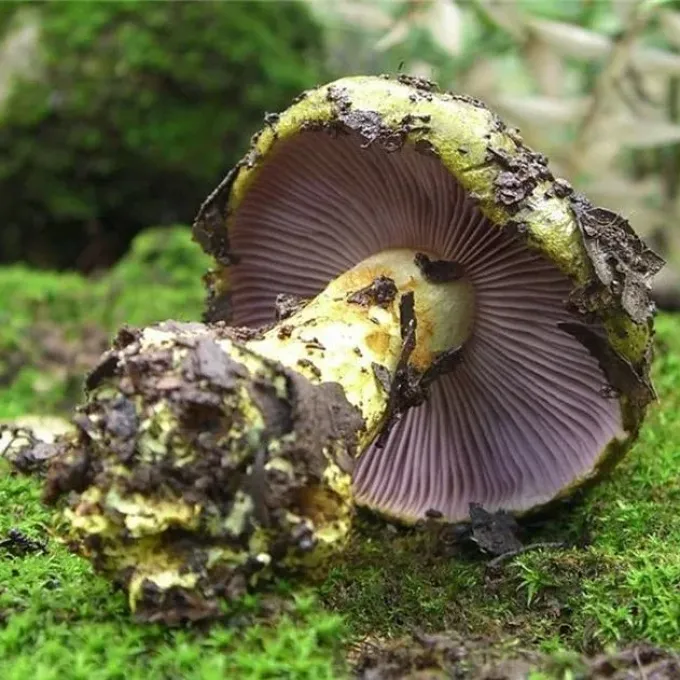
Morphologically, the fungus is characterized by its violet color and distinct striations on the cap. These features assist in distinguishing it from other species within the diverse Cortinarius genus.
In agricultural and forestry management, Cortinarius violaceostriatus is considered a beneficial organism rather than a threat. Therefore, no disease control measures are required or advised for this species.
Conditions for development
The development of Cortinarius violaceostriatus fruiting bodies is closely tied to the specific environmental conditions found in temperate forests. High soil moisture levels and cool, humid autumn temperatures are critical for their appearance.
The fungus thrives in habitats with well-preserved soil layers and organic matter, which provide the necessary nutrients for the mycelial network. It is highly sensitive to changes in soil chemistry, preferring slightly acidic environments.
Spore dispersal relies on natural vectors such as wind and local fauna, ensuring the colonization of suitable host tree roots. Successful establishment depends on the presence of compatible tree partners.
Habitat disturbance, such as heavy machinery use or intensive soil cultivation, can lead to the destruction of the delicate underground mycelial networks. This often results in the local disappearance of the species.
Maintaining a balanced forest microclimate is the most effective way to preserve the biodiversity of such mycorrhizal fungi, which are integral to the health of woodland areas.
Discussion
No discussions yet — be the first.