
Cortinarius aprinus
Cortinarius aprinus
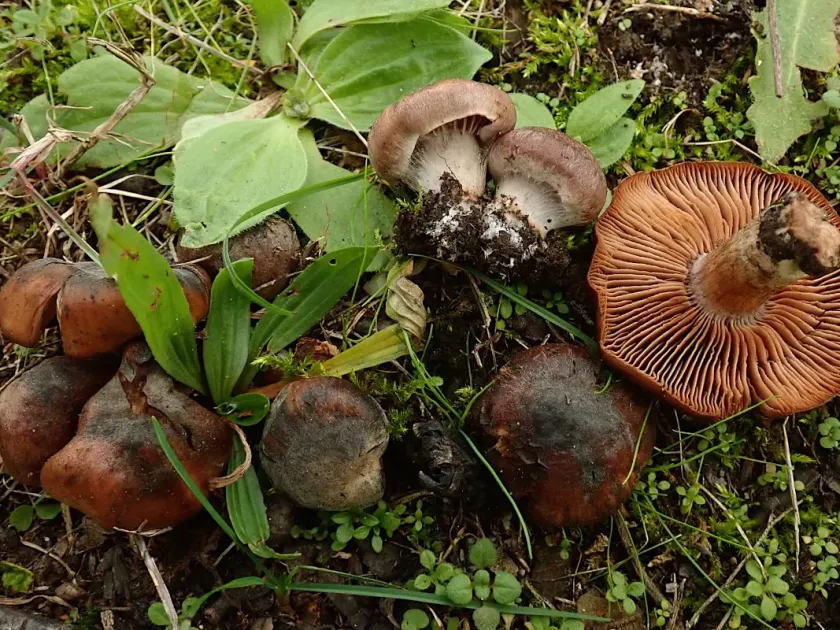
Description
Symptoms
Cortinarius aprinus belongs to the Cortinariaceae family and is a typical agaric mushroom. Its cap diameter typically ranges from 3 to 8 centimeters, featuring a greyish-brown or yellowish-tan color covered with fine scales.
The gills of young specimens are protected by a cobweb-like veil, which is the defining characteristic of this genus. As the mushroom matures, the veil disappears, leaving subtle remnants on the stem.
The flesh is firm and often possesses a faint, sometimes unpleasant odor. The stem is generally cylindrical, fibrous, and may be slightly thicker at the base compared to the upper part.
The spore print is rust-brown, which is a standard diagnostic feature for the genus. Microscopic examination of the spores reveals an ornamented surface, crucial for species identification.
This species is not a plant pathogen; it is a saprotrophic or mycorrhizal fungus inhabiting forest soils. It is not associated with any crop diseases and poses no risk to agriculture.
Pathogen
Cortinarius aprinus is not a pathogen; it does not affect agricultural crops, fruit trees, or vegetable gardens. It is classified as a beneficial mycorrhizal mushroom.
The fungus interacts with tree roots to form an ectomycorrhizal network. This partnership enhances the uptake of nutrients for the host tree, contributing to forest ecosystem health.
No parasitic activity against cultivated plants has been recorded for this species. It lacks the mechanisms to colonize or destroy living plant tissues of field crops.
In terms of agronomy, this species is neutral. It does not require control measures, as it is a natural part of forest biodiversity rather than an agricultural pest.
Biological studies confirm that its life cycle is strictly tied to woodland environments. It is effectively a beneficial component of the natural soil mycoflora.
Conditions for development
Cortinarius aprinus requires specific forest conditions to thrive, including moist soil and acidic substrates. It is commonly found in coniferous or mixed woodland areas.
The growth of fruit bodies is highly dependent on rainfall and moderate temperatures. The most favorable period for observation is during the late summer and autumn seasons.
Stable soil temperature and the presence of organic matter in the forest floor are essential for mycelium health. Drought conditions significantly inhibit its productivity.
Dispersal is achieved through spores carried by wind and forest fauna. Successful colonization of new sites requires specific tree symbionts to be present.
Agricultural practices such as tillage, liming, or excessive nitrogen fertilization are unfavorable for the survival of this species in its natural habitat.
Discussion
No discussions yet — be the first.