
Contumyces vesuvianus
Contumyces vesuvianus
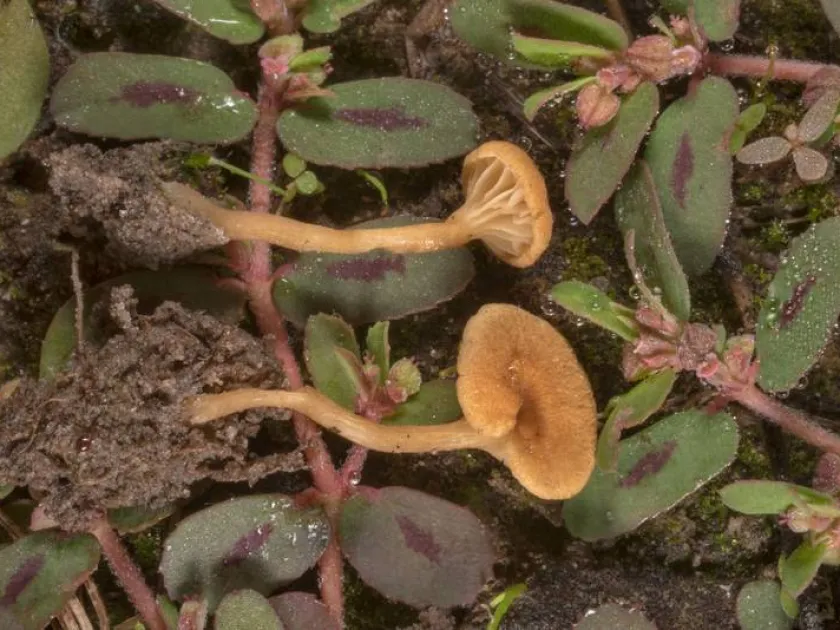
Description
Symptoms
Initial symptoms of Contumyces vesuvianus infection often present as chlorotic spots on leaves that gradually evolve into necrotic areas.
Over time, a characteristic fungal sporulation layer appears at the lesion sites, serving as a clear indicator of active infection.
Affected plants show stunted growth, premature yellowing, and lower leaf drop, which significantly reduces the photosynthetic surface area.
In severe cases, the infection spreads to the main stems, causing tissue deformation and eventually leading to the death of the affected plant parts.
A diagnostic hallmark of this disease is the appearance of concentric zonation patterns within the affected leaf lesions upon close inspection.
Pathogen
The disease is caused by the fungus Contumyces vesuvianus, a pathogenic organism that targets the vegetative organs of various crops in specific environments.
The pathogen is highly resilient, capable of adapting to fluctuating temperature ranges and persisting in soil environments for extended periods.
Its life cycle involves the production of spores that are easily disseminated by wind currents and water splashes, facilitating rapid spread across cultivated fields.
The fungus invades plant tissues through natural openings like stomata or via physical wounds, setting the stage for subsequent tissue colonization.
Inside the plant, the fungal mycelium grows aggressively, compromising the host's cellular integrity and disrupting normal physiological and metabolic processes.
Conditions for development
High relative humidity, typically exceeding 80%, acts as the primary catalyst for the development and spread of Contumyces vesuvianus.
Moderate temperatures ranging from 18 to 24 degrees Celsius create an ideal thermal window for spore germination and colonization of new host tissue.
Poor field ventilation, often caused by overly dense planting or inadequate spacing, allows moisture to accumulate, creating a favorable microclimate for the pathogen.
The presence of free moisture or dew on the leaf surface for several hours is essential for the pathogen to successfully penetrate plant cells.
Unfavorable agricultural practices, such as the retention of diseased plant debris in the field, ensure the continuous survival of the pathogen between seasons.
Why it matters
The economic impact of Contumyces vesuvianus is primarily manifested through significant yield losses and a reduction in the marketability of the harvested produce.
Infected crops are significantly weaker, leaving them highly susceptible to secondary pathogens and opportunistic pests that further diminish overall plant health.
Under epidemic conditions, the pathogen can destroy a large percentage of the crop, resulting in substantial financial losses for agricultural producers.
The quality of the final harvest is compromised, as infected plants fail to channel energy into fruit production, leading to smaller, lower-quality yields.
Contaminated products often become unsuitable for long-term storage due to rapid post-harvest decay initiated by the underlying fungal infection.
Protection
Managing the disease requires a strict commitment to crop rotation, ensuring that susceptible species are not replanted in the same location for several years.
Sanitation is a critical control measure; removing and destroying crop residues helps eliminate the primary overwintering sites for the fungus.
The timely application of systemic and contact fungicides is effective at limiting disease progression when symptoms are identified at an early stage.
Maintaining proper plant spacing and ensuring good airflow within the canopy can significantly reduce the moisture levels required for fungal growth.
- Selecting and planting resistant crop varieties.
- Implementing regular field monitoring during high-humidity periods.
- Applying balanced fertilization to improve plant immune responses.
- Using clean, disease-free seed and planting material.
Discussion
No discussions yet — be the first.