
Conoideocrella tenuis
Conoideocrella tenuis
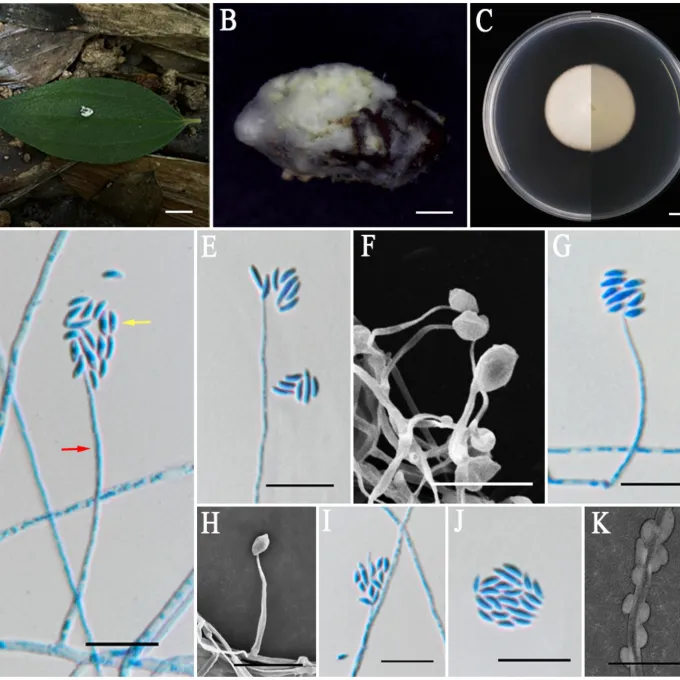
Description
Symptoms
The most visible sign of an infection is the presence of insect cadavers fixed to the leaves or stems of plants. Insects often die in a characteristic position while gripped by the fungal mycelium.
A whitish or creamy coating of mycelium covers the insect's cuticle. As the infection progresses, this growth becomes denser and eventually produces reproductive stroma.
The development of thin, hair-like stalks (stroma) protruding from the insect's body is the diagnostic feature of Conoideocrella tenuis. These stalks release conidia that infect nearby insects.
Infected insects often exhibit reduced movement and behavioral changes before death. This is due to the fungal penetration and colonization of their internal vital organs.
Observing a group of dead insects with these specific fungal growths on their surface serves as an indicator that the natural biological control is active in the field.
Pathogen
Conoideocrella tenuis is a specialized entomopathogenic fungus belonging to the Ascomycota division. It functions primarily as a natural biological control agent against various insect species, particularly those that feed on plants.
The fungus is closely related to the Clavicipitaceae family, which is known for its complex interactions with host organisms. It has evolved to parasitize insects, using their internal tissues as a source of nutrients for its growth and reproduction.
Unlike phytopathogens that attack crops, Conoideocrella tenuis targets arthropods. Its life cycle is perfectly synchronized with the seasonal activity of its insect hosts in natural and agricultural ecosystems.
Morphologically, the fungus is recognized by the formation of thin, elongated stroma that emerge from the host's body. These structures are the sites of spore production, essential for the pathogen's spread.
By infecting pest populations, this fungus contributes to the maintenance of ecological balance, often preventing pest outbreaks without the need for synthetic chemical intervention.
Conditions for development
High relative humidity is the most critical environmental factor for the successful growth and dispersal of Conoideocrella tenuis spores. Moisture allows the conidia to germinate and penetrate the host cuticle.
The optimal temperature for the fungal metabolism ranges between 20°C and 25°C. Outside this range, the development of the pathogen significantly slows down or enters a dormant phase.
Canopy structure and dense foliage play a significant role in creating a humid microclimate. This protection against direct sunlight and wind ensures the fungus survives and spreads effectively.
High host density facilitates the rapid transmission of the fungus. When pests are clustered together, the rate of infection increases, leading to widespread mortality within the population.
During dry spells, the fungus can survive in the soil or in sheltered crevices on bark or plant debris, remaining dormant until favorable conditions for infection return.
Why it matters
This fungus is not harmful to crops; it is considered a beneficial organism in sustainable agriculture. It does not infect or damage plant tissues in any capacity.
The primary effect of Conoideocrella tenuis is the reduction of pest population levels. This directly benefits crop health by lowering the damage caused by herbivores.
By acting as a natural regulator, the fungus reduces the pressure of pests on the harvest, potentially increasing overall yields and product quality in an eco-friendly manner.
It acts as a key component of integrated pest management (IPM), minimizing the dependency on chemical pesticides that might otherwise harm the environment and human health.
In terms of agricultural impact, the presence of this fungus is highly desirable as it promotes a resilient and self-regulating agroecosystem.
Protection
Management of Conoideocrella tenuis centers on conservation rather than elimination. Farmers should adopt practices that protect the natural population of this fungus.
The most important measure is to minimize the use of broad-spectrum fungicides, which can inadvertently inhibit or kill this beneficial fungus, disrupting the natural pest control cycle.
Promoting habitat complexity through the use of border rows and mixed planting provides refuges for the fungus, ensuring its presence across the agricultural landscape.
Proper irrigation management can help maintain the microclimatic conditions necessary for the fungus to thrive, especially in arid or semi-arid growing regions.
Integrating biological pest control programs, including the introduction of commercial microbial preparations, can enhance the natural effectiveness of Conoideocrella tenuis in managing pest populations.
Discussion
No discussions yet — be the first.