
Conocybe tenera
Conocybe tenera
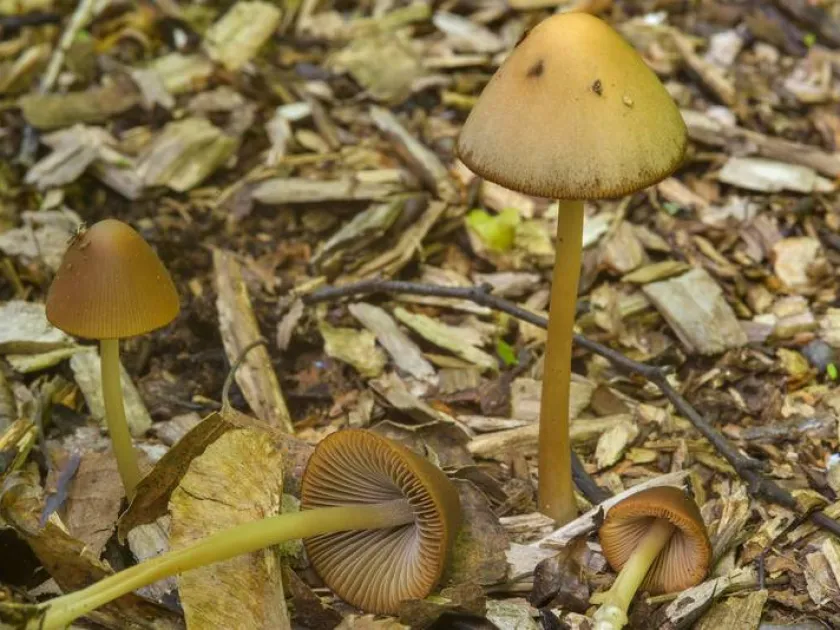
Description
Symptoms
Conocybe tenera is a small, gilled mushroom often observed in grasslands, lawns, and agricultural fields during periods of high humidity.
The fruiting bodies typically feature a conical to bell-shaped cap that is ochre or brownish in color, maturing to a flatter shape.
The stem is slender, brittle, and lighter in color, making the mushroom look delicate, as its name suggests.
These mushrooms usually appear in small groups or clusters, providing a clear visual indicator of the soil surface conditions.
The spore print is a distinct rusty-brown color, which is a key identification feature for mycologists and agronomists.
Pathogen
Conocybe tenera is classified as a saprotrophic fungus belonging to the Bolbitiaceae family, meaning it feeds on decaying organic matter.
It is not a plant pathogen and does not infect live crop tissues, meaning it poses no direct threat of plant disease.
The fungus plays a beneficial role in the ecosystem by decomposing organic debris and contributing to the humification process in soil.
While not a disease agent, its presence indicates high levels of available organic matter and potential moisture issues in the specific area.
Reproduction is carried out through spores that travel via wind and water, colonizing damp and nutrient-rich environments effectively.
Conditions for development
Conocybe tenera thrives in environments with high moisture levels, particularly following rainy periods or in areas with poor drainage.
It favors soils with significant amounts of decomposing organic material, such as crop residues, manure, or high-humus substrates.
Compacted soil surfaces that impede water infiltration often harbor the mycelium of this fungus, leading to visible fruiting bodies.
Moderate temperatures ranging from 15°C to 22°C are ideal for the rapid development of the mycelium and the emergence of mushrooms.
Excessive organic fertilization without proper incorporation into the soil profile can trigger outbreaks of this saprotrophic fungus.
Why it matters
There is no direct damage caused to agricultural crops by Conocybe tenera, as it lacks the physiological mechanisms to attack living plants.
The primary concern is that its dominance may signify suboptimal soil management practices, such as poor aeration or drainage issues.
In high concentrations, the mycelial mass may compete locally for water, though this impact is generally negligible for established crops.
On livestock pastures, these mushrooms can be a safety concern as certain species within the Conocybe genus are known to be toxic if ingested.
As an agronomist, viewing this fungus as an indicator of soil moisture management is more productive than viewing it as a harmful pest.
Protection
Control measures for Conocybe tenera focus on soil management rather than chemical applications, as it is not a parasitic disease.
Improving soil drainage is the most effective way to prevent favorable conditions for this fungus to produce fruiting bodies.
Regular cultivation and deep tillage practices help break up the mycelium and accelerate the decomposition of organic material.
Adjusting fertilization strategies to ensure organic matter is well-integrated prevents surface accumulation that supports fungal growth.
- Enhance soil drainage systems.
- Practice consistent inter-row cultivation.
- Manage crop residue effectively.
- Ensure proper aeration for soil health.
Discussion
No discussions yet — be the first.