
Conocybe arrhenii
Conocybe arrhenii
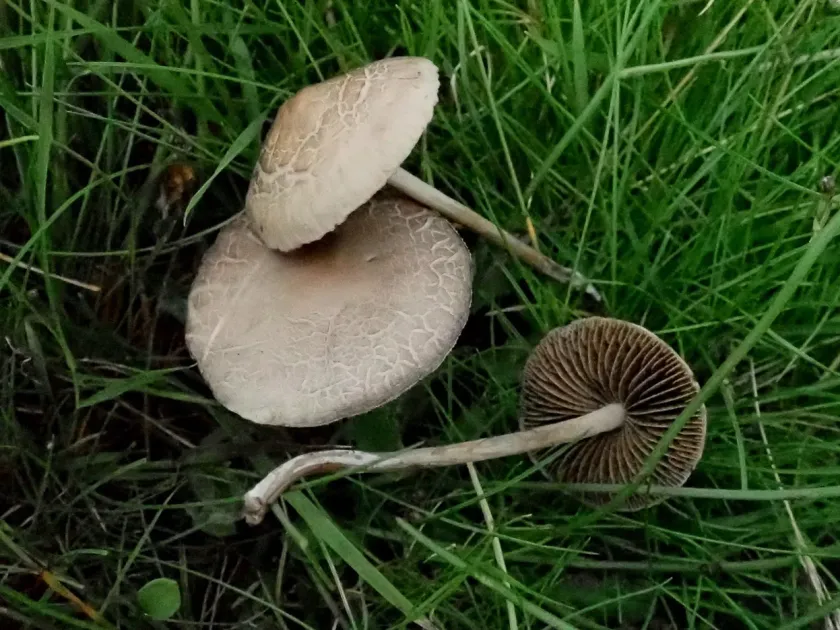
Description
Symptoms
The main external symptom of the fungus is the appearance of small fruit bodies directly within the grass canopy.
Fungi often form groups or so-called "fairy rings," which suppress the development of the root system of agricultural grasses.
Affected turf areas exhibit localized yellowing or wilting, caused by the disruption of water and nutrient uptake in the soil.
In the root zone of affected areas, a dense network of fungal mycelium is often found, blocking the normal absorption of moisture.
Close inspection of the root zone reveals thin, whitish fungal filaments spreading deeper into the soil profile.
Pathogen
Conocybe arrhenii is a basidiomycetous fungus belonging to the Bolbitiaceae family. In agronomy, it is categorized as a saprotrophic organism that colonizes soil and organic matter.
The fungus mycelium spreads rapidly through organic substrates, penetrating the upper soil layers. While not an obligate parasite, its massive appearance indicates a biological imbalance in the soil.
Fruit bodies are characterized by small caps on slender stalks, typical of the Conocybe genus. They develop as a result of active vegetative growth in moist, nutrient-rich environments.
The biology of the species is closely linked to the decomposition of cellulose and lignin found in plant residues, making it a common companion in dense grass communities.
While not a classical plant disease, its presence significantly affects the health and competitive capacity of turfgrass and agricultural plants.
Conditions for development
Optimal conditions for Conocybe arrhenii development include high soil moisture levels and moderate ambient temperatures.
The fungus thrives in soils with a high content of undecomposed plant residues, such as old straw or accumulated turf thatch.
Poor soil aeration and compaction of the upper layer facilitate the rapid expansion of the mycelium throughout the site.
Excessive application of raw organic matter without prior composting creates an ideal environment for outbreaks of fruit bodies.
Shaded areas with poor drainage are considered critical zones where fungal development occurs most aggressively during the growing season.
Why it matters
The primary danger lies in the competition for nutrients and space with cultivated grass species.
The massive growth of mycelium can lead to the formation of bare patches in the turf, which is critical for sports lawns and pastures.
Toxins released during the fungus's life cycle can adversely affect the root development of sensitive plant species.
Disruption of the turf structure reduces both the aesthetic value of lawns and the total yield of forage crops.
The presence of the fungus increases the risk of secondary diseases due to the weakened immunity of plants in affected areas.
Protection
The primary control measure is to improve the drainage of the site to prevent moisture accumulation in the soil.
Regular scarification and aeration of lawns are necessary to destroy the mycelium and ensure air access to the roots.
The application of non-composted organic fertilizers should be limited as they serve as a nutritional substrate for the fungus.
In cases of severe infestation, systemic fungicides approved for use on turfgrass may be applied effectively.
- Regular mowing with removal of grass clippings.
- Balanced application of mineral fertilizers.
- Monitoring and adjustment of soil pH levels.
Discussion
No discussions yet — be the first.