
Conocybe apala
Conocybe apala
Description
Symptoms
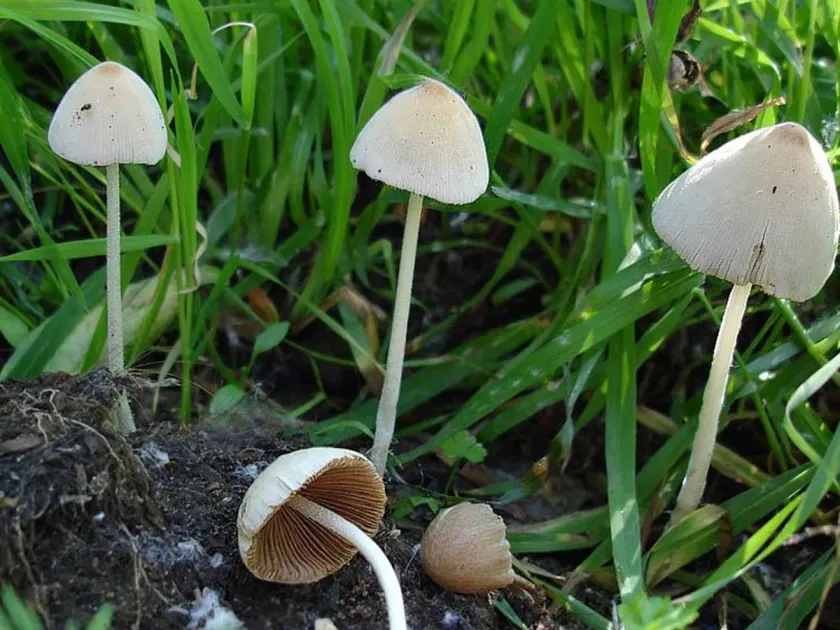
The primary sign of its presence is the sudden emergence of fragile, cream-colored fruiting bodies following periods of heavy rain or high humidity.
These mushrooms feature a small, conical to bell-shaped cap and a delicate, brittle stem that is easily broken when handled.
No symptoms of disease, such as necrotic lesions, wilting, chlorosis, or root rot, are observed on the surrounding turf or plants.
The appearance of these mushrooms is often isolated to spots with high concentrations of organic matter within the thatch layer of the lawn.
Because the fungus does not interact with living plants, the total lack of adverse effects on grass health is the most reliable diagnostic indicator.
Pathogen
Conocybe apala is a small soil-dwelling mushroom belonging to the Bolbitiaceae family. It is crucial to clarify that it is not a plant pathogen and does not cause diseases in crops or turfgrass.
This organism acts as a saprophyte, playing an essential ecological role in decomposing organic matter, such as dead roots, thatch, and fallen leaves in the soil profile.
The mycelium resides within the soil or the thatch layer, feeding exclusively on decaying materials without infecting living plant tissues.
From an agronomic perspective, the presence of these mushrooms should be viewed as a sign of organic decomposition activity rather than a symptomatic plant infection.
It is a common species in lawns and pastures, adapted to open areas rich in organic debris where moisture levels support its life cycle.
Conditions for development
The development of Conocybe apala is highly dependent on sufficient soil moisture and appropriate ambient temperatures for mycelial expansion.
Lawn environments with significant thatch accumulation provide an ideal substrate for this fungus to thrive and produce fruiting bodies.
High relative humidity and warm conditions during the spring or autumn months facilitate the rapid maturation of the fungal sporocarps.
Poor soil drainage or excessively moist turf environments are the primary drivers that allow this saprophyte to emerge on the surface.
Excess nitrogen or a lack of proper soil aeration can indirectly contribute to creating favorable conditions for its metabolism.
Why it matters
There is no agronomic damage associated with Conocybe apala, as it does not parasitize any living plant species or threaten harvest yields.
The main concern for turf managers and homeowners is aesthetic, as the mushrooms can disrupt the visual uniformity of a well-maintained lawn.
These mushrooms are considered inedible and potentially toxic if ingested, making them undesirable in areas where children or pets frequently play.
Misidentifying this fungus as a plant pathogen can lead to unnecessary and potentially harmful applications of fungicides, which disrupt healthy soil life.
Understanding that it is a harmless saprophyte allows managers to focus resources on actual agronomic challenges rather than aesthetic ones.
Protection
No chemical control measures are recommended, as Conocybe apala is not a disease-causing agent and does not warrant the use of fungicides.
Cultural practices focused on turf management, such as regular scarification or dethatching, are the most effective ways to discourage mushroom growth.
Improving soil aeration and drainage will prevent the excessive moisture retention that this fungus requires to thrive.
Managing the lawn irrigation schedule to allow the surface to dry out periodically will naturally limit the development of the fungus.
- Maintain proper lawn aeration to improve soil drainage.
- Remove excess thatch through regular scarification.
- Manage irrigation to prevent constant soil surface saturation.
- Manually remove fruiting bodies if appearance is a concern.
Discussion
No discussions yet — be the first.