
Soybean Coniothyrium blight
Coniothyrium glycines
Description
Symptoms
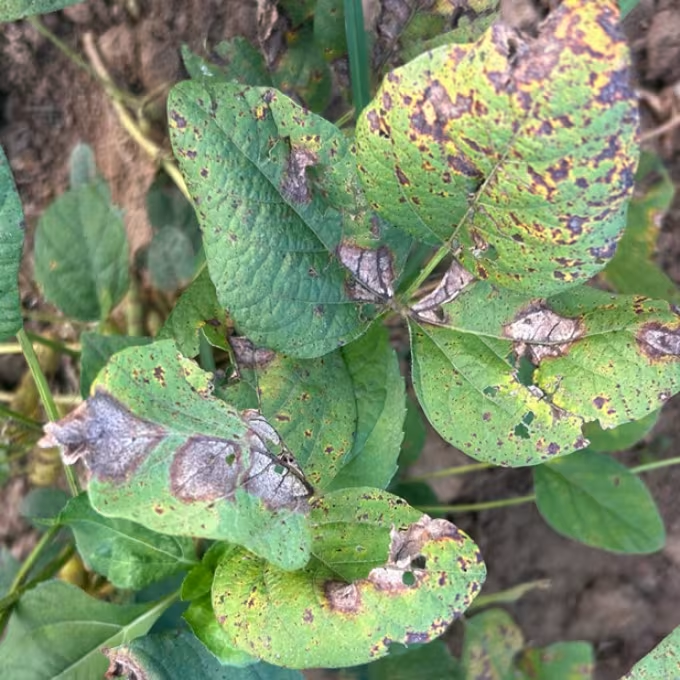
Initial symptoms include the appearance of small, irregular chlorotic spots on leaves, which gradually enlarge and turn reddish-brown or dark gray.
The necrotic lesions often exhibit a distinct margin and, under high humidity, small black pycnidia become visible within the dead tissue of the spots.
Stems and petioles may show elongated, sunken lesions that can weaken the structural integrity of the plant, potentially leading to lodging.
When pods are infected, they exhibit discoloration and internal damage, which directly affects seed filling and grain quality.
In severe cases, premature defoliation occurs, which compromises the plant's ability to complete its reproductive growth phase effectively.
Pathogen
The causal agent of this disease is the fungus Coniothyrium glycines, which belongs to the anamorphic ascomycetes. It is capable of surviving for long periods as saprophyte in crop residues.
The fungus produces pycnidia, which are specialized structures containing conidia. These spores are released under humid conditions to infect healthy parts of the host plant.
The pathogen is highly adapted to soybean crops, colonizing vascular tissues and leaves. It penetrates through wounds or natural openings such as stomata.
Biological studies suggest that the fungus remains viable in soil debris, making it a persistent challenge for continuous soybean cropping systems.
Transmission occurs through airborne spores as well as rain-splashed inoculum, leading to rapid spread throughout the canopy during the growing season.
Conditions for development
Coniothyrium blight is favored by warm, humid environments. Prolonged rainy weather during the flowering and pod-filling stages is highly conducive to disease outbreaks.
Optimal temperatures for the development of the pathogen and spore germination typically range between 20°C and 25°C.
Poor field drainage and excessive irrigation contribute to the buildup of moisture within the canopy, facilitating fungal penetration and growth.
High planting density restricts airflow, which keeps the leaf surface wet for longer periods, thereby increasing the risk of infection.
Low soil fertility or specific nutrient deficiencies can exacerbate the severity of the disease by weakening the plant's natural defense mechanisms.
Why it matters
The primary impact of the disease is a reduction in photosynthetic capacity, which directly results in diminished biomass and lower crop yields.
Infected seeds often have reduced viability and may carry the pathogen, leading to poor emergence rates in the following cropping cycle.
Severe infestations can lead to substantial yield losses, sometimes reaching significant percentages if weather conditions remain favorable for the fungus.
The deterioration of pod quality lowers the oil and protein content of the soybeans, making the harvest less valuable for commercial processing.
Secondary infections and weak plants are more susceptible to other opportunistic pathogens, creating a synergistic effect that further impacts overall field productivity.
Protection
The most effective strategy involves a combination of cultural practices, such as crop rotation, to prevent the buildup of inoculum in the soil.
Fungicide seed treatments are recommended to reduce early-season infection and protect the emerging seedlings from soil-borne pathogens.
Timely application of foliar fungicides during the critical stages of pod development can significantly suppress the spread of the fungus.
Deep plowing of field residues helps decompose the infected plant material, reducing the number of survival sites for the pathogen.
- Use of certified pathogen-free seeds.
- Selection of resistant or tolerant varieties.
- Implementation of adequate spacing.
- Effective weed management.
Discussion
No discussions yet — be the first.