
Coniothyrium leaf spot
Coniothyrium concentricum
Description
Symptoms
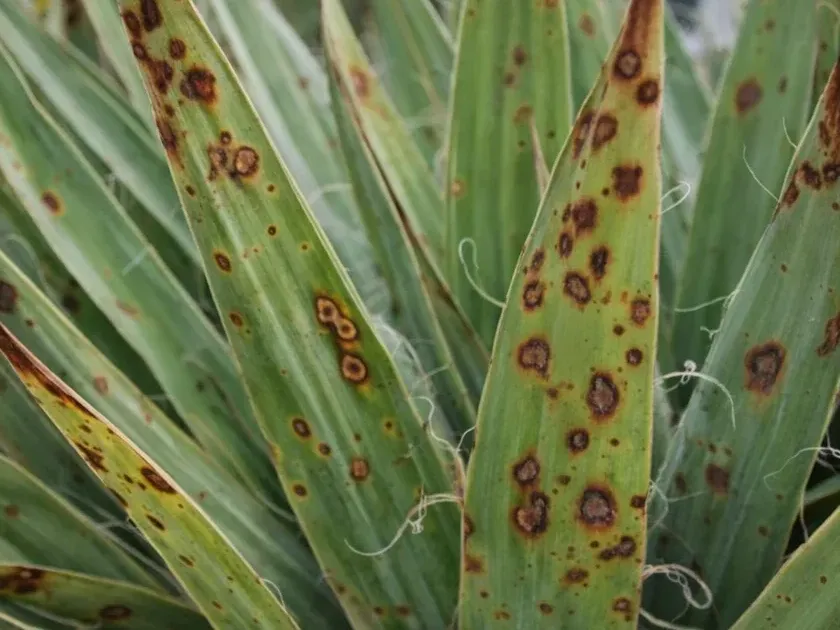
The primary symptom of Coniothyrium leaf spot is the emergence of small light-colored or grayish spots on the leaves of the Yucca plant. Over time, these spots expand in size.
As the infection progresses, concentric rings form within the lesions, which is reflected in the Latin name of the pathogen. This zonal pattern is the most critical diagnostic feature.
Dark, tiny dots, representing the fungal pycnidia, eventually appear on the surface of the lesions. These are often arranged in irregular or concentric patterns within the damaged tissue.
The tissue in the affected areas gradually desiccates, becomes brittle, and turns brown or gray. In severe cases, individual spots coalesce to cover large sections of the leaf surface.
If the disease is not managed, the affected leaves will wither and die prematurely, resulting in a significant loss of aesthetic value and a decrease in the plant's overall vigor.
Pathogen
The causal agent of this disease is the fungus Coniothyrium concentricum. It is a specialized pathogen that primarily targets succulent plants, with members of the Yucca genus being particularly susceptible.
The infection persists in plant debris, fallen leaves, and within the infected tissue itself in the form of pycnidia. These fruiting bodies allow the fungus to survive adverse conditions for extended periods.
The pathogen spreads through conidia, which are disseminated by rain splashes, irrigation water, or wind currents. Upon landing on healthy leaf tissue, the spores germinate under suitable moisture conditions and invade the plant epidermis.
The fungal mycelium develops within the leaf tissue, gradually disrupting its physiological functions. The pathogen exhibits high adaptability, allowing it to colonize the host plant rapidly when the plant's natural defenses are compromised.
The lifecycle of the fungus is tightly correlated with ambient humidity levels, as the production of spores requires a high degree of moisture in the surrounding environment.
Conditions for development
Excessive humidity in both the air and the substrate is the key driver for the development of Coniothyrium leaf spot. In greenhouses or indoor environments, poor ventilation significantly increases disease pressure.
The temperature range plays a vital role; moderately warm conditions paired with high humidity provide an optimal environment for rapid spore germination and infection.
Dense plantings limit air circulation around the plants, leading to stagnant moisture on leaf surfaces, which creates an ideal microclimate for the pathogen to establish itself.
Compromised plant immunity due to incorrect agricultural practices, light deprivation, or physical trauma to the epidermis makes the plant far more susceptible to infection.
Overwatering the substrate, particularly during dormant periods, leads to metabolic stress in the plant, rendering the tissues more vulnerable to the encroaching fungus.
Why it matters
The primary harm caused by Coniothyrium leaf spot is the rapid deterioration of the plant's appearance, which is catastrophic for its use in landscaping or interior design.
The fungal infection disrupts photosynthetic processes in the affected foliage, leading to stunted growth and a general decline in the plant's vital energy.
If the center of the leaf rosette is infected, the growth point may die, which puts the entire existence of the plant at risk.
A neglected infection becomes a constant reservoir of spores that can easily spread to other ornamental plants, requiring the isolation or destruction of the affected specimens.
In nursery settings, mass infestation can result in significant economic losses, as infected plants become unsuitable for commercial sale.
Protection
The first step in controlling Coniothyrium leaf spot is strict sanitary pruning. All affected leaves must be carefully removed, including a margin of healthy tissue, and destroyed immediately.
It is essential to adjust the irrigation regime, ensuring that no water splashes onto the foliage and that drainage is sufficient to prevent waterlogging.
- Application of systemic fungicides based on copper or mancozeb.
- Preventative treatment with biological control agents like Bacillus subtilis.
- Strict disinfection of pruning tools with alcohol or fire after each use.
- Improved spacing and air circulation to manage local microclimate.
- Balanced fertilization with potassium and phosphorus to enhance tissue strength.
In cases of severe infestation, transplanting the Yucca into fresh, sterile substrate with full root system treatment using fungicide solutions is highly recommended.
Discussion
No discussions yet — be the first.