
Coniophoraceae
Coniophoraceae
Description
Symptoms
The primary symptom of infestation is the discoloration of the wood, which turns into a distinctive dark brown shade due to the biochemical breakdown process.
As the rot progresses, the wood loses its structural integrity, resulting in the development of cracks along and across the grain, creating a characteristic cubic fracture pattern.
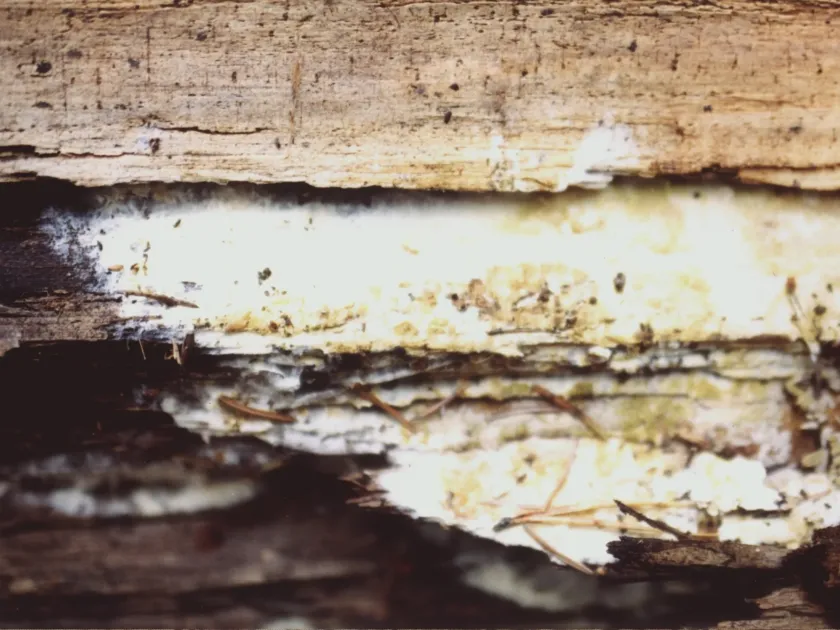
Surface mycelium is often visible as a whitish, yellowish, or dark brown film, depending on the moisture level and the specific growth stage of the fungus.
Advanced stages of decay result in the wood becoming extremely brittle. It can easily crumble into small fragments or powder when touched or subjected to pressure.
A musty or earthy smell in enclosed areas is a classic sign of active fungal growth, often accompanied by visible signs of dampness or water leakage within the structure.
Pathogen
The Coniophoraceae are a family of fungi within the order Boletales. The most significant and common species in this group is Coniophora puteana, often referred to as the cellar fungus.
These fungi are specialized wood-decay agents (xylotrophs) that effectively degrade both cellulose and hemicellulose, which are the main structural components of wood.
The life cycle involves the development of an extensive mycelium that penetrates the inner layers of the wood, utilizing enzymatic systems to break down lignocellulose.
Fruit bodies of these fungi are typically resupinate, appearing as thin, flat, crust-like layers that range in color from olive to brown when mature.
The spread of the fungus occurs via millions of microscopic spores released from these fruit bodies, which are easily transported by air currents to colonize new damp wood surfaces.
Conditions for development
The development of Coniophoraceae is strictly dependent on the moisture content of the wood, which must be consistently high, typically above 20-30 percent.
Warm temperatures, ranging between 20°C and 25°C, create an optimal environment for rapid mycelial growth, although the fungus can survive in a wider range of conditions.
Poor ventilation in crawl spaces, basements, or areas with improper insulation traps humidity, providing the perfect breeding ground for these decay fungi.
Direct contact with soil, water-saturated concrete, or leaking plumbing fixtures provides the constant moisture source required for the fungus to initiate an attack.
In indoor environments, lack of airflow prevents wood from drying out after occasional wetting, leading to long-term fungal colonization of structural timbers.
Why it matters
The main threat posed by these fungi is the rapid induction of brown rot, which can cause severe structural failure in wooden frames, beams, and subfloors.
Buildings affected by Coniophoraceae often require expensive structural repairs because the rot undermines the load-bearing capacity of the wood elements.
This type of decay is particularly dangerous because it often progresses inside the wood, remaining hidden until the structural integrity of the timber is critically compromised.
In agricultural settings, these fungi cause significant degradation to wooden barns, storage bins, and fencing, resulting in continuous maintenance and replacement costs.
Beyond the structural damage, the growth of these fungi creates unhealthy indoor conditions by releasing fungal spores and volatile organic compounds into the air.
Protection
The most effective strategy for control is moisture management. Keeping wood dry, improving ventilation, and repairing any water leaks is essential for prevention.
Proper building design, including the use of damp-proof membranes and raising wood above ground level, prevents the initial conditions necessary for fungal infestation.
The use of wood preservatives (fungicides) on timber before installation provides a chemical barrier that prevents spores from successfully colonizing the wood surface.
If decay is detected, the standard remedial action involves cutting out the affected wood, typically extending the cut at least 50-100 cm into visibly sound timber.
- Maintain low humidity in indoor areas.
- Ensure adequate ventilation in crawl spaces.
- Treat timber with professional-grade wood preservatives.
- Replace severely decayed structural components.
- Properly dispose of all removed infected wood by burning.
Discussion
No discussions yet — be the first.