
Coniocybaceae
Coniocybaceae
Description
Symptoms
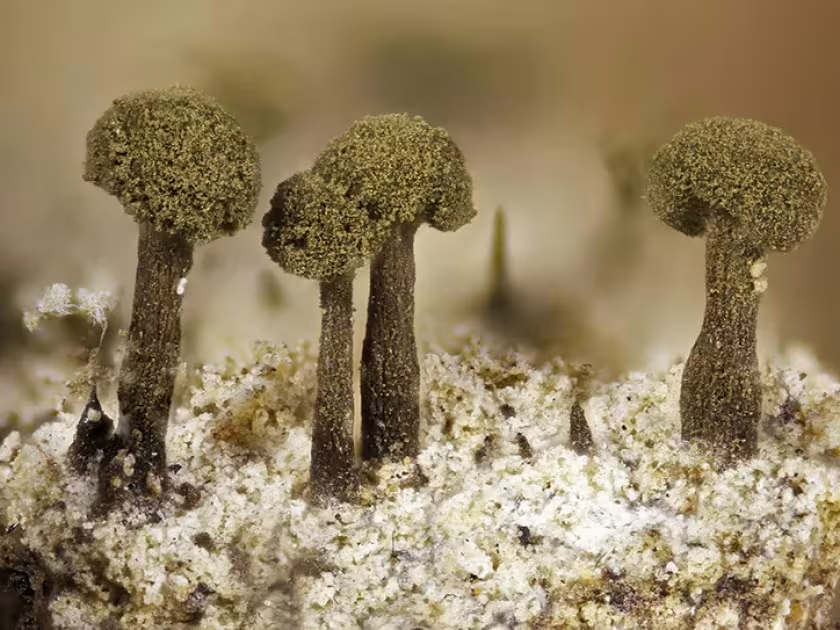
The most recognizable sign of Coniocybaceae is the appearance of minute, pin-like fruiting bodies on the bark surface. These structures often look like small, darkened dust particles or tiny "nails" emerging from the bark crevices.
Affected areas may exhibit subtle discoloration, ranging from grayish-brown to yellow. The texture of the bark in the colonized zone might appear slightly powdery or crusty due to the accumulation of spores.
Unlike aggressive pathogens, these fungi do not create extensive necrosis or cankers. Instead, the infection is superficial, appearing mostly in sheltered areas such as deep cracks, scars, or the shaded sides of trunks.
Observation with a magnifying glass is often necessary to distinguish these fungi from other lichens or epiphytic growth. The stalked nature of the apothecia is the defining morphological feature.
In advanced stages of colonization, the affected bark may show signs of accelerated weathering, although this is usually a cumulative effect rather than the direct result of fungal enzymatic activity.
Pathogen
The Coniocybaceae family belongs to the order Coniocybales, representing a group of specialized fungi often associated with lichen-like growth. These organisms are primarily saprotrophic, meaning they derive nutrients from decaying organic matter on tree bark.
Biologically, they are characterized by the production of stipitate apothecia, which appear as tiny, stalked fruiting bodies. These structures are designed for the efficient dispersal of spores by wind or local micro-currents within forest environments.
While not typical plant pathogens, they can colonize the bark of trees that are stressed, injured, or aging. They typically inhabit the outer layers of the periderm, rarely causing deep internal decay in living wood.
The lifecycle of Coniocybaceae is closely tied to the humidity levels of their environment. They require stable moisture to sustain their vegetative mycelium, which spreads across the surface of the bark, absorbing trace nutrients.
These fungi serve as important biological indicators. Their presence often reflects the ecological health of a forest, as they are notably sensitive to air pollution and changes in microclimate conditions.
Conditions for development
Development of Coniocybaceae is strictly dependent on high humidity and protection from direct sunlight. They thrive in environments where moisture is retained for extended periods, such as in thick forests or humid valleys.
Temperature fluctuations play a significant role in their sporulation cycles. They are generally most active during mild, wet seasons when atmospheric moisture is high, allowing for consistent growth.
The surface characteristics of the host tree influence colonization rates. Older trees with rough, deeply fissured bark offer optimal micro-habitats that protect the fungi from desiccation and environmental stress.
Air quality is a limiting factor for these organisms. They are rarely found in urban or industrial areas with high concentrations of atmospheric pollutants, marking them as sensitive species.
Any disruption to the bark, such as mechanical wounds or damage from pests, provides a favorable entry point and substrate for the fungal spores to germinate and colonize the surface.
Why it matters
Coniocybaceae are generally considered non-harmful to healthy, vigorous trees. They do not possess the enzymatic capability to aggressively degrade healthy xylem or phloem tissues.
The primary harm is purely aesthetic, which can be a concern in ornamental landscaping, parks, or nursery settings where visual appeal of tree trunks is a management priority.
Their presence can be interpreted as a diagnostic symptom of an underlying issue, such as environmental stress, soil compaction, or the onset of senescence in the host tree.
In very specific instances, persistent moisture retention on the bark caused by heavy fungal colonization may create a microenvironment that supports secondary pests or other, more harmful pathogens.
However, in natural forestry settings, they are viewed as a normal part of the bark microbiome, contributing to the decomposition of organic matter on the surface of the tree.
Protection
Management of Coniocybaceae is rarely required in natural or managed forest settings. If intervention is necessary, the focus should remain on improving the tree's overall vitality through proper care.
Good agricultural practices, such as ensuring adequate watering and fertilization, boost the tree's natural resilience, often limiting the spread of non-pathogenic fungal growth on the bark.
If removal is necessary for aesthetic purposes, mechanical cleaning with a soft brush followed by the application of standard copper-based fungicides can be effective in clearing the bark surface.
Preventative pruning to improve airflow and sunlight penetration within the tree canopy can reduce the localized humidity that these fungi need to thrive.
Regular monitoring of the bark status is recommended for high-value ornamental trees to ensure that superficial colonization does not mask early symptoms of more critical tree health problems.
Discussion
No discussions yet — be the first.