
Coniferiporia
Coniferiporia
Description
Symptoms
The most diagnostic sign of a Coniferiporia infection is the presence of perennial sporocarps on the bark surface. These fruiting bodies are usually found near old wounds or branch junctions and often appear dark brown, woody, and hard to the touch.
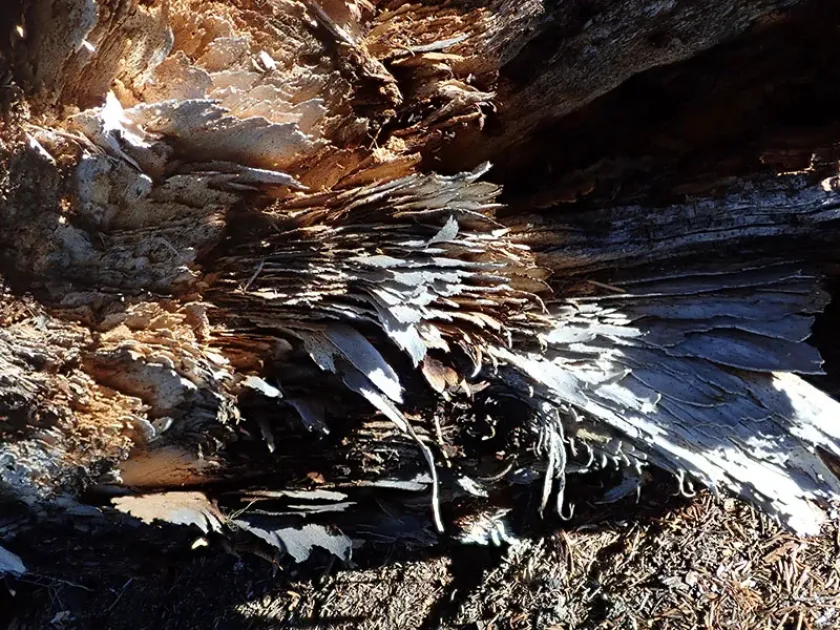
Internally, the wood exhibits a characteristic white or yellow pocket rot. The wood fibers become brittle and stringy, often losing their structural cohesion. In advanced stages, the internal tissue may turn into a soft, fibrous mass that easily separates.
Large hollows or cavities may develop within the main trunk as the decay progresses. These cavities are frequently lined with a white fungal mat, which is a clear indicator of active colonization and decomposition of the wood matrix.
Crown symptoms often reflect the internal damage, presenting as chlorosis (yellowing) or premature needle shed. The canopy becomes thinner over time as the tree’s water and nutrient transport systems are impaired by the fungal activity in the trunk.
Trees affected by Coniferiporia often exhibit reduced annual ring growth and a decline in overall vigor. In many instances, the structural weakening leads to stem breakage during windstorms, leaving behind characteristic splintered stumps.
Pathogen
Coniferiporia is a genus of wood-decaying fungi within the Hymenochaetaceae family. Previously classified under the genus Phellinus, these fungi have been taxonomically reorganized into a distinct group based on morphological and genetic evidence. They are primarily known for causing internal rot in coniferous species.
The pathogen typically functions as a necrotrophic parasite. It gains entry into the host tree through wounds, fire scars, or branch stubs. Once inside, the mycelium secretes enzymes that break down cellulose, hemicellulose, and lignin, effectively rotting the heartwood of the tree.
The life cycle involves the production of perennial, hoof-shaped, or resupinate fruit bodies (conks). These structures are often found on the trunk or near the base of the tree and can persist for many years, acting as a continuous source of basidiospore release.
Spore dispersal is primarily mediated by wind, allowing the fungus to colonize new hosts over significant distances. In some cases, the fungus may also spread through root grafts between adjacent trees, establishing a local infection center within a stand.
The structural complexity of the mycelium enables it to survive under varying moisture conditions within the wood. The fungus thrives by slowly but persistently decomposing the structural integrity of the xylem, which compromises the tree’s overall vitality.
Conditions for development
High humidity and poor air circulation are critical environmental factors that promote the spread and growth of Coniferiporia. Dense stands with canopy closure often create a stable, moist microclimate that facilitates spore germination and fungal establishment.
Tree age is a significant factor, as older stands typically have more accumulated damage, such as bark cracks and dead branches, which serve as entry points. Susceptibility increases as trees lose their capacity for rapid wound closure.
Mechanical damage caused by forest management equipment or wildlife browsing provides the necessary infection courts for the pathogen. Once a wound is exposed, the absence of protective sap flow allows the fungus to gain an easy foothold.
Temperature plays a vital role in the metabolic rate of the fungus, with growth peaking in warm conditions. However, the mycelium is highly resilient and can remain dormant during cold periods, resuming activity once favorable conditions return.
Environmental stress, such as drought or air pollution, can further weaken the tree's natural defense mechanisms. Trees under stress are unable to compartmentalize the decay effectively, allowing the fungus to spread more rapidly through the heartwood.
Why it matters
The primary economic impact of Coniferiporia is the degradation of timber quality. Infected trees produce wood with low structural value, making them unsuitable for construction or high-end wood products, which results in significant financial losses for the forestry industry.
The pathogen threatens forest stability by creating hazard trees. These weakened stems are prone to catastrophic failure, posing a risk to personnel and infrastructure within forest areas, necessitating costly removal operations.
Coniferiporia contributes to the ecological degradation of forest stands by reducing the competitive capacity of conifers. The resulting gaps in the canopy can alter the local environment, potentially favoring the invasion of secondary pests or less desirable plant species.
The disease cycle impairs the reproductive capacity of the host. Severely infected trees produce fewer seeds, which hinders natural forest regeneration and threatens the long-term sustainability of the forest ecosystem.
Management costs are significantly increased due to the need for sanitation efforts. Removing infected trees and disposing of debris correctly requires substantial labor and resource allocation to prevent further spread of the pathogen to healthy trees.
Protection
Integrated forest management is the most effective approach to control Coniferiporia. This includes rigorous sanitation practices, such as the prompt removal of infected, storm-damaged, or dead trees to eliminate the sources of inoculum.
Minimizing mechanical injury during logging and silvicultural operations is crucial. Operators must be trained to avoid bark damage, and any accidental wounds should be treated with appropriate protective sealants to prevent fungal entry.
Thinning schedules should be optimized to maintain appropriate tree density, improving air circulation and sunlight penetration. This environment is less conducive to the humidity-dependent growth of fungal pathogens.
In forest stands where infection is detected, it is important to delineate and manage the affected area as a single unit. This prevents the spread of the fungus to neighboring healthy stands through contact or airborne spores.
Ongoing monitoring via aerial surveys or ground-level diagnostics is essential for early detection. Identifying infected trees before they develop large sporocarps allows for timely interventions that can effectively contain the spread of the disease.
Discussion
No discussions yet — be the first.