
Proso millet smut
Conidiosporomyces ayresii
Description
Symptoms
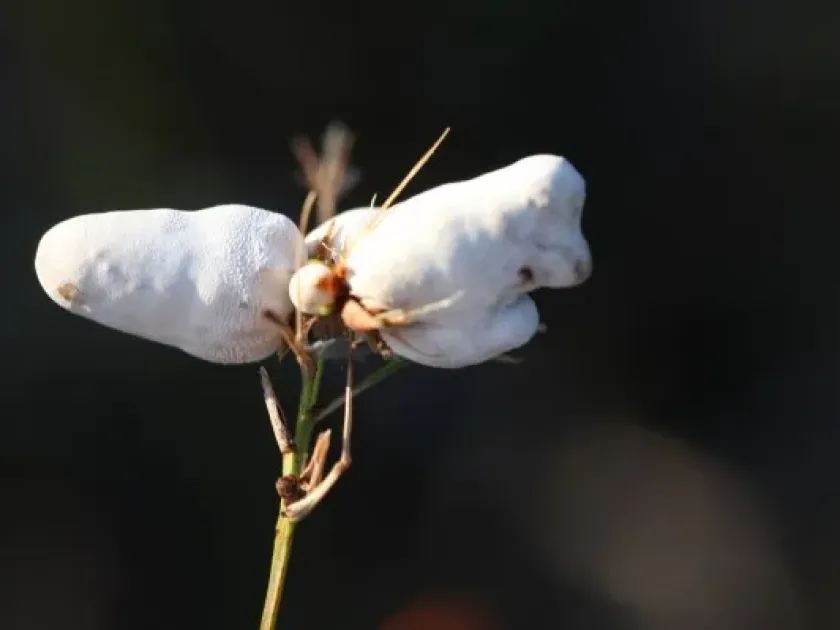
The most distinctive symptom is the transformation of individual grains in the panicle into enlarged, deformed structures known as sori or smut galls. These galls are noticeably larger than healthy seeds.
These galls are covered by a thin, greyish membrane that eventually ruptures upon maturity. When broken, they release a dark, dusty mass of spores, which is characteristic of smut diseases.
Unlike some other smut types that destroy the entire panicle, Conidiosporomyces ayresii often affects scattered individual grains throughout the panicle, making identification more challenging.
Disease symptoms usually appear during the milk to dough stage of grain development. Before this, infected plants may look relatively normal to the casual observer.
The affected areas of the panicle show localized deformation. Under close inspection, the replacement of the grain embryo and endosperm with dark powdery spores is clearly visible.
Pathogen
The causative agent of this disease is the fungus Conidiosporomyces ayresii, which belongs to the Basidiomycota phylum. This pathogen is specialized in infecting the reproductive structures of proso millet.
The fungus exhibits a systemic mode of infection. It colonizes the host plant tissues early in the development stage, remaining latent until the heading phase when symptoms become evident.
The life cycle of the pathogen is closely synchronized with the phenology of the host plant. It survives as teliospores both on the seed coat and within the soil, ready to infect emerging seedlings.
Once the infection is established, the fungus produces masses of spores that replace the healthy tissue of the grain. These spores are then dispersed by wind and rain, allowing for further spread during the growing season.
Taxonomic classification of Conidiosporomyces ayresii has been refined over time, distinguishing it from other smuts that affect different cereal crops.
Conditions for development
Environmental factors during germination are critical for infection. Moderate temperatures and adequate soil moisture create optimal conditions for the fungus to penetrate the young millet seedlings.
Humidity levels during the flowering phase play a significant role in secondary infection. Rain or high humidity allows the teliospores to germinate and successfully colonize the floral parts.
Cropping history is a major factor in disease prevalence. Continuous cropping of millet on the same land facilitates the accumulation of spore loads in the soil, leading to higher infection rates.
Delayed or uneven emergence caused by poor seedbed preparation or excessive planting depth makes seedlings vulnerable to infection for a longer duration.
Regional climate conditions determine the severity of outbreaks. In areas where millet is grown intensively, the pathogen can quickly become an endemic threat if not managed properly.
Why it matters
The primary economic impact is a direct loss in grain yield. Infected grains are essentially destroyed, as they are converted into spore masses with zero nutritional value for human or animal consumption.
Contamination of the harvest is a significant issue. The presence of smut spores reduces the market value and quality of the entire grain batch, often leading to rejection by processors.
Infested grain can impart an off-flavor and dark coloration to flour, making it unsuitable for food industry applications unless subjected to expensive cleaning processes.
The disease affects the physiological performance of the plant, as it competes for nutrients and photosynthates that would otherwise be allocated to healthy grain development.
In severe cases of infestation, the crop may suffer from significant reductions in milling yield and overall seed viability for the following season.
Protection
Seed treatment is the most fundamental and effective control measure. Utilizing systemic fungicides, such as tebuconazole or fludioxonil, provides strong protection against seed-borne inoculum.
Crop rotation is essential for breaking the pathogen's life cycle. A rotation cycle of at least 3-4 years without proso millet helps to decrease the soil-borne spore density significantly.
Deep plowing in the autumn helps to bury infected crop residues, which speeds up the decomposition process and reduces the survival time of the teliospores in the upper soil layers.
Sourcing high-quality, certified, and clean seed is a critical preventative step to avoid introducing the pathogen into disease-free fields.
- Applying systemic fungicidal seed dressings before planting.
- Implementing a diverse crop rotation schedule.
- Monitoring fields during heading for early detection of infected panicles.
Discussion
No discussions yet — be the first.