
Winter fungus (Flammulina velutipes)
Collybia velutipes
Description
Symptoms
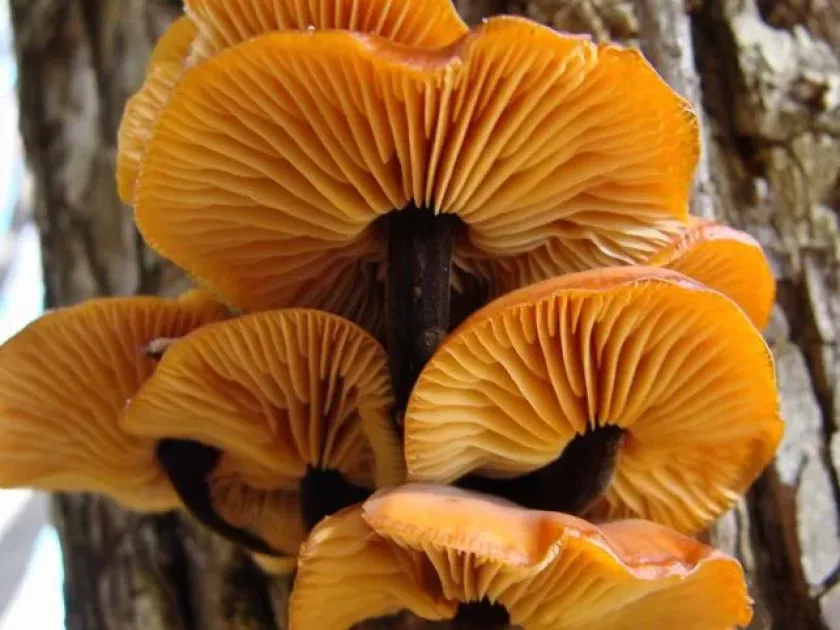
The most visible symptom is the emergence of clusters of yellow-orange to brownish mushrooms growing directly on the tree trunk or near the roots.
Internally, the infected wood exhibits advanced stages of white rot, appearing light in color and having a soft, spongy texture.
External signs include cracks in the bark, areas of discolored wood, and general decline in the tree's overall canopy health.
In advanced cases, the infected tree may show stunted growth and premature leaf drop due to the disruption of vascular functions.
Diagnostic field identification involves checking for the characteristic velvety stems of the fruit bodies and the presence of bleached, rotted wood.
Pathogen
The causative agent of the disease is the wood-rotting fungus Flammulina velutipes, widely known as the winter fungus or velvet shank.
This fungus acts as a facultative parasite that colonizes weakened or damaged living trees, as well as decaying wood material.
The mycelium penetrates deep into the tree through wounds, frost cracks, or improper pruning cuts, initiating the process of wood degradation.
As a white-rot fungus, it secretes specific enzymes that decompose both cellulose and lignin, leading to structural weakening of the host tree.
Its life cycle is uniquely adapted to cold weather, allowing the fungus to thrive and produce fruit bodies during late autumn and winter months.
Conditions for development
Cool temperatures and high humidity are the primary drivers for the growth and spread of Flammulina velutipes.
Mechanical damage to the bark, whether from animal grazing, storm damage, or human activity, provides the essential entry points for the fungal spores.
Poor orchard sanitation, such as leaving diseased wood piles near healthy trees, increases the concentration of spores in the immediate environment.
Trees that are already suffering from environmental stress, such as drought or root compaction, become more susceptible to the fungal invasion.
Poor air circulation in dense planting configurations allows moisture to remain on trunks, fostering the conditions necessary for colonization.
Why it matters
The fungus causes significant wood decay, which compromises the structural integrity of the tree, creating a major safety hazard.
Infected trees suffer from reduced physiological function, leading to decreased fruit production and poor growth rates.
The decay process is often irreversible; once the mycelium reaches the heartwood, it can gradually destroy the tree from the inside out.
Trees infected with this fungus become high-risk candidates for collapse during storms, posing threats to surrounding property and people.
The persistent presence of the fungus in a garden acts as a reservoir, continually releasing spores that threaten neighboring plant specimens.
Protection
Implement strict sanitation practices by immediately removing and disposing of any decaying branches or infected deadwood found in the orchard.
Ensure that all pruning operations are performed with sanitized tools to prevent the cross-contamination of healthy trees.
Properly seal all significant pruning cuts or accidental trunk wounds with a suitable wound dressing to prevent spore entry.
Maintain tree vigor through balanced fertilization and appropriate irrigation to boost the plant's natural defensive capabilities.
Monitor the orchard regularly for early signs of fungal fruiting bodies to enable prompt intervention before the decay spreads to the core.
Discussion
No discussions yet — be the first.