
Collybia dryophila
Collybia dryophila
Description
Symptoms
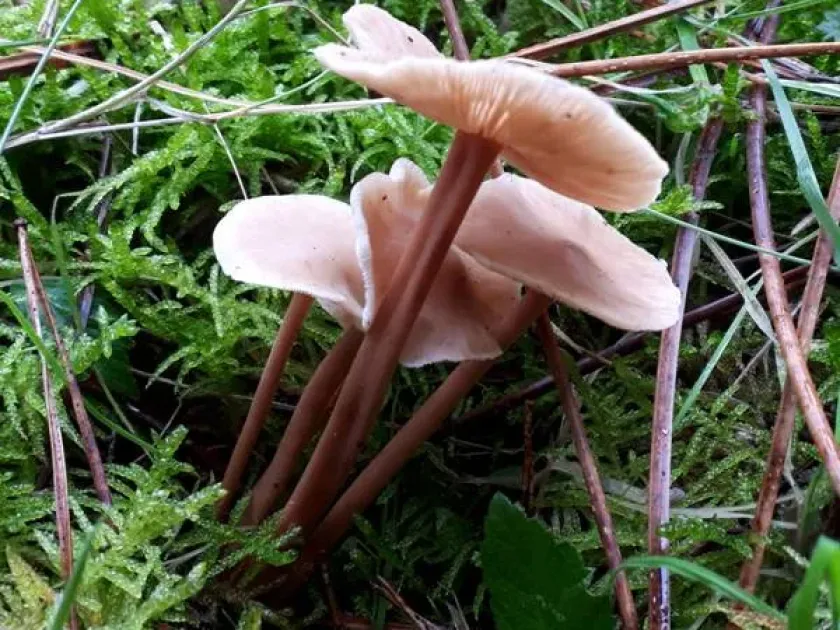
The fruiting bodies of Collybia dryophila typically appear in clusters or scattered groups. The cap is convex to flat, 2–6 cm in diameter, and reddish-brown to tan.
The gills are white to creamy, crowded, and slightly attached to the stem. This feature is important for field identification of the species.
The stem is slender, hollow, and fibrous, matching the color of the cap. A white, cottony mycelium is often visible at the base of the stalk.
Presence of the fungus in soil is indicated by a white, dense mycelial mat within the layer of decaying leaves and organic debris.
Spore prints of this mushroom are white. Fruiting occurs mostly during periods of high humidity throughout the spring and autumn months.
Pathogen
Collybia dryophila, currently classified as Gymnopus dryophilus, belongs to the family Marasmiaceae. It is a common mushroom species found in temperate forest ecosystems.
It is important to clarify that this fungus is a saprotroph, meaning it feeds on decaying organic matter rather than attacking living plant tissues.
In the context of plant pathology, Collybia dryophila is not considered a disease-causing agent for agricultural crops, trees, or greenhouse plants.
The mycelium of this fungus functions primarily in the forest floor, breaking down complex organic molecules like cellulose and lignin present in leaf litter.
This species plays a beneficial ecological role in nutrient cycling, helping to convert organic waste into nutrients available for soil enrichment.
Conditions for development
Collybia dryophila thrives in moist, shaded environments, particularly in deciduous and mixed forests where there is a consistent accumulation of leaf litter.
The fungus prefers moderately acidic soils and is highly adaptable to various organic substrates, though it is strongly associated with oak and pine litter.
Environmental conditions such as temperature between 10°C and 22°C and high moisture content are ideal for the rapid development of the fungal network.
Dissemination occurs via spores dispersed by wind currents. These spores settle on suitable moist substrates to initiate the formation of new mycelial colonies.
The fungus is resilient to moderate changes in temperature, allowing it to fruit early in the season and persist until late autumn in many regions.
Why it matters
Collybia dryophila causes no damage to living plants. It lacks the enzymatic pathways required to degrade the cellulose and lignin of healthy living wood.
There is no evidence of this fungus causing root rot, damping-off, or any other pathological condition in agricultural or horticultural crop species.
The fungus is entirely non-pathogenic, and its presence does not require any form of intervention to protect crops or ornamental plant health.
In forestry, it is not listed as a timber-degrading agent because it focuses on loose litter and debris rather than standing, healthy, or even stressed trees.
Thus, the economic impact of this species is neutral or potentially positive due to its role as a decomposer within the forest floor ecosystem.
Protection
Since Collybia dryophila is not a plant pathogen, no chemical or biological control strategies are necessary or recommended for its management.
If aesthetic or practical concerns arise in managed parks or gardens, simple physical removal of excessive leaf litter is the most effective approach.
Maintaining proper soil drainage and aeration discourages the dense formation of fungal mats by creating an environment less favorable for excessive humidity.
Fungicide applications are strictly unnecessary and potentially harmful to the beneficial microbial soil community, so they should never be used against this fungus.
Good horticultural practice involves regular clearing of debris and organic residue, which naturally limits the substrate availability for saprotrophic fungi.
Discussion
No discussions yet — be the first.