
Collybia cookei
Collybia cookei
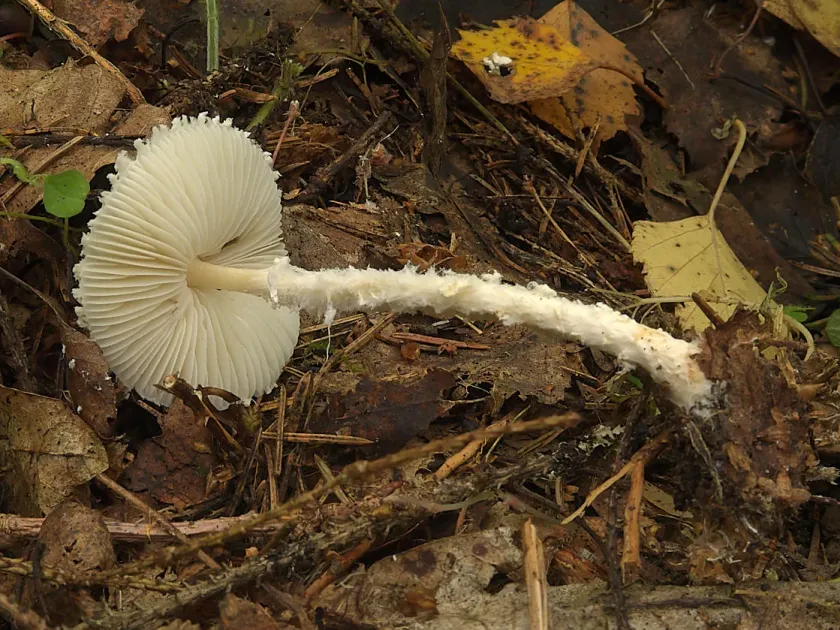
Description
Pathogen
Collybia cookei is a species of fungus belonging to the Marasmiaceae family. It is crucial to understand that this organism is not a plant pathogen and does not cause diseases in crops or trees.
This fungus is strictly a saprotroph, specifically a mycophilous species. It derives its nutrition by colonizing and breaking down the decaying fruit bodies of other fungi, such as Russula or Lactarius species.
Its biological cycle is defined by the production of small, often yellowish sclerotia buried in the substrate, which act as a reservoir for the organism during dormant phases.
From an agronomic perspective, Collybia cookei plays an ecological role as a decomposer in forest ecosystems rather than posing a threat to agriculture.
There is no evidence suggesting that this fungus interacts with vascular plant tissues, making it harmless to gardens, farms, or horticultural plantations.
Conditions for development
The development of Collybia cookei is highly dependent on the presence of specific organic matter. It flourishes in damp woodland environments where it can find decaying fungal tissue.
Environmental requirements include high levels of soil and air humidity, typically found in forest leaf litter or shaded areas during the autumn months.
The fungus thrives in temperate climates, responding to moisture and the availability of its fungal hosts to initiate the growth of its small, delicate fruit bodies.
Dispersal is primarily facilitated by wind-borne spores, though the establishment of new colonies requires a stable, moist microhabitat with sufficient decay levels.
As a natural component of the forest floor, it serves as a valuable indicator of ecosystem stability and organic turnover, requiring no human intervention or control measures.
Discussion
No discussions yet — be the first.