
Collybia cirrhata
Collybia cirrhata
Description
Symptoms
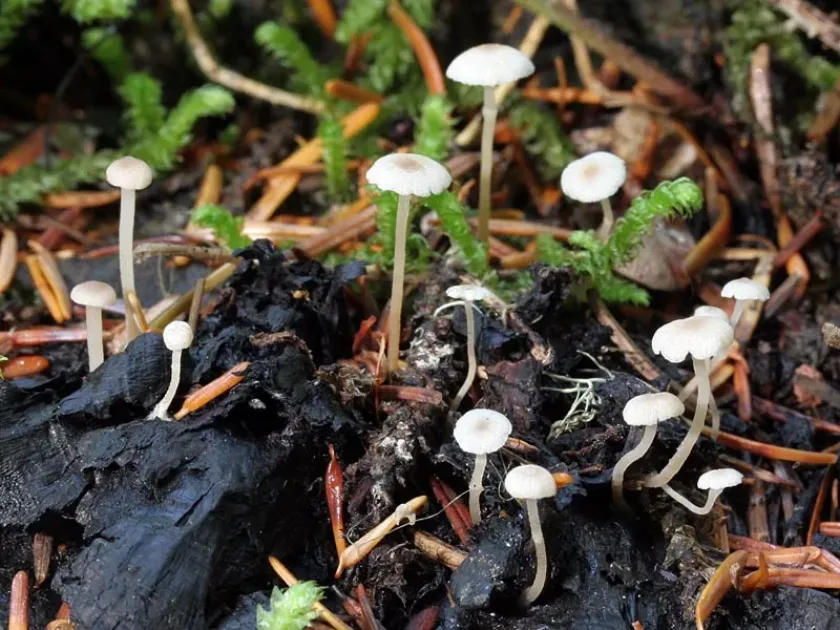
The fruit bodies of this mushroom are small and possess white or cream-colored caps.
A distinctive feature of this species is the presence of sclerotia attached to the base.
They often grow in clusters, appearing on damp surfaces or leaf litter.
The white mycelium is typically hidden within the organic substrate it is consuming.
Visual identification relies on the shape and the presence of these sclerotial bodies.
Pathogen
Collybia cirrhata is not a plant disease or an agricultural pathogen.
This fungus is a saprotroph, meaning it gains its energy from decaying organic matter.
It does not attack or colonize the living tissues of any cultivated plant species.
The organism functions as a decomposer, breaking down complex biological compounds.
It exists in the environment as a mycelial network that helps cycle nutrients back into the soil.
Conditions for development
This fungus thrives in environments with high humidity and cool temperatures.
It is commonly found in shaded areas where moisture persists in the soil profile.
A supply of decomposing organic material is necessary for its development.
It is most visible during wet seasons when the fungal activity reaches its peak.
Soil environments with high humus content provide the best conditions for its survival.
Why it matters
The species poses zero risk to crops and does not negatively impact plant development.
It is a non-parasitic fungus that does not compete with plants for water or light.
Agricultural fields are rarely affected by this fungus unless there is excessive decaying organic debris.
There is no economic harm associated with its presence in garden beds or fields.
It is generally considered a neutral component of the soil ecosystem in agricultural settings.
Protection
No chemical protection or control measures are required for this fungal species.
Fungicide application is unnecessary and ineffective against non-pathogenic saprotrophs.
If its presence is undesirable, simple mechanical cleaning of debris will suffice.
Improving soil drainage and aeration can naturally limit the growth of moisture-loving fungi.
Farmers should focus on managing actual threats rather than controlling benign fungal activity.
Discussion
No discussions yet — be the first.