
Greasy toughshank
Collybia butyracea
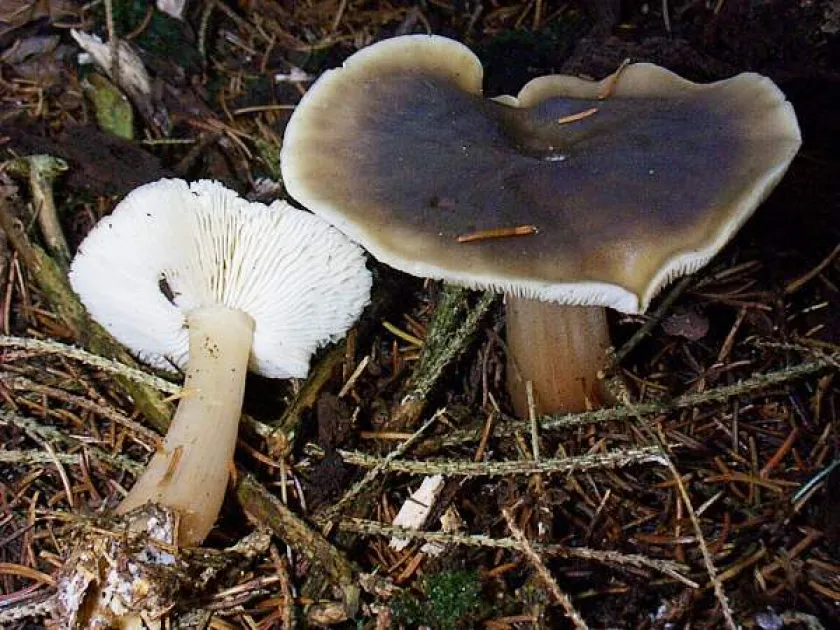
Description
Symptoms
The fruiting bodies of Rhodocollybia butyracea exhibit distinctive features that facilitate identification by mycologists and field observers.
The cap typically reaches a diameter of 3 to 10 centimeters and is often characterized by a reddish-brown color that fades toward the margins.
As the common name implies, the surface of the cap feels greasy or lubricated when moist, which is a key morphological trait.
The gills are white to cream-colored, crowded, and usually exhibit a distinctive attachment to the stipe, often appearing adnate or slightly decurrent.
The stipe is cartilaginous, tough in texture, and usually displays a swollen base covered with a fine white mycelial mat.
Pathogen
The Greasy toughshank, scientifically known as Rhodocollybia butyracea, is not a plant pathogen and causes no diseases in agricultural crops.
It is classified as a saprophytic fungus that plays a vital role in forest ecosystems by decomposing organic matter such as leaf litter and woody debris.
Unlike parasitic fungi, it does not invade the living tissues of plants, meaning it has no negative impact on the health of agricultural fields or gardens.
The mycelium of this fungus is strictly confined to decaying organic material in the soil, effectively cycling nutrients back into the ecosystem.
Therefore, it should not be considered an agricultural pest or a threat to vegetation in any managed crop environment.
Conditions for development
This fungus thrives in a wide range of habitats, including both coniferous and deciduous forests, where organic matter is plentiful.
It prefers acidic, well-drained soils and is frequently found growing in deep leaf litter or amidst mossy forest patches.
The fruiting cycle is most prominent from late summer through late autumn, often extending well into the frost season in many regions.
High humidity and consistent soil moisture levels are essential environmental conditions for the development of the fungal colonies.
It is rarely found in open agricultural fields, as it relies on the specific microclimate provided by forest canopy and accumulated humus layers.
Discussion
No discussions yet — be the first.