
Vetch anthracnose
Colletotrichum villosum
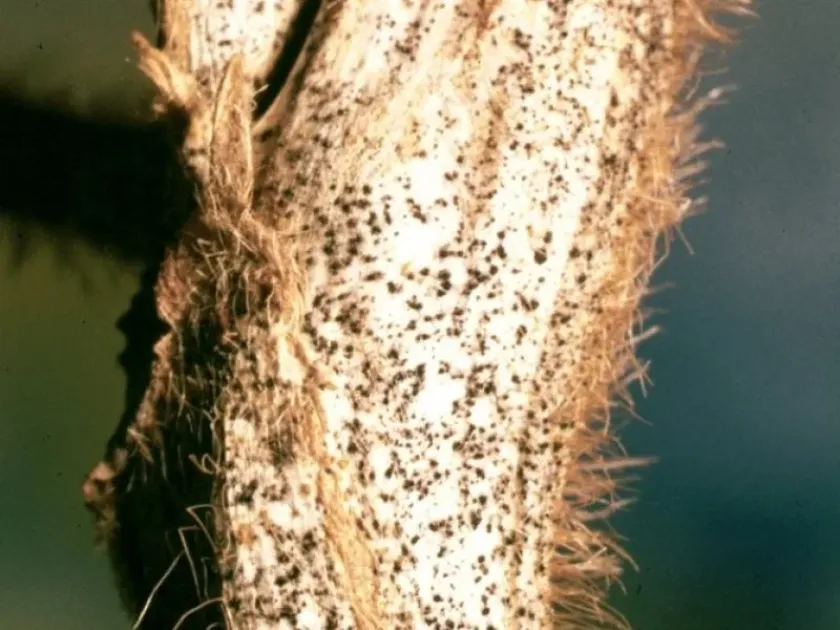
Description
Symptoms
Early symptoms appear as small, dark, sunken spots on stems, petioles, and leaves. These lesions gradually expand and often develop a distinct border, characteristic of the anthracnose infection.
In humid conditions, the centers of the lesions produce masses of conidia, visible as pink or cream-colored pustules. This sign is a critical diagnostic feature for field identification.
Severe infection causes leaves to yellow and wilt prematurely, leading to significant defoliation. Stems become brittle and weak, particularly at the site of lesions, which often results in lodging.
Pods can also be infected, showing circular dark spots that can penetrate deep into the tissue. This results in discolored, shriveled, and non-viable seeds that significantly lower grain quality.
Infection at the base of the stem can lead to root rot symptoms, causing the entire plant to wilt and die. This is often due to the obstruction of the xylem, which prevents water transport.
Pathogen
The causative agent of this disease is the fungus Colletotrichum villosum, which belongs to the class of mitosporic fungi. It is a specialized pathogen that primarily infects species of the Vicia genus, leading to severe tissue necrosis.
The pathogen survives in the soil on infected plant debris and can also persist as mycelium or spores on infected seeds. This makes contaminated seed material a primary vector for the disease's introduction into new fields.
The fungus's lifecycle involves the formation of numerous conidia, which are efficiently dispersed by wind, rain splashes, and insects. Upon landing on a suitable host, the spores germinate and form appressoria for penetration.
Once inside, the fungus colonizes the plant tissues, disrupting normal physiological processes. The secretion of enzymes by the fungus destroys cell walls, leading to the collapse of vascular bundles.
Colletotrichum villosum is highly adaptable to various environmental conditions. It can enter a state of dormancy within host remains, allowing it to survive unfavorable seasons until favorable growth conditions return.
Conditions for development
The development of the disease is heavily dependent on moisture. Prolonged rainfall, fog, or high relative humidity are essential for the germination and spread of fungal spores.
Temperatures between 20°C and 25°C are ideal for the rapid growth and reproduction of the pathogen. Under these conditions, the disease can spread throughout an entire field in a very short time.
High-density planting creates a microclimate with reduced airflow and increased humidity, which significantly promotes the development of anthracnose patches.
Poor crop rotation practices, where legumes are grown too frequently on the same plot, lead to a high accumulation of inoculum in the soil. This exposes new seedlings to early infection.
Poor plant health or excessive nitrogen fertilization can sometimes make vetch more susceptible to fungal attacks, as the lush, soft tissues are easier for the pathogen to penetrate.
Why it matters
Anthracnose significantly reduces the yield of both green forage and seed production. In severe cases of epiphytotics, farmers can lose more than 50% of the expected harvest.
The nutritional quality of the vetch is diminished, as infected tissues show a marked decrease in proteins and essential minerals, making the harvest less suitable for livestock consumption.
Lodging caused by the weakening of stems makes mechanized harvesting difficult. This leads to substantial field losses as the combine cannot effectively pick up the fallen crop.
The degradation of seed quality forces farmers to purchase new, healthy certified seeds, increasing the total cost of production for the next season.
Widespread occurrence of the fungus necessitates the use of fungicides, adding to the operational costs and potentially complicating the transition to sustainable farming practices.
Protection
Using healthy, pathogen-free seeds is the most effective preventative measure. Seed treatment with systemic fungicides is mandatory to reduce the initial disease pressure.
Maintaining a strict crop rotation schedule, avoiding legumes on the same field for at least 3-4 years, is crucial for breaking the disease cycle in the soil.
Deep plowing after harvest helps bury infected plant residues, which accelerates the decomposition of the pathogen and limits the survival of the fungus.
During the growing season, timely applications of systemic fungicides are recommended if environmental conditions favor disease development, especially before flowering.
Choosing resistant or tolerant vetch varieties is a long-term strategy for managing the disease. Additionally, managing plant density helps ensure better airflow and reduced humidity within the canopy.
Discussion
No discussions yet — be the first.