
Anthracnose
Colletotrichum verruculosum
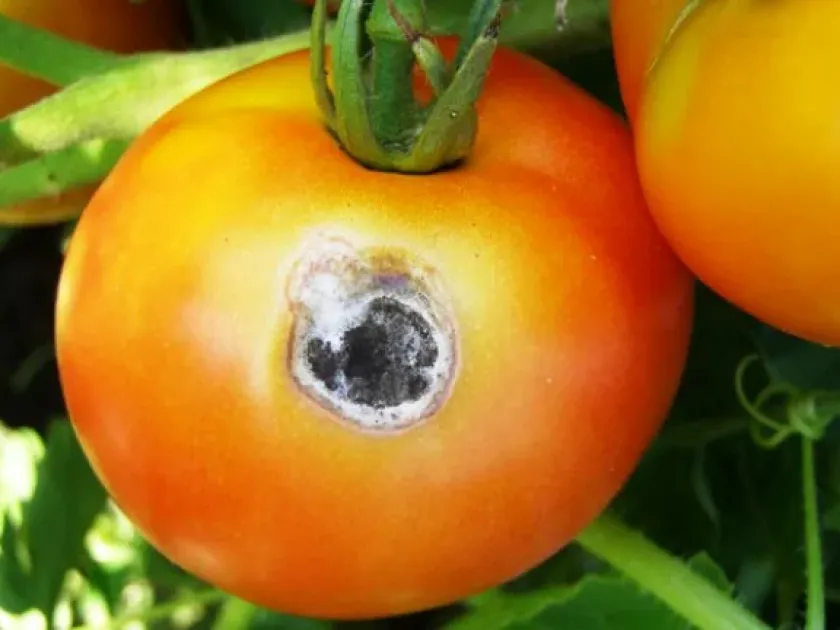
Description
Symptoms
The primary symptoms appear as small, dark, water-soaked spots on leaves, stems, and fruits, which eventually expand into necrotic lesions.
As lesions mature, their centers may collapse or become brittle, sometimes resulting in shot-hole effects on the leaves or deep craters on the fruit surfaces.
Under high-humidity conditions, visible pinkish or white slimy spore masses often appear on the surface of the lesions, indicating active sporulation.
Infected stems often show signs of girdling, which can weaken the plant and cause stems to break under the pressure of fruit weight or wind.
Severe infestations on seedlings or root systems lead to damping-off, stunted growth, and eventually the death of the entire plant.
Pathogen
The disease is caused by the fungus Colletotrichum verruculosum, an anamorphic fungus belonging to the Ascomycota division that targets various agricultural crops.
The pathogen survives in infected plant debris, soil, and seeds, maintaining an inoculum source that persists across multiple growing seasons.
The life cycle involves the formation of acervuli, which release numerous conidia that are spread efficiently through splashing rain, irrigation, and wind currents.
The mycelium colonizes plant tissues by penetrating through both natural openings and wounds, subsequently degrading cellular integrity to extract nutrients.
Under favorable environmental conditions, the fungus can complete multiple generations in a single season, leading to rapid disease development across the field.
Conditions for development
High relative humidity and frequent rainfall are the most critical factors driving the spread and infection cycles of Colletotrichum verruculosum.
Temperatures ranging from +20 to +28 degrees Celsius provide the perfect metabolic conditions for the rapid germination and growth of fungal spores.
Poor air circulation, caused by dense planting or crowded environments in greenhouses, creates a microclimate that facilitates sustained infection periods.
Soil-borne inoculum levels increase significantly if proper crop rotation is neglected, allowing the pathogen to thrive in the host crop environment.
Overhead irrigation acts as a transmission vector, splashing spores from infected lower leaves to healthy foliage and immature fruits.
Why it matters
Anthracnose is highly damaging to crop productivity, often causing substantial yield losses ranging from 30% to 50% in untreated fields.
Direct damage to fruits significantly decreases marketability and shelf life, leading to post-harvest losses due to rot and degradation.
By compromising the photosynthetic leaf surface area, the disease reduces the overall plant vigor and its ability to develop healthy, viable fruits.
Economic losses are compounded by the need for repeated fungicide applications and the potential rejection of infected produce by distributors.
Seed-borne infection results in reduced germination rates and weakened seedlings, which can collapse early in the growing season, necessitating replanting.
Protection
The most effective strategy involves the use of certified, disease-free seed and resistant cultivars, which mitigate the risk of initial infection.
Sanitation practices, including the deep plowing and removal of crop residues, are essential to destroy overwintering sites for the fungus.
Proper field management, such as maintaining optimal plant spacing and ensuring good airflow, helps lower the humidity around the foliage.
Chemical control involving timely application of fungicides is recommended when environmental conditions are conducive to disease outbreaks.
- Utilize drip irrigation to keep foliage dry.
- Practice crop rotation with non-host plants for 3+ years.
- Remove and destroy symptomatic plant tissues immediately.
- Apply preventive copper-based fungicides when necessary.
- Monitor field conditions during periods of high rainfall.
Discussion
No discussions yet — be the first.