
Soybean anthracnose
Colletotrichum temperatum
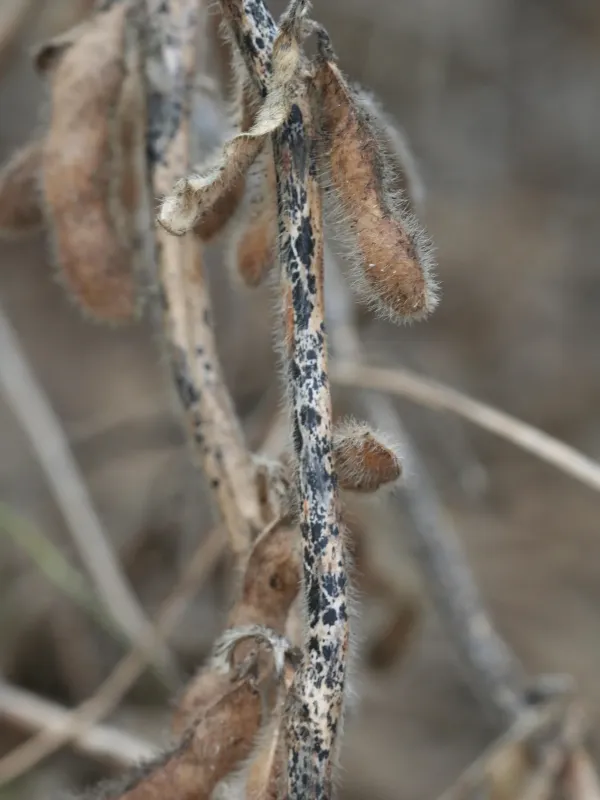
Description
Symptoms
Symptoms typically manifest as dark brown or black necrotic lesions on stems, leaf petioles, and pods. Under high humidity, small, black, cushion-like structures with tiny stiff bristles appear on these lesions, which are diagnostic for anthracnose.
When pods are infected, lesions appear sunken, and the pods often fail to fill properly, resulting in shriveled or absent seeds. Early-season infection can cause damping-off of seedlings, leading to reduced plant stands.
Internal symptoms include the discoloration of vascular tissues within the stem, which can be observed upon splitting the stalk. This internal decay interferes with the plant's ability to transport water and nutrients efficiently.
Premature leaf drop is a common late-season sign, often accompanied by the blight-like appearance of the upper canopy. The plant may die prematurely, resulting in reduced grain filling and poor quality of the final harvest.
- Sunken dark lesions on stems and pods.
- Small, bristle-covered fungal fruiting bodies.
- Premature yellowing and shedding of leaves.
- Seedling death and poor germination.
- Vascular browning inside the stems.
Pathogen
The disease is caused by the fungus Colletotrichum temperatum. It is a highly aggressive pathogen within the Ascomycota phylum that poses a significant threat to soybean production in various climatic zones across the globe.
The pathogen survives in crop residues, soil, and infected seeds. Its ability to persist in a saprophytic state allows it to maintain its presence in the field even in the absence of a primary host plant for short periods.
Infection begins when conidia, produced in specialized fruiting bodies called acervuli, are dispersed by rain splash or wind. The fungus penetrates plant tissue through stomata or wounds caused by insect damage, weather, or machinery.
The biological cycle of Colletotrichum temperatum is characterized by rapid sporulation, which facilitates the horizontal spread of the disease within the crop canopy. The fungus utilizes a range of enzymes to degrade plant cell walls, allowing for tissue colonization.
Understanding the life cycle of this pathogen is essential for effective disease forecasting and the strategic application of chemical control measures. Late-season development often leads to significant inoculum build-up in the soil.
Conditions for development
Anthracnose development is heavily favored by warm temperatures (20–28°C) and high relative humidity (above 85%). Frequent rainfall and extended leaf wetness periods are critical for spore germination and infection.
Dense crop canopies prevent air movement and keep the lower portions of the plant humid for longer periods, creating an ideal environment for the fungus. This makes the mid-to-late growth stages particularly vulnerable.
Plant stress, whether from drought, nutrient deficiency, or herbicide injury, significantly increases susceptibility to Colletotrichum temperatum. The fungus exploits weakened tissues to establish an infection rapidly.
Physical damage, such as from hail storms or tractor passes during cultivation, serves as a direct entry point for the pathogen. Once a field is wounded, the spread of the disease can become exponential.
Continuous cropping of soybeans provides a constant food source for the fungus, allowing the inoculum level to increase over time. This makes long-term rotation strategies essential for managing soil-borne pressure.
Why it matters
The primary impact of soybean anthracnose is a reduction in both yield and seed quality. Severely infected fields can experience yield losses ranging from 20% up to 50% under persistent favorable conditions.
Infected seeds are often smaller and have reduced viability, which creates a cycle of infection that carries over to the next season. The quality reduction in oil and protein content lowers the market value of the grain.
The disease weakens the structural integrity of the soybean stems, making them prone to lodging. This causes significant mechanical harvesting difficulties and leads to direct field losses where pods cannot be recovered by the combine.
The presence of the disease impairs the physiological function of the plant, reducing photosynthetic activity and hindering the development of pods. This forces the plant into early senescence, which stops grain filling prematurely.
Controlling an outbreak requires significant investment in fungicides, which increases the total cost of production. If untreated, the epidemic can lead to widespread plant death and total economic failure in extreme cases.
Protection
The most important control measure is the use of high-quality, disease-free seed. Treating seeds with effective systemic fungicides is essential to protect the vulnerable seedling stage from initial infection.
Implementing a diverse crop rotation cycle, including non-host crops, is vital to break the life cycle of the pathogen and reduce inoculum levels in the soil. Tillage practices that incorporate crop residues also help accelerate decomposition.
Foliar fungicides applied during the critical R3-R5 stages of soybean development (pod formation) can effectively suppress disease spread. Choosing products with different modes of action helps prevent resistance development.
Good agronomic practices, including proper weed management and optimizing plant density, improve canopy airflow and reduce humidity levels. This creates a less hospitable environment for fungal development.
Monitoring the field for signs of disease, especially during periods of wet and warm weather, allows for timely intervention. Scouting should focus on the lower stems of the plants, where the first symptoms usually appear.
Discussion
No discussions yet — be the first.