
Soybean anthracnose
Colletotrichum sojae
Description
Symptoms
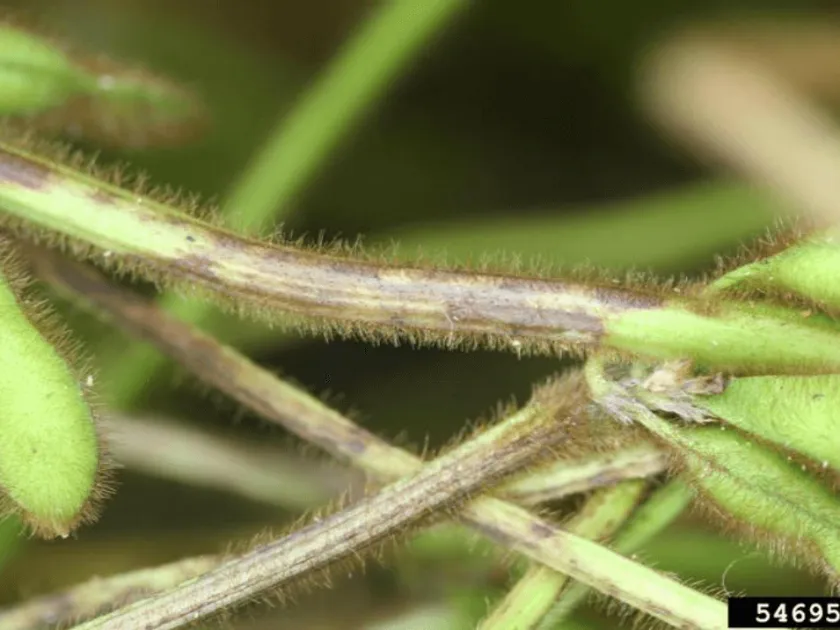
Symptoms usually appear as dark, irregular brown lesions on stems, petioles, and leaves. Under humid conditions, small black fungal fruiting bodies (acervuli) become visible on these lesions.
Pod infection is common and leads to pods becoming shriveled, deformed, or dropping prematurely. Seeds inside infected pods often show symptoms of decay, brown discoloration, or light-colored fungal growth.
Stem lesions can eventually girdle the plant, causing the upper canopy to wilt and die. Infected plants often exhibit stunted growth and show signs of premature senescence compared to healthy neighboring plants.
In the field, infected areas often appear as patches of necrotic plants. Heavy rain events during the pod-filling stage often trigger the most severe manifestation of the disease symptoms.
- Dark brown lesions on stems and petioles.
- Visible black fruiting bodies on necrotic tissue.
- Shriveled, malformed pods and discolored seeds.
- Premature leaf yellowing and defoliation.
- Wilt and top-dieback of soybean stems.
Pathogen
The causal agent of the disease is the fungus Colletotrichum sojae (often synonymous with Colletotrichum truncatum). This fungal pathogen is known to cause severe damage to soybeans in various agricultural regions worldwide.
The pathogen survives as mycelium or spores (conidia) in infected crop debris, soil, and contaminated seeds. Seeds serve as a primary source of long-distance dissemination of the infection.
The fungus produces structures called acervuli, which rupture the host plant's epidermis to release masses of spores. These spores are spread by wind-blown rain, splashes, and insect activity within the field.
Colletotrichum sojae acts as a hemibiotroph, initially invading plant cells and then transitioning to necrotrophic growth, which results in the characteristic lesions and decay of plant tissues.
Its life cycle is highly dependent on environmental moisture levels, allowing the pathogen to remain dormant until favorable conditions arise for active infection and colonization.
Conditions for development
High relative humidity and frequent rainfall are the most critical factors favoring the development and spread of soybean anthracnose. The optimal temperature range for the pathogen is between 20°C and 28°C.
Dense canopies that reduce airflow and retain leaf wetness for extended periods create a perfect microclimate for Colletotrichum sojae to infect soybean tissues effectively.
Continuous cropping of soybeans significantly increases the inoculum density in the soil. Crop rotation is essential, as the fungus remains viable on surface debris for several growing seasons.
Plant stress due to nutrient deficiency or drought can weaken soybean defenses, making the crop more susceptible to rapid fungal colonization once environmental moisture returns.
Insect feeding, such as that by stink bugs, can cause mechanical wounds that serve as entry points for the fungus, significantly increasing the incidence of pod-stage infection.
Why it matters
The disease causes substantial economic losses by reducing seed quality and quantity. Yield losses can reach up to 30% in highly susceptible varieties under conducive conditions.
Seed infection not only reduces germination rates but also introduces the pathogen into new fields. This complicates the production of high-quality, disease-free seed stock for future planting.
The quality of grain is compromised due to smaller seed size and reduced oil content. Contaminated lots may suffer from price discounts or rejection at grain elevators due to visual decay signs.
Premature plant death and lodging caused by stem weakening result in harvest difficulties. Farmers often face significant yield losses during combine operations because damaged pods shatter easily.
Managing the impact of the disease requires long-term planning, as persistent inoculum in soil necessitates multi-year rotation strategies to maintain economic viability of soybean production.
Protection
The primary control measure is the use of high-quality, disease-free certified seeds. Seed treatment with broad-spectrum systemic fungicides is critical to protect early seedling emergence from soil-borne inoculum.
Crop rotation with non-host crops (e.g., corn or wheat) for at least three years is highly recommended to allow the breakdown of infected crop debris, which acts as the main disease reservoir.
Cultural practices such as deep tillage help bury infected soybean residue, accelerating its decomposition and reducing the survival chances of the fungal pathogen in the field.
Fungicide applications during the vegetative and reproductive stages, particularly before pod development, are effective in minimizing disease progression during high-pressure seasons.
Integrated pest management, specifically targeting insects that damage pods, is vital to prevent secondary infections. Maintaining optimal soil fertility levels further strengthens plant natural defense mechanisms.
Discussion
No discussions yet — be the first.