
Soybean Anthracnose
Colletotrichum rhombiforme
Description
Symptoms
Symptoms often appear as irregular, dark brown lesions on leaves, petioles, and stems. These lesions may expand, eventually covering significant portions of the plant tissue.
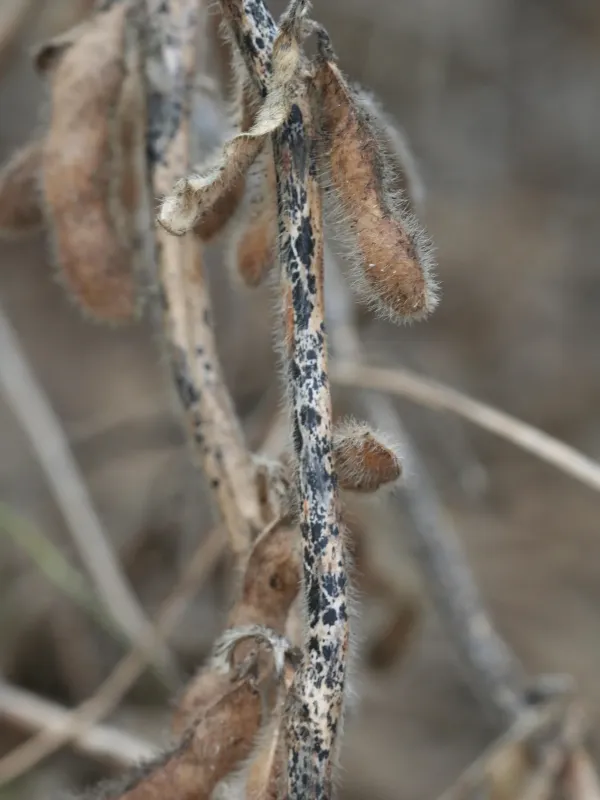
On stems, the fungus produces elongated, necrotic spots. When high humidity is present, these spots may develop small, black, cushion-like structures known as acervuli, which produce masses of spores.
Infected leaves usually turn yellow, curl up, and drop prematurely. This severe defoliation can occur long before the natural senescence of the soybean crop.
Pods infected by the fungus exhibit darkened, sunken lesions. If the infection reaches the seeds, they may become shriveled, discolored, or covered with fungal growth, leading to poor seed quality.
Seedling blight is another common symptom, where the infection kills the young plants shortly after germination, leading to patchy stands in the field.
Pathogen
Soybean anthracnose is caused by the fungal pathogen Colletotrichum rhombiforme. It is a member of the imperfect fungi group that can survive in soil and on infested plant debris for multiple growing seasons.
The pathogen persists as mycelium and sclerotia within crop residues. These structures allow the fungus to remain dormant during unfavorable environmental conditions and initiate new infections when hosts appear.
Infection cycles are driven by conidia, which serve as the primary inoculum. These spores are spread through rain splashes and agricultural machinery, facilitating the rapid development of the disease across the field.
The fungus is both a parasite and a saprophyte. This versatility allows it to thrive on living soybean tissue as well as decaying organic matter, making it a persistent threat in agricultural systems.
Environmental stress and the physiological state of the soybean plant heavily influence the ability of Colletotrichum rhombiforme to establish a successful infection.
Conditions for development
The development of soybean anthracnose is highly dependent on high moisture levels. Relative humidity above 85% and frequent rainfall are essential for the rapid germination of conidia.
Optimal temperatures for the growth of the pathogen range from 20°C to 25°C. Prolonged warm and humid periods during the reproductive stages of soybean development favor epidemic outbreaks.
Canopy density plays a crucial role in disease spread. Thick planting patterns trap moisture within the lower canopy, creating a microclimate that accelerates fungal growth.
Weakened plants are significantly more susceptible to infection. Factors such as nutrient imbalances or damage from insect feeding can facilitate the entry of the pathogen into plant tissues.
Weather events that cause physical damage to the plant surface also create ideal entry points for the fungus to penetrate the stems and leaves.
Why it matters
Anthracnose causes severe yield losses by reducing the plant's ability to photosynthesize effectively due to premature leaf drop and stem necrosis.
The disease significantly impacts the weight and quality of the seeds. Shriveled and discolored seeds are often rejected by buyers and have very low market value.
Increased field losses occur when the infection causes pods to shatter, leading to seed scatter before the harvest is completed.
The reduction in seedling vigor caused by infected seeds can necessitate field replanting, significantly increasing production costs for farmers.
Because the pathogen can persist on seeds, it limits the export potential and seed trade of infested soybean lots, presenting international phytosanitary challenges.
Protection
Using certified, fungicide-treated seeds is the most effective initial defense against anthracnose. Seed treatments protect the young plants during the most vulnerable germination stage.
Implementing a rigorous crop rotation program—avoiding soybeans for at least 3 years—helps to reduce the population of the pathogen in the soil by allowing time for host residues to decay.
Effective residue management is vital. Tilling under or deep plowing infected crop debris can significantly decrease the amount of primary inoculum available for the next season.
Foliar application of fungicides during the R1 to R3 growth stages can effectively suppress the spread of the disease if environmental conditions remain favorable for the fungus.
Selecting and planting resistant soybean varieties provides the most sustainable and cost-effective management strategy, reducing the reliance on chemical interventions.
Discussion
No discussions yet — be the first.