
Anthracnose
Colletotrichum phyllanthi
Description
Symptoms
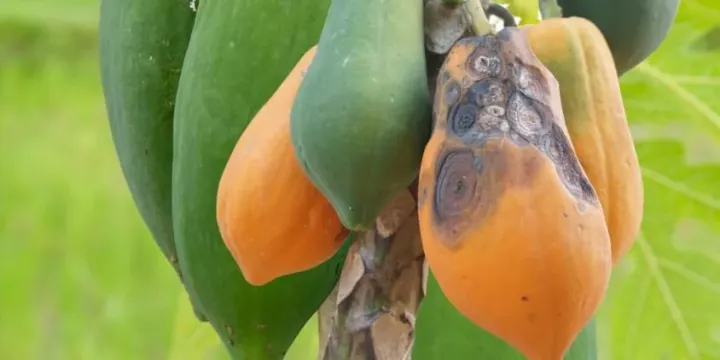
Initial symptoms appear as small, irregular, or circular spots on leaves, stems, and fruits. As the disease progresses, the centers of these spots turn gray or brown, often surrounded by a dark margin due to tissue necrosis.
Under high-humidity conditions, visible pinkish, orange, or brown spore masses form on the surface of the lesions. These represent accumulations of conidia, which are readily available for spread upon contact with moisture.
On stems and shoots, the infection manifests as sunken, elongated cankers. These lesions disrupt the plant's vascular system, leading to wilting, branch dieback, and potentially the death of the entire plant if left untreated.
Fruits are often severely affected, developing deep, rotting lesions. The skin of the fruit may crack in the affected area, exposing the fungal mycelium and making the produce completely unmarketable and susceptible to further rot.
- Yellowing and premature shedding of foliage.
- Deformation of developing fruits and tender shoots.
- Presence of gelatinous spore masses in necrotic lesions.
- Tip dieback and general plant decline.
- Significant loss in crop quality and market value.
Pathogen
The causal agent of this disease is the fungus Colletotrichum phyllanthi, which belongs to the Colletotrichum genus. This pathogen is highly adaptable and can survive for long periods in plant debris, soil, and seeds as mycelium or sclerotia.
The life cycle of the fungus involves the production of conidia in fruiting bodies called acervuli. These spores are easily disseminated by rain splashes, wind, or insects onto healthy plant parts, facilitating the rapid spread of the disease within the crop.
The fungus infects a wide range of hosts, including fruit trees, berry bushes, ornamental plants, and vegetable crops. It is particularly prevalent in species of Phyllanthus, coffee plants, and various tropical botanical species.
The pathogen thrives in high humidity and moderate to warm temperatures. Once the spores germinate and penetrate the epidermis, the fungus spreads intercellularly, releasing enzymes that destroy parenchyma tissue and cause severe necrosis.
Genetic variability among Colletotrichum strains makes disease management challenging. Continuous evolution allows the fungus to overcome natural plant defenses, requiring constant monitoring by agronomists to stay ahead of outbreaks.
Conditions for development
High relative humidity (above 80-85%) is the primary driver for disease development. Prolonged surface wetness on leaves is essential for spore germination and successful infection of plant tissues.
Optimal temperatures for the activity of C. phyllanthi range between 22°C and 28°C. Under these conditions, the incubation period of the fungus is minimized, which can lead to explosive disease development in a short time.
Crowded planting and poor field ventilation create a humid microclimate that favors fungal growth. Stagnant air allows moisture to persist on leaf surfaces for longer periods, providing ideal conditions for pathogen infection.
Infected seeds and plant debris serve as the primary inoculum. Using contaminated planting material often results in early infection of seedlings, which can lead to significant crop failure from the very beginning of the season.
Mechanical injuries caused by insects, hail, or improper pruning serve as entry points for the fungus. Through these wounds, the pathogen can penetrate tissues much more efficiently than through intact cuticles.
Why it matters
Anthracnose causes major economic losses, often destroying a significant portion of the harvest. Infected fruits rot rapidly, making them unsuitable for both consumption and long-term storage or transport.
The disease reduces the photosynthetic capacity of the plant by damaging the foliage. As the plant loses active leaf area, it becomes weakened, resulting in stunted growth and a reduced ability to withstand environmental stress.
In nurseries, anthracnose can be devastating, leading to the total loss of seedlings. By attacking young stems, the fungus disrupts the transport of water and nutrients, which is fatal for developing plants.
Financial losses also stem from the high cost of intensive fungicide applications required to keep the disease under control. Furthermore, infected produce often fails to meet quality standards, leading to rejection by buyers.
If not managed correctly, the disease becomes chronic. The pathogen persists in the soil and greenhouse structures, creating a perpetual source of infection that requires long-term management and land sanitation efforts.
Protection
Strict sanitation is the cornerstone of anthracnose control. It is essential to promptly remove and dispose of all infected plant parts to prevent the dispersal of spores throughout the field or greenhouse.
The use of protective and systemic fungicides, such as copper-based formulations, triazoles, or strobilurins, is crucial upon the detection of initial symptoms. Preventive applications should be scheduled during high-risk periods, such as rainy seasons.
Improving air circulation through proper plant spacing and regular pruning helps reduce humidity around the canopy. Ensuring the foliage dries quickly after rain significantly lowers the risk of infection.
Sourcing certified disease-free seeds and performing pre-sowing seed treatments are fundamental preventative measures that help stop the introduction of the pathogen into the growing area.
Drip irrigation is highly recommended to minimize leaf wetness. By delivering water directly to the root zone, you prevent the overhead moisture accumulation that is frequently exploited by C. phyllanthi.
Discussion
No discussions yet — be the first.