
Orchid Anthracnose
Colletotrichum orchidearum
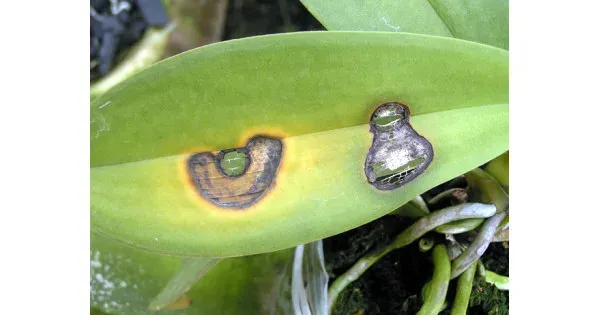
Description
Symptoms
The hallmark symptom of anthracnose is the development of circular or oval spots that are black, dark brown, or tan. The centers of these spots often become depressed and lighter in color as the tissue dies.
Over time, concentric rings appear within the lesions, which are actually masses of fungal spores. In high humidity, these spots may become covered in a slimy or powdery residue of pink or yellowish spores.
Affected leaves eventually lose turgidity, turn yellow, and drop. If the pathogen reaches the pseudobulbs, it causes deep, sunken lesions that can lead to the total collapse and death of the entire plant structure.
Early-stage infections may resemble heat stress or sunscald. However, unlike physical damage, anthracnose lesions are progressive, continuously enlarging and eventually covering the entire leaf surface if left untreated.
Infection of the flower spikes is particularly detrimental; it prevents buds from opening and causes premature bud drop, which destroys the aesthetic value and flowering potential of the orchid.
Pathogen
The causal agent of this disease is the pathogenic fungus Colletotrichum orchidearum, a member of the deuteromycetes class. It invades orchid tissues primarily through stomata or small wounds on the epidermis.
The fungus can persist in plant debris and on the surface of the potting medium for extended periods. In greenhouses and home environments, spores are primarily spread via water splashes, insects, and contaminated garden tools.
This disease commonly affects various epiphytic orchids, including popular genera such as Phalaenopsis, Cattleya, and Dendrobium. The pathogen attacks leaves, pseudobulbs, and inflorescences, severely impacting plant physiology.
The fungal biology involves rapid germination of conidia upon contact with free moisture. Once inside the host, the mycelium spreads intercellularly, destroying cellular structures and releasing toxins that trigger necrosis.
Tissue colonization occurs quickly under warm and humid conditions. After the incubation period, the fungus begins producing visible fruiting bodies on the surface of the lesions, facilitating further spread.
Conditions for development
The most critical factor for disease development is high relative humidity, typically exceeding 70-80%, combined with stagnant air or poor ventilation. This environment is perfect for spore germination.
Improper watering practices, especially overhead watering or misting in the evening, leave water sitting in leaf axils or on leaf blades, which serves as a primary vector for infection.
The temperature range between +22 and +28 degrees Celsius (72-82°F) is optimal for Colletotrichum orchidearum activity. Within this range, the fungus can colonize host tissues very aggressively.
Plants weakened by poor lighting, nutrient imbalances, or cold stress are significantly more susceptible to infection. Stress factors compromise the natural immune barriers of the orchid.
Crowded collections are high-risk environments. When infected plants are positioned close to healthy ones, spores are easily transmitted through humidity, accidental splashes during watering, or shared tools.
Why it matters
Orchid anthracnose is a destructive disease capable of wiping out a collection in a short period. It disrupts the photosynthetic capacity and nutrient uptake of the plant.
If the infection reaches the crown or the root zone, the plant's ability to regenerate or produce new growth is permanently lost, leading to certain death of the orchid.
The presence of anthracnose creates opportunistic pathways for secondary infections, such as bacterial soft rots, which often thrive in the damaged, necrotic tissues created by the fungus.
Economic losses include the destruction of valuable specimens and the high cost of specialized fungicides required to manage the disease and sanitize the environment.
The disease tends to become chronic. Without professional intervention, the infected plant remains a persistent source of inoculum, endangering all other plants in the greenhouse or home.
Protection
The first step in control is the immediate isolation of infected plants. Carefully trim away all affected tissues, ensuring you remove an additional 1-2 cm of healthy tissue to clear the mycelium.
Tools used for pruning must be sterilized thoroughly with alcohol or heat between each cut to prevent the mechanical transfer of fungal spores from the infected zone to healthy parts.
The use of systemic fungicides, specifically those containing triazoles (like difenoconazole or tebuconazole) or copper-based compounds, is effective in stopping fungal growth within the plant tissues.
- Stop overhead misting or watering.
- Improve air circulation with fans.
- Use fungicides as a preventative measure.
- Seal cuts with antiseptic pastes.
- Monitor substrate for moisture excess.
Preventative care involves strengthening the orchid's overall health, avoiding excessive nitrogen fertilization, and conducting weekly inspections of the leaf surface to identify early signs of spotting.
Discussion
No discussions yet — be the first.