
Ginger anthracnose
Colletotrichum okinawense
Description
Symptoms
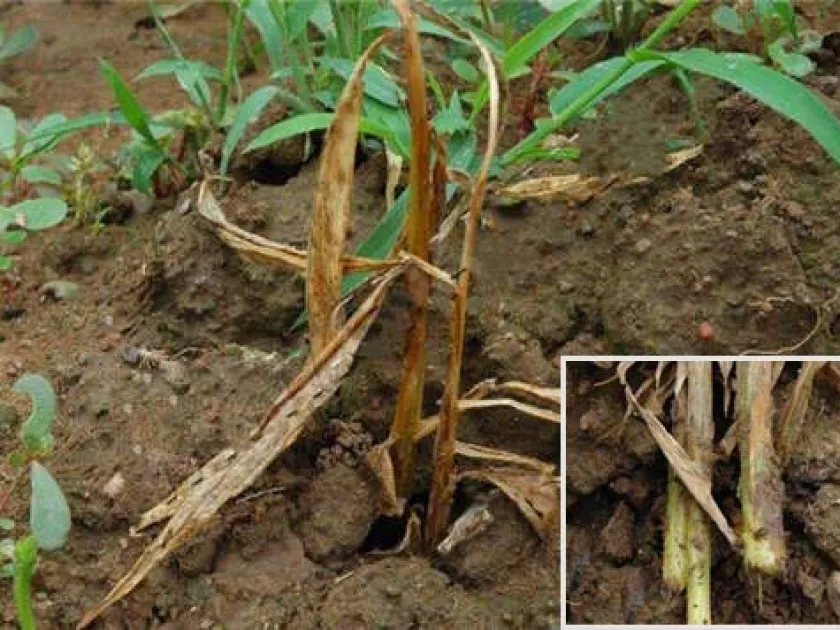
The first symptoms of ginger anthracnose appear on the leaves as small, water-soaked spots that gradually turn light brown or yellowish. As the infection progresses, these lesions expand, often forming irregular or circular patterns, typically surrounded by a darker margin that marks the infected tissue.
In the center of these necrotic spots, tiny black structures called acervuli develop; these are the fungal fruiting bodies where spores are produced. Under conditions of high humidity, a slimy, salmon-pink or reddish mass of conidia may become visible on the lesion surface, which is a diagnostic sign of the pathogen.
In severe cases, the infection spreads rapidly to petioles and stems, causing them to wilt and wither. Necrosis disrupts the integrity of the plant tissues, hindering normal photosynthesis and restricting the transportation of essential nutrients from the leaves down to the rhizomes.
Affected leaves often turn yellow and fall prematurely, while stems become brittle and break under minor mechanical pressure. This loss of canopy area significantly impacts the plant's overall vitality, leading to stunted growth and poor rhizome development, which drastically reduces the yield.
The infection can also affect the harvested rhizomes if they come into contact with spores from diseased plant debris. Sunken, dark lesions appear on the skin of the ginger rhizomes, eventually leading to rot and rendering the product unsuitable for marketing or as propagation material.
Pathogen
The causal agent of this disease is the microscopic fungus Colletotrichum okinawense, which belongs to the Ascomycota phylum. This pathogen is highly specialized in infecting ginger and related species, exhibiting aggressive growth and rapid spread in warm and humid climates.
The fungus acts as a parasite, entering the host plant through natural openings such as stomata or via physical wounds on the leaf surface. Once inside, it secretes cell wall-degrading enzymes that break down plant tissues, allowing the mycelium to colonize the area and expand further.
Reproduction occurs asexually through the production of conidia within acervuli. These spores are highly mobile and are easily disseminated by splashing rain, wind gusts, or through contact with contaminated agricultural equipment, enabling the infection to move across the entire field very quickly.
Colletotrichum okinawense is a robust pathogen capable of surviving in the soil or on buried plant debris for extended periods. Its ability to persist in the environment makes it a persistent threat, as it remains dormant until favorable environmental conditions trigger a new wave of infections.
The fungus shows a significant degree of genetic variability, which poses challenges for breeding resistant ginger varieties. Furthermore, it can adapt to chemical fungicides, requiring farmers to rotate active ingredients regularly to prevent the development of resistant fungal populations.
Conditions for development
The primary factor promoting the development of ginger anthracnose is high humidity, typically above 80%. Prolonged periods of rainfall, heavy dew, or foggy conditions create the necessary environment for spores to germinate and penetrate the host tissue successfully.
The optimal temperature range for the pathogen's growth is between 22°C and 28°C. Under these conditions, the incubation period is significantly shortened, allowing the disease to reach epidemic proportions within just a few weeks if left unmanaged.
Planting density is a crucial management factor; crowded crops suffer from poor air circulation, which prevents leaves from drying quickly after rain. Persistent moisture on leaf surfaces is essential for the fungus to establish itself and initiate the infection process.
Inappropriate irrigation, especially overhead sprinkling in the late afternoon, creates an ideal setup for anthracnose outbreaks. Water droplets that remain on the leaves throughout the night provide the ideal substrate for conidial germination and host tissue penetration.
Plants weakened by poor nutrition or excessive nitrogen fertilization are significantly more susceptible to Colletotrichum okinawense. High nitrogen levels stimulate the growth of soft, succulent tissue that lacks sufficient structural defense, making it easier for the fungal hyphae to penetrate.
Why it matters
The economic impact of ginger anthracnose is substantial, primarily due to the reduction in both rhizome weight and market quality. Because the foliage is compromised, the plant cannot synthesize enough carbohydrates, resulting in undersized rhizomes that fail to meet commercial standards.
The aesthetic value of the ginger is severely diminished by necrotic spots and wilting, making it unsellable for the fresh market. This leads to massive financial losses for growers, who may be forced to discard a large portion of their harvest if quality control standards are strict.
The disease poses a serious risk to seed stocks, as the pathogen is easily carried over in infected rhizomes. Using infected rhizomes for propagation guarantees the introduction of the fungus into the field during the following growing season, leading to early-onset disease.
During post-harvest storage, the fungus can spread rapidly from one rhizome to another, leading to severe rot during transit or in storage warehouses. These losses can be catastrophic, effectively destroying the profit margins of an entire season's production.
Severe infestations can lead to complete crop failure, especially in climates where the weather remains continuously favorable for the fungus. Growers often face the prospect of abandoning fields entirely, adding to the total loss of labor, input costs, and potential revenue.
Protection
A comprehensive control strategy must prioritize the use of certified, disease-free planting material. Before planting, it is highly recommended to treat rhizomes with systemic fungicides that are specifically effective against the Colletotrichum genus to minimize initial inoculum.
Cultural practices are essential; these include removing and destroying all infected plant parts and crop residues to lower the local inoculum pressure. Crop rotation is also a highly effective method to break the life cycle of the pathogen within the soil.
Switching from overhead irrigation to drip irrigation is a vital step in keeping foliage dry, which significantly reduces the opportunities for spore germination. Balancing soil fertility with appropriate levels of potassium and phosphorus can also help improve the plant's structural defense mechanisms.
For chemical control, a preventive fungicide program should be implemented, especially during periods of high humidity and rainfall. Copper-based compounds, triazoles, or strobilurins are effective in stopping fungal growth and preventing the mass production of new spores.
Regular field scouting is critical to detect the disease at the onset of symptoms. Early detection allows for localized treatments, which significantly reduces the need for widespread pesticide application and mitigates the environmental impact of chemical usage on the farm.
Discussion
No discussions yet — be the first.