
Banana anthracnose
Colletotrichum musicola
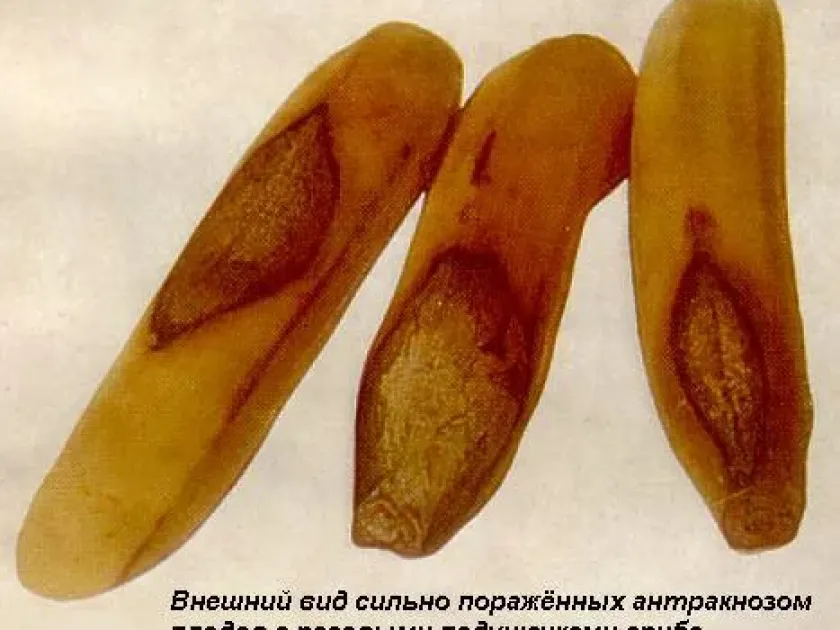
Description
Symptoms
The initial visual signs of anthracnose appear as small, circular, brown to black lesions on the banana peel. As the disease progresses, these spots expand in size and eventually coalesce, covering larger areas of the fruit surface.
Under high humidity conditions, a diagnostic sign of the infection is the development of pink or orange spore masses in the center of the necrotic lesions. These masses consist of thousands of conidia, indicating the active reproductive phase of the fungus.
The pulp beneath the infected skin softens and begins to decay, often accompanied by darkening and an unpleasant odor. This is often the result of both the primary fungal infection and secondary colonization by opportunistic bacteria, rendering the fruit inedible.
Besides the fruit, the disease can also manifest on leaves and peduncles as elongated, dark-colored necrotic patches with a chlorotic halo. This foliar damage reduces the plant's overall photosynthetic capacity, impacting the development of the banana bunches.
The disease is most notorious during the post-harvest ripening phase. Bananas that appeared healthy during packing can rapidly develop severe lesions within a few days in ripening rooms, leading to significant quality degradation before the fruit reaches the consumer.
Pathogen
The causal agent of banana anthracnose is the pathogenic fungus Colletotrichum musae. This fungus belongs to the Ascomycota phylum and is a highly specialized parasite that affects banana plants, particularly targeting the fruit during its maturation stage.
A key biological feature of this pathogen is its ability to establish latent infections. The fungus can colonize host tissues early in the fruit development stage without showing symptoms, remaining dormant until conditions become favorable for the fungus and the fruit ripens.
Conidia (spores) of the pathogen are disseminated through water splashes, such as rain or irrigation, as well as wind currents. These spores are capable of surviving on crop residues, fallen leaves, and soil, serving as a continuous primary source of inoculum in banana plantations.
The infection process involves the formation of specialized structures called appressoria. These structures allow the fungal hyphae to penetrate the protective cuticle of the banana peel, overcoming the physical defenses of the plant tissue to initiate colonization.
Due to the high genetic diversity of Colletotrichum musae, the pathogen shows significant adaptability. This plasticity allows it to bypass some resistant mechanisms of certain banana cultivars, necessitating ongoing monitoring and adaptive disease management strategies.
Conditions for development
High relative humidity, typically exceeding 85–90%, is the most critical environmental factor promoting the development of banana anthracnose. Moisture on the fruit surface is essential for the germination of fungal spores and their subsequent penetration into the tissue.
The optimum temperature for Colletotrichum musae growth ranges from +24°C to +28°C. In these tropical conditions, the pathogen reproduces rapidly, which can lead to widespread outbreaks in plantations, especially during prolonged rainy seasons.
Mechanical injuries to the fruit peel, caused by insects, birds, or handling during harvesting, act as entry points for the infection. Wounded tissues are colonized much faster than intact surfaces, making pest control an essential part of disease prevention.
High planting density, which reduces airflow within the plantation, creates a microclimate that keeps foliage and fruits moist for longer periods. This prolonged wetness is highly conducive to the proliferation of the fungal pathogen.
Inadequate storage conditions, such as temperature fluctuations or poor ventilation in transit containers, trigger the transition of the pathogen from a latent state to an active one, often resulting in significant losses during logistics.
Why it matters
Anthracnose is recognized as one of the most economically damaging post-harvest diseases in the global banana industry. In severe cases, losses can reach up to 50% of the total harvest if proper control measures are not implemented.
The disease severely impacts the commercial value of bananas, as symptomatic fruits cannot be sold. This leads to massive financial losses for growers and exporters and significantly reduces the overall profitability of the supply chain.
The management of anthracnose necessitates regular applications of fungicides, which adds to the cost of production. This represents a significant financial burden for smallholder farmers and drives the need for more sustainable and cost-effective alternatives.
Persistent disease pressure weakens the plant's vigor, making it more susceptible to other pathogens and environmental stresses. This cumulative effect leads to lower plantation productivity and shortened economic lifespans of banana mats.
The difficulty of detecting latent infections leads to contaminated shipments reaching retail markets. This causes substantial reputation damage for distributors and retailers, alongside the immediate financial hit of disposing of wasted produce.
Protection
Effective management begins with strict sanitation practices, including the regular removal of necrotic leaves and decaying plant materials from the plantation. Minimizing the primary inoculum source is a fundamental step in integrated disease management.
Transitioning from overhead irrigation to drip irrigation is a vital agricultural practice. By keeping the foliage and fruit dry, the risk of spore germination and infection is significantly reduced throughout the growing cycle.
Fungicide treatments, applied during both the vegetative stage and pre-harvest or post-harvest processing, are the industry standard. These applications protect the fruit surface from infection and prevent latent spores from developing into lesions.
Proactive pest control is crucial to prevent physical damage to the fruit peel. By keeping insect populations under control, growers can maintain the integrity of the banana skin, which serves as a natural barrier against fungal ingress.
During transport and storage, maintaining a stable temperature between +13°C and +14°C is essential to suppress the growth of the pathogen. Proper airflow management in containers helps maintain fruit quality and minimizes the risk of post-harvest rot.
Discussion
No discussions yet — be the first.