
Anthracnose
Colletotrichum magnum
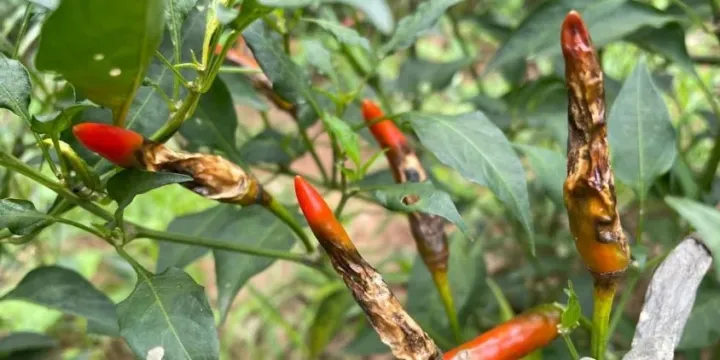
Description
Symptoms
The primary sign of the disease is the appearance of sunken dark or brown spots on leaves, stems, and fruits. Over time, these spots increase in size and become necrotic, often with a distinct border.
In high humidity conditions, numerous small pads (fruiting bodies of the fungus) form on the surface of the necrotic spots, which can be pink, beige, or black.
As the pathogen develops, the tissues in the affected areas begin to crack, leading to the appearance of deep ulcers. On fruits, this is often accompanied by rotting that spreads deep into the flesh.
Affected shoots exhibit deformation, chlorosis, premature leaf drop, and drying of the tops. Plants lag in growth, lose turgor, and look stunted even with sufficient watering.
- Appearance of dark spots with borders.
- Presence of pinkish fungal spores.
- Cracking of tissues and formation of ulcers.
- Deformation of shoots and fruits.
- Premature leaf fall.
Pathogen
The disease is caused by the imperfect fungus Colletotrichum magnum (teleomorph stage — Glomerella magna). It belongs to the order Melanconiales and can persist for long periods in the soil on plant debris, in seeds, or in weed seeds.
The fungus infects a wide range of crops, including cucurbits, fruit trees, berry bushes, and vegetables. The infection spreads actively via spores (conidia) through rain splashes, dew, irrigation water, and is also carried by insects and gardening tools.
The biological development cycle of the fungus is closely linked to the presence of moisture on the plant surface. Spores germinate upon contact with water droplets, forming infection hyphae that penetrate tissues through stomata or mechanical damage to the epidermis.
The pathogen has a high metabolic rate and can quickly colonize host tissues by secreting enzymes that destroy plant cell walls. This makes it extremely aggressive under conditions favorable for its development.
Experts note that Colletotrichum magnum often acts as a secondary infection, weakening the overall state of the plant organism, which complicates the identification of the primary lesion in the early stages.
Conditions for development
The development of anthracnose depends directly on air humidity; a level between 85% and 100% is required for spore germination. Heavy precipitation, dense fog, and prolonged rains are critical factors for the spread of the disease.
The temperature range for active growth of the fungus is between +22 and +28 degrees Celsius. However, spores can survive short periods of lower temperatures and fluctuations.
Dense, poorly ventilated plantings create a microclimate with excessive humidity, which contributes to the rapid development of the disease. Lack of ventilation within the tree canopy or between plants in a garden bed provokes outbreaks.
Poor agricultural practices, including excessive nitrogen fertilization while lacking potassium and phosphorus, make plant tissues more susceptible to the penetration of pathogen spores.
The infection can be activated after mechanical damage caused by hail, pruning, or careless weeding, which serves as an entry point for the fungus.
Why it matters
The main danger of anthracnose is the rapid loss of the marketability of fruits and berries. Affected produce becomes unsuitable for sale and long-term storage, and during transportation, the rot can spread to healthy specimens.
Severe infection of the foliage leads to a reduction in photosynthetic activity, which is directly proportional to the decrease in crop yield and quality, as well as the sugar content of the fruits.
When stems and conductive vessels are affected, metabolism is disrupted, which can lead to the death of individual branches or the entire plant, especially if the infection occurs early in the growing season.
Anthracnose reduces the overall winter hardiness of perennial crops, as weakened plants do not have enough time to accumulate sufficient plastic substances before the onset of frost.
Massive spread of the infection requires high costs for protection measures, which significantly increases the cost of agricultural products.
Protection
The main preventive method is the use of resistant varieties and hybrids, as well as crop rotation, returning crops to the same location no sooner than after 3-4 years.
It is important to timely remove and destroy plant residues where the mycelium persists. Deep autumn plowing of the soil contributes to suppressing pathogen activity.
Upon detection of disease signs, it is necessary to conduct treatments with contact and systemic fungicides. Copper-based preparations show good efficiency as a preventive agent.
Optimization of planting density and regular sanitary pruning improve air circulation, reducing humidity in the root zone and within the plant canopy.
Balanced mineral nutrition, with an emphasis on phosphorus and potassium fertilizers, helps strengthen cell walls and increases the plant's natural immunity to fungal infections.
Discussion
No discussions yet — be the first.