
Lime anthracnose
Colletotrichum limetticola
Description
Symptoms
Initial symptoms are observed on young, developing shoots, which turn black, become deformed, and eventually die back. This condition is often referred to as "wither-tip" due to the appearance of dead shoot terminals.
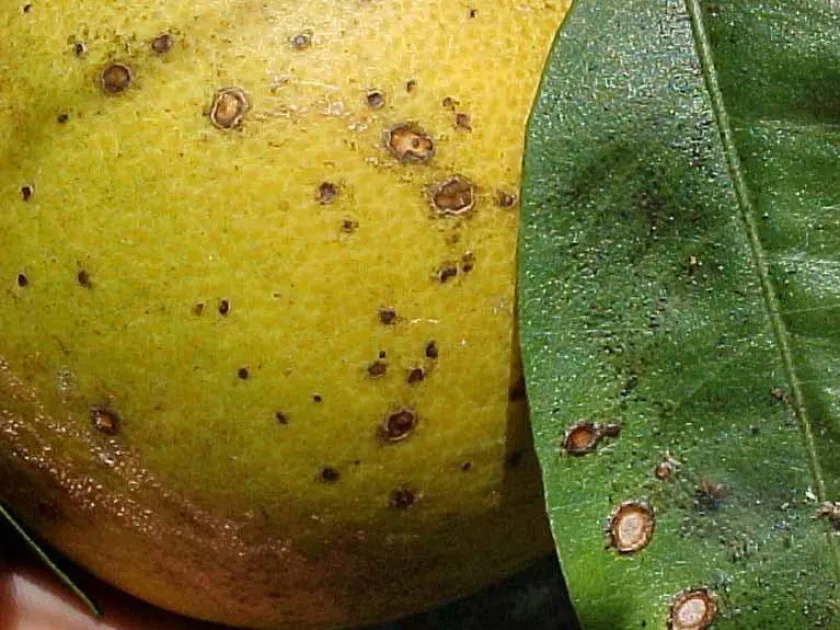
On leaves, the disease manifests as irregular or rounded dark brown to gray spots. These spots often grow larger over time and may result in holes as the necrotic tissue dries and falls away.
Infection of flowers is a severe sign of the disease, leading to premature blossom drop. When the fungus attacks young fruitlets, they develop sunken dark spots, turn black, and mummify on the tree branch.
In conditions of high humidity, the surface of infected organs displays pinkish or orange slimy spore masses. These are the acervuli, confirming the presence of active fungal sporulation.
On older, woody branches, the fungus may cause cankers or ulcers. These weaken the structural integrity of the branches, often leading to breakage and general decline in the tree's overall vitality.
Pathogen
The causal agent of this disease is the fungus Colletotrichum limetticola (synonym Gloeosporium limetticolum). It belongs to the group of imperfect fungi and is known for producing conidia within specialized structures called acervuli.
The fungus persists in infected plant tissues such as twigs, leaves, and fruits that remain on the tree or fall to the ground. Mycelium and spores can survive through unfavorable periods within these debris reservoirs.
Disease dissemination in an orchard occurs via conidia, which are splashed by raindrops or carried by wind. Insects and contaminated agricultural tools also serve as vectors for spreading the spores between trees.
The pathogen is highly synchronized with the growth phases of citrus trees. It is particularly aggressive during the flush of new vegetative growth, as these young tissues are soft and lack a fully developed protective cuticle.
The fungus penetrates host plants by direct infection through the epidermis or through existing wounds. Once inside, it secretes enzymes that degrade cell walls, leading to tissue necrosis and the formation of characteristic lesions.
Conditions for development
High relative humidity and frequent rainfall are the primary drivers of disease outbreaks. Wet weather during the critical stages of flowering and fruit set creates the perfect environment for rapid fungal infection.
The optimal temperature for Colletotrichum limetticola development ranges from 20 to 28 degrees Celsius. Within this window, the fungus propagates quickly and colonizes host tissues with high efficiency.
Dense planting patterns that restrict airflow contribute to a microclimate with persistently high humidity around the foliage. This allows the pathogen to establish and spread much more effectively than in well-spaced orchards.
Inappropriate orchard management, such as the use of overhead irrigation, is a major factor that encourages the disease by wetting the tree canopy and facilitating spore germination on susceptible surfaces.
Trees that are already under stress due to nutrient deficiencies, pest pressure, or poor site conditions show a significantly lower threshold for infection and suffer more severe damage from anthracnose.
Why it matters
Anthracnose is considered a highly destructive disease for lime cultivation. Under favorable weather conditions, it can cause catastrophic yield losses, potentially destroying nearly the entire crop by killing flowers and young fruit.
Extensive leaf infection reduces the photosynthetic capacity of the tree. This leads to long-term vigor loss, stunted growth, and a significant decrease in the accumulation of sugars and secondary metabolites in fruits.
Marketable quality is severely compromised by the presence of dark spots and necrotic blemishes on the fruit surface. Such produce is often rejected by buyers and is highly prone to post-harvest decay.
Repeated dieback of terminal shoots distorts the architecture of the canopy, leading to a reduction in the bearing surface and forcing the tree to expend energy on compensatory regrowth instead of fruit production.
Chronic infestation weakens the tree over several seasons, making it more susceptible to secondary infections and abiotic stressors, which increases maintenance costs and shortens the economic life of the lime orchard.
Protection
Sanitation is the most critical management practice. Pruning and destroying infected branches and mummified fruits significantly reduces the primary inoculum load in the orchard.
Improving orchard ventilation through proper canopy management and regular thinning of branches is essential. This ensures that moisture evaporates quickly after rainfall, hindering the growth of the pathogen.
Prophylactic applications of copper-based fungicides before the onset of the flowering period provide a protective shield for new tissues, preventing initial infections from establishing.
When symptoms appear, systemic fungicides from the triazole or strobilurin classes can be used to control the spread of the disease, provided they are rotated to prevent the development of resistant fungal strains.
- Transition from overhead irrigation to drip irrigation systems.
- Provide balanced fertilization to boost plant immunity and growth.
- Conduct regular field scouting to identify and treat hot spots early.
- Select resistant or tolerant varieties for new planting programs.
Discussion
No discussions yet — be the first.