
Anthracnose
Colletotrichum henanense
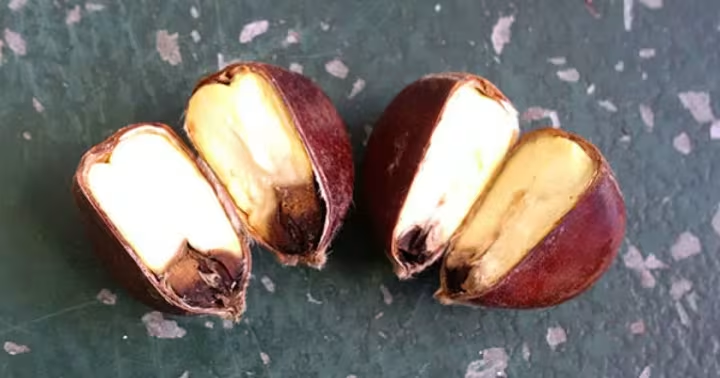
Description
Symptoms
Initial symptoms of the disease appear as small, sunken spots of circular or angular shape. They are most commonly observed on the leaves, stems, and young shoots of susceptible crops.
As the pathogen develops, the spots turn dark brown or nearly black. Frequently, a light-colored margin or a yellowish halo forms around the infection sites, signaling tissue necrosis.
A hallmark sign of the disease is the presence of microscopic structures (acervuli) on the surface of the lesions. During humid weather, these structures exude pinkish or orange droplets of mucilage containing a mass of spores.
On fruits, anthracnose manifests as deep ulcers that may eventually coalesce. This leads to the decay of tissue and premature dropping of affected plant parts.
When stems are infected, the disease can obstruct the transport of nutrients, leading to the wilting and eventual death of all vegetative growth above the infection point.
Pathogen
The causal agent of this disease is the imperfect fungus Colletotrichum henanense, which belongs to the class Deuteromycetes. This pathogen is characterized by its high specialized aggressiveness, primarily affecting the vegetative organs of host plants.
The fungus's life cycle involves the production of conidia—asexual spores that disperse rapidly in the environment. These conidia are formed within specific structures called acervuli, which rupture the epidermis of the host plant to release spores.
The mycelium of the pathogen can persist for long periods in infected plant debris, within seeds, and on the soil surface. This longevity makes the fungus highly resilient to various environmental stresses and temperature fluctuations.
Infection spreads mainly through rain splashes, irrigation water, and contaminated agricultural tools. Insects can also act as vectors, carrying spores from infected areas to healthy plants.
The fungus secretes specialized enzymes that break down plant cell walls, allowing the hyphae to penetrate deep into tissues to obtain nutrients and facilitate further colonization and reproduction.
Conditions for development
The primary factor driving the development of Colletotrichum henanense is high humidity in both the air and the soil. Optimal infection conditions occur when relative humidity exceeds 80%.
Temperature plays a crucial role: the ideal range for active conidial germination is between +22 and +28 degrees Celsius. In moderate warmth, the disease progresses rapidly across the field.
Dense planting and poor spacing create a microclimate with restricted air circulation, which helps moisture persist on leaves and provides perfect conditions for the pathogen to thrive.
Imbalanced nutrition, especially an excess of nitrogen fertilizers, lowers the plant's natural immunity and makes it significantly more susceptible to fungal entry.
Heavy morning dew and fog greatly accelerate the spore dissemination process, allowing the fungus to colonize new plant tissues at an exponential rate.
Why it matters
Anthracnose causes severe economic losses, often reducing crop yields by 30–50%. In severe epiphytotic years, the impact can lead to total crop failure.
Infection of fruits makes the produce unsuitable for market and storage. Post-harvest rot can lead to the loss of entire batches during transport and distribution.
The disease severely weakens the plant by disrupting essential processes like photosynthesis and transpiration. This leads to stunted growth and poor development, which is critical during early vegetative stages.
The pathogen can contaminate seed stocks, causing poor germination rates and introducing the disease into fields from the very beginning of the growing season.
Tissues damaged by anthracnose become easy entry points for secondary bacterial infections, which accelerate the decomposition of the affected plant material.
Protection
The foundation of effective protection is the use of healthy, certified seed material. Treating seeds with systemic fungicides before planting significantly reduces the risk of initial infection.
Proper crop rotation is a vital agricultural practice. Susceptible crops should not be planted in the same location more frequently than once every 3 to 4 years.
Timely removal and destruction of crop residues eliminate the pathogen's overwintering sites. Deep plowing of the soil helps accelerate the decomposition of infected organic matter.
- Application of copper-based and triazole fungicides during periods of high infection risk.
- Regular ventilation of greenhouses to reduce ambient humidity.
- Establishing spatial isolation from older infection sources.
- Cultivating resistant hybrids and crop varieties.
Chemical treatments should be applied preventively or at the very first signs of disease, strictly adhering to recommended dosage rates and pre-harvest intervals to ensure safety.
Discussion
No discussions yet — be the first.