
Anthracnose
Colletotrichum fructicola
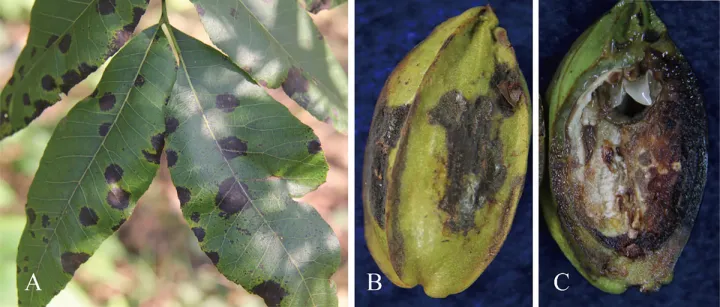
Description
Symptoms
The first symptoms appear as small, sunken, brown or dark grey spots on leaves, stems, and fruits. Over time, these spots enlarge and may coalesce, creating significant necrotic areas.
In the center of the spots, under high humidity conditions, characteristic spore-bearing structures called acervuli form, often exhibiting a pink or orange fungal exudate. These are clusters of conidia ready to spread infection further.
Stem infection leads to cracking, which can cause the wilting of individual branches or the entire canopy. On fruits, anthracnose manifests as deep ulcers or lesions that eventually decay, rendering the harvest unsuitable for storage or consumption.
In young shoots, the infection causes constriction or girdling, which hinders nutrient uptake, causing leaves to turn yellow and abscise. The plant shows stunted growth and appears weak and underdeveloped.
- Darkening and necrosis of tissues.
- Formation of sunken lesions.
- Development of spore-bearing pads.
- Premature leaf drop.
- Fruit rotting on the plant.
Pathogen
The causal agent of this disease is the fungus Colletotrichum fructicola, belonging to the Ascomycota phylum. This pathogen can persist in infected plant debris, soil, and on seeds as mycelium or conidia.
The infection is characterized by a wide host range, affecting fruit, berry, ornamental, and vegetable crops. The fungus spreads actively via conidia, which are disseminated by wind, rain splashes, and insect vectors.
The biological cycle of the pathogen includes phases of active growth when moisture is available and dormancy when environmental factors are unfavorable. Spore viability is maintained across a broad temperature range, making the fungus highly resilient in field conditions.
During the development phase, the pathogen penetrates plant tissues, degrading cell walls with specialized enzymes. This results in the progressive necrosis of plant tissues and the subsequent formation of fruiting bodies, known as acervuli, where new spores are produced.
Mycological identification of this specific pathogen requires laboratory techniques, as symptoms may resemble other species of anthracnose. Genetic analysis confirms the identity of Colletotrichum fructicola within various pathogen complexes on plants.
Conditions for development
The primary factor favoring anthracnose development is high humidity, especially when combined with moderately warm temperatures. Frequent rainfall, fog, and heavy dew create an optimal microclimate for spore germination.
The temperature optimum for Colletotrichum fructicola development lies between 22–28 degrees Celsius. However, the fungus remains active at lower temperatures as long as high moisture levels persist.
Crowded plantings, poor aeration, and excessive nitrogen fertilization contribute to the rapid spread of the disease. In such conditions, the fungal mycelium grows aggressively, affecting neighboring plants within days.
Poor agricultural practices, such as overhead irrigation that wets the foliage, create additional infection hotspots. Rain splashes carry spores to healthy plant parts, triggering secondary infection cycles within the same growing season.
Lack of proper orchard maintenance, such as the presence of dry and damaged branches, provides the pathogen with sites for primary colonization. Timely sanitary pruning significantly reduces the inoculum level in the area.
Why it matters
The damage caused by anthracnose leads to a significant reduction in crop productivity. Infected plants lose their photosynthetic capacity, which results in a substantial decrease in yield volume and quality.
Fruits affected by this pathogen lose their marketability and spoil quickly during storage. Yield losses under favorable conditions for the fungus can reach 50–80%, making it economically significant for agriculture.
The infection weakens the immunity of perennial plants, making them more susceptible to frost damage and other diseases. Chronic infestation can lead to the total loss of an orchard or plantation over several seasons.
Damage to vegetative organs disrupts metabolism, preventing fruits from developing proper sugar levels and size. Quality decreases to the point where the harvest is unfit even for industrial processing.
Managing the disease requires significant investments in fungicide applications and integrated protective measures. This increases production costs and reduces the overall profitability of the farming business.
Protection
The basis of protection is the use of healthy planting material that is free from the pathogen. It is crucial to perform seed treatments and select seedlings that show no external signs of the disease.
Regular sanitary pruning and the destruction of plant debris are mandatory preventive measures. Collecting and burning fallen leaves and infected fruits removes the primary overwintering sites for the fungus.
Chemical control includes spraying with systemic and contact fungicides during periods conducive to disease development. The most effective applications occur before and immediately after the flowering stage.
Adherence to good agricultural practices, such as proper spacing, canopy management, and balanced nutrition, enhances the natural resistance of plants. Strengthening plant immunity with micronutrients also plays a vital role.
In organic farming, the use of biological control agents based on beneficial bacteria and fungi that suppress pathogen growth is permitted. An integrated approach combining chemical and biological methods provides the best results against anthracnose.
Discussion
No discussions yet — be the first.