
Orchid Anthracnose
Colletotrichum cymbidiicola
Description
Symptoms
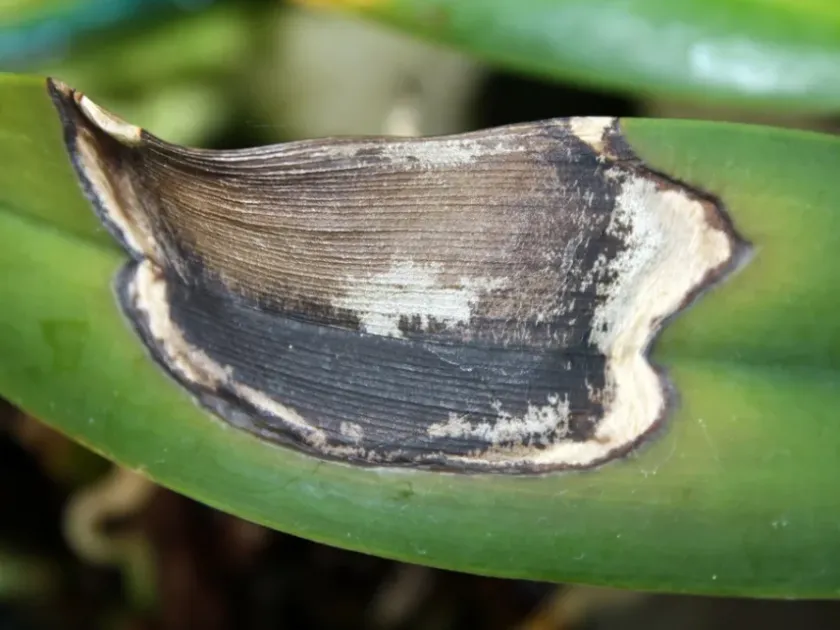
Early symptoms of anthracnose include the formation of small, sunken, dark-colored spots on the leaves. These spots are often circular or irregular in shape and may be surrounded by a chlorotic yellow halo as the plant attempts to contain the spread.
As the infection progresses, the spots expand and may develop concentric ring patterns, reflecting the periodic growth of the fungal mycelium. In high humidity, the centers of these lesions produce slimy masses or visible black acervuli.
Beyond the foliage, the fungus can infect pseudobulbs and flower spikes. Lesions on these parts appear as blackened, depressed necrotic areas, which often lead to premature wilting of flowers and failure of buds to develop correctly.
Severe infestations cause the leaf tissue to lose structural integrity and wither. If the infection reaches the crown or apex of the plant, the damage can become irreversible, leading to the total collapse of the orchid.
- Sunken brown or black spots on leaves.
- Concentric rings within necrotic lesions.
- Small black fruiting bodies (acervuli) on the spots.
- Yellowing of tissue surrounding the infection zone.
- Deformed flower spikes and premature bud drop.
Pathogen
The causal agent of this disease is the imperfect fungus Colletotrichum cymbidiicola, which primarily affects various epiphytic orchid species. This pathogen belongs to the Colletotrichum genus, known for its high virulence and rapid propagation within enclosed environments such as greenhouses.
The pathogen infects plant tissues through stomata, minor surface wounds, or mechanical damage. The infection spreads primarily via conidia, which are dispersed by water splashes, insect vectors, or contaminated pruning tools used during routine maintenance.
The fungus develops specific fruiting bodies known as acervuli, which emerge as tiny black dots on the leaf surface. These structures house massive quantities of spores, allowing the disease to proliferate rapidly when environmental conditions favor the fungus.
Colletotrichum cymbidiicola is highly resilient, capable of surviving for months in potting media, plant debris, or on the surfaces of pots, even in the absence of a host plant. This persistence makes it a recurring threat to orchid collections.
The fungus can exist as an endophyte, colonizing plant tissues without triggering immediate symptoms. This subclinical infection can remain dormant until the host plant experiences stress, at which point the disease manifests aggressively.
Conditions for development
High humidity levels, typically exceeding 70-75%, are the primary trigger for the rapid development of orchid anthracnose. Excess moisture on leaf surfaces provides the perfect environment for spore germination and colonization.
The optimal temperature range for Colletotrichum cymbidiicola is between +22°C and +28°C. These conditions are standard in many orchid growing environments, making prevention and constant vigilance essential.
Poor air circulation significantly increases the risk of an outbreak. Stagnant air prevents the rapid evaporation of water droplets from leaves, facilitating infection and accelerating the spread of spores throughout a collection.
Improper cultivation practices, such as excessive nitrogen application, reduce the plant's natural resistance. Healthy, well-balanced orchids are far more capable of producing defense compounds that inhibit fungal penetration.
Light levels also play a role; insufficient light weakens the orchid, leading to soft, succulent growth that is highly vulnerable to infection. Plants grown in optimal light conditions exhibit stronger cellular walls and better disease resistance.
Why it matters
Anthracnose is a devastating disease for orchid hobbyists and commercial growers alike. If left unchecked, it can lead to the rapid death of entire plants, representing a significant loss of value and biodiversity.
The economic impact on commercial orchid nurseries is substantial, as infected plants become unmarketable. Furthermore, the need for intensive care, strict quarantine, and multiple chemical treatments increases production costs significantly.
Because the disease often targets the meristematic tissue (growth point), it can permanently stunt a plant's development. For sympodial and monopodial orchids, the loss of the apical meristem results in the loss of the plant's primary growth habit.
High-density cultivation, which is typical in professional greenhouses, facilitates rapid disease spread. A single infected orchid can serve as a catalyst for a full-scale epidemic if proactive measures are not taken.
Secondary infections, particularly bacterial soft rots, frequently take advantage of the tissue damage caused by anthracnose. This synergy complicates the diagnosis and treatment process, often requiring a multifaceted approach to save the plant.
Protection
The first step in management is the isolation of symptomatic plants to protect the rest of the collection. Affected areas should be surgically removed with sterile tools, and the exposed tissue treated with a fungicide paste or charcoal.
Systemic fungicides, particularly those containing copper or triazole compounds, are effective for controlling the fungus. It is recommended to rotate chemical classes to prevent the development of fungicide resistance in the pathogen.
Adjusting the growing environment is crucial: improve air circulation, avoid overhead watering to keep leaf axils dry, and optimize the watering schedule to ensure that the substrate is not overly saturated.
Preventative use of biological agents such as Bacillus subtilis has proven effective in creating a protective biofilm on the leaves, which inhibits the initial stages of spore germination.
Rigorous tool hygiene is a standard requirement. After touching an infected plant, pruning equipment must be sterilized with 70% ethanol or a sodium hypochlorite solution to prevent mechanical transmission of the pathogen.
Discussion
No discussions yet — be the first.