
Turmeric anthracnose
Colletotrichum curcumae
Description
Symptoms
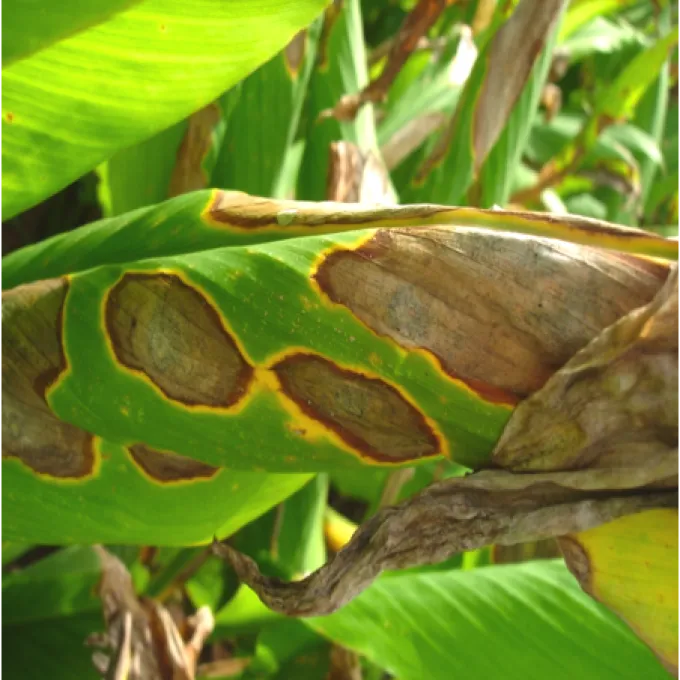
Initial symptoms of the disease appear as small, oval-shaped yellowish-brown spots on the leaves. As the infection progresses, the centers of these lesions turn greyish, often surrounded by a dark-brown or purple margin.
Under humid conditions, the pathogen produces characteristic black, dot-like fruiting bodies (acervuli) on the surface of the lesions. These structures are visible evidence of the fungus reproducing and spreading.
The infection often spreads to leaf petioles and stems, causing them to develop sunken necrotic lesions. In severe cases, this leads to leaf wilting, stem collapse, and premature death of the entire foliage.
Infected rhizomes often exhibit soft rot and discoloration. When cut, the inner tissue may show greyish or dark patches, indicating that the fungus has colonized the root system, which ruins the quality of the crop.
- Yellowish-brown spots on leaf surfaces.
- Formation of greyish necrotic centers with dark edges.
- Black, dot-like fruiting bodies on lesions.
- Sunken lesions on stalks and petioles.
- Soft, discolored rhizomes with reduced weight.
Pathogen
The causal agent of turmeric anthracnose is the fungus Colletotrichum curcumae, which belongs to the class Coelomycetes. This pathogen is highly host-specific, primarily targeting plants within the Zingiberaceae family.
The fungus survives in infected plant debris and soil as dormant mycelium or spores. The infection is frequently introduced to new fields through contaminated rhizomes used as planting material.
Conidia (spores) of the fungus are disseminated through wind currents, splashing rain, and agricultural equipment. The incubation period is relatively short, allowing the disease to spread rapidly in favorable environments.
The pathogen infects plants by penetrating epidermal cells through stomata or mechanical injuries. Once inside, the fungus secretes enzymes that break down plant cell walls, leading to significant tissue damage.
The biological cycle is strongly dependent on moisture. In dormant stages, the fungus remains inactive but initiates a rapid infectious cycle immediately upon receiving adequate moisture and favorable temperature triggers.
Conditions for development
High humidity, typically above 85-90%, is the primary environmental factor promoting anthracnose outbreaks. Extended periods of rainfall or heavy morning dew create the perfect conditions for spore germination.
The optimal temperature range for the development of Colletotrichum curcumae is between +25°C and +30°C. Within this range, the pathogen's metabolic activity reaches its peak, leading to faster tissue colonization.
Poor aeration in dense or poorly spaced plantations significantly increases the risk of infection. Stagnant air allows moisture to persist on leaf surfaces for longer periods, facilitating fungal penetration.
Nutrient imbalance, particularly excessive nitrogen fertilization, makes the plants more succulent and vulnerable. Such plants lack the structural strength to resist the enzymatic attack of the fungus.
Continuous cropping of turmeric in the same area without a break allows the inoculum to build up in the soil. Furthermore, improper irrigation techniques, such as overhead spraying, can inadvertently spread the disease.
Why it matters
The primary economic harm of anthracnose is the reduction in rhizome yield. Because the disease attacks the leaves, it disrupts photosynthesis, leading to stunted plants and undersized, low-quality tubers.
Anthracnose significantly degrades the market value of turmeric. Infected rhizomes have a shorter shelf life and are more susceptible to secondary storage rots, making them unsuitable for long-term export.
In severe epidemics, yield losses can exceed 50%. The disease weakens the plant's overall system, making it more susceptible to opportunistic bacteria and other soil-borne pathogens that might otherwise be ignored.
Farmers face financial pressure due to increased costs for fungicides and labor-intensive sanitation practices. Moreover, the inability to use harvested rhizomes as seeds creates a self-perpetuating cycle of loss.
The chemical impact of the disease also includes the loss of essential oils and curcumin content, which are the main commercial components of the crop. This results in significant loss of processing quality.
Protection
The most important control measure is the use of healthy, disease-free seed rhizomes. Treating the rhizomes with systemic fungicides before planting can significantly reduce the initial infection pressure.
Implementing a robust crop rotation strategy is essential for managing soil-borne inoculum. Avoid planting turmeric in the same field for at least 3 to 4 years to allow the fungus to decline naturally.
Maintain optimal plant spacing to promote better airflow and reduce humidity around the canopy. Regular weeding is necessary, as certain weeds may serve as alternative hosts for the pathogen.
Apply systemic or protective fungicides (such as copper-based or triazole compounds) preventively during the rainy season. Frequent monitoring and immediate removal of infected plant parts are recommended.
Post-harvest sanitation is crucial. Destroying infected plant debris by burying or burning helps remove the main source of inoculum for the following season, significantly lowering the risk of a repeat outbreak.
Discussion
No discussions yet — be the first.