
Citrus anthracnose
Colletotrichum abscissum
Description
Symptoms
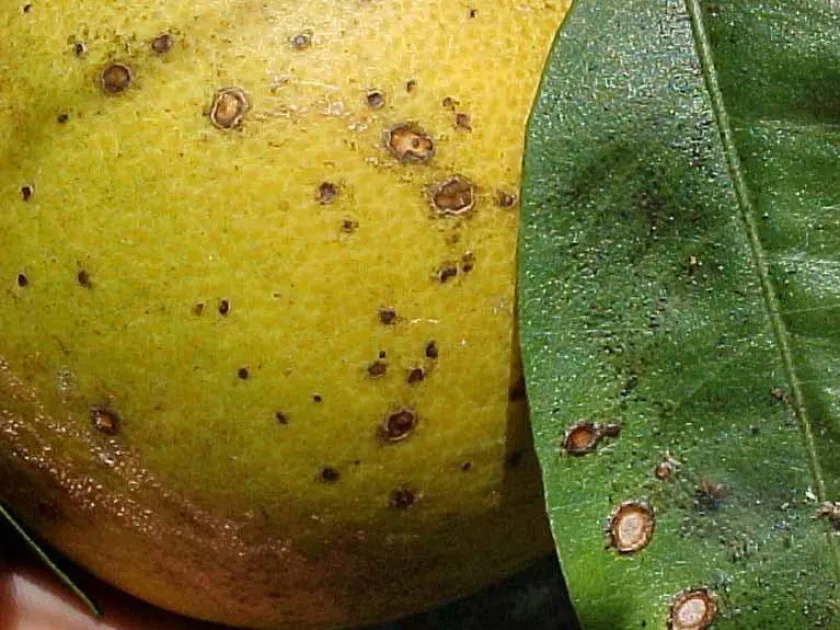
Early symptoms typically manifest as dark, necrotic spots appearing on young leaves and succulent twigs, which may eventually lead to leaf drop.
On developing fruits, the disease causes firm, sunken, dark brown or black lesions that significantly impair the commercial quality of the citrus.
High humidity conditions often trigger the production of salmon-colored or orange spore masses on the surface of the infected lesions, which is a diagnostic feature.
Severe infections lead to the premature abscission of flowers and young fruit, causing major yield losses during the development phase.
In mature wood, the fungus can induce dieback, characterized by the death of twigs and branches due to the restriction of water and nutrient movement.
Pathogen
The causal agent of citrus anthracnose is the fungus Colletotrichum abscissum, which is a significant pathogen responsible for substantial damage in citrus-growing regions globally.
This fungus, belonging to the Ascomycota division, is highly adapted to surviving in dead plant tissues and debris left in the orchard after harvest.
The spread of the pathogen is primarily driven by conidia, which are disseminated by rain splashes, wind currents, and mechanical activities within the grove.
A notable characteristic of this fungus is its ability to remain latent in host tissues for extended periods, emerging as an active infection only when environmental conditions become ideal.
The pathogen demonstrates a wide range of host affinity within the genus Citrus, affecting various species including lemons, limes, and oranges.
Conditions for development
The disease thrives in warm and humid environments, with high relative humidity and surface moisture being the most critical factors for spore germination.
Optimal growth for Colletotrichum abscissum occurs within a temperature range of 20°C to 28°C, which frequently overlaps with the active growing season.
Poor orchard sanitation, characterized by dense foliage and stagnant air, creates a microclimate that prevents leaves from drying, thus facilitating infection.
Trees that are physically stressed due to poor soil fertility, waterlogging, or insect infestation are significantly more susceptible to successful colonization by the fungus.
Persistent rainfall during the bloom and fruit-set stages is often the primary driver for widespread outbreaks across commercial citrus operations.
Why it matters
Citrus anthracnose causes significant economic loss by reducing both the quality and quantity of marketable fruit, as infected crops are rejected by quality control standards.
Long-term infestation weakens the overall physiological status of the tree, leading to reduced vigor and decreased productivity over several years.
The loss of canopy foliage due to necrosis reduces the tree's photosynthetic capacity, which directly negatively impacts fruit size and sugar content.
Dieback symptoms may force growers to perform intensive pruning, which increases production costs and reshapes the tree architecture over time.
Persistent infection pressure necessitates continuous application of fungicides, adding significant expense to the annual maintenance of the orchard.
Protection
Integrated pest management starts with rigorous orchard sanitation: the removal and destruction of all dead wood and fallen plant material to eliminate inoculum sources.
Improving orchard ventilation through regular and strategic pruning is essential to reducing the humidity levels that favor fungal growth.
Chemical control involving copper-based fungicides is recommended, particularly during critical windows of plant development such as flowering and fruit set.
- Application of protective fungicides following periods of wet weather.
- Balanced fertilization to enhance the tree's natural resilience to disease.
- Selection of resistant citrus cultivars when establishing new orchard blocks.
Regular scouting and monitoring programs are vital to detect the first signs of the pathogen and implement rapid interventions to prevent an epidemic.
Discussion
No discussions yet — be the first.