
Coltsfoot rust
Coleosporium tussilaginis
Description
Symptoms
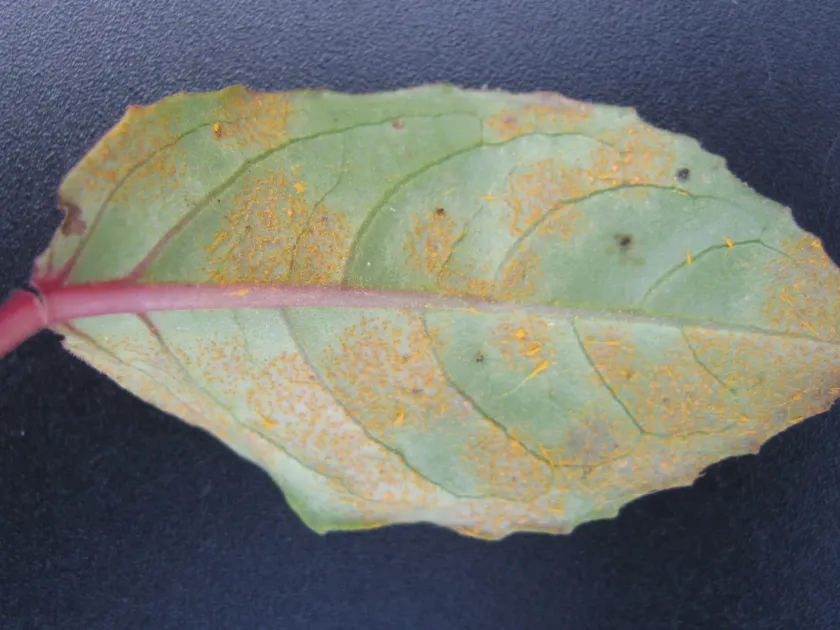
The first symptoms appear on the underside of the leaves as small, bright orange or yellow pustules, known as uredinia, releasing powdery spores.
As the infection progresses, these pustules coalesce, covering a significant portion of the leaf surface and causing chlorotic patches on the upper leaf side.
Affected leaves often lose their natural vigor, showing signs of premature wilting, rolling, and yellowing, which indicates a severe disruption of physiological processes.
In the late stages of the season, dark brown or black telia develop on the leaf undersides, signaling the end of the active infection phase of the fungus.
Severe infestations lead to premature leaf drop, which significantly hampers the ability of the plant to synthesize necessary nutrients for root storage and future growth.
Pathogen
The causal agent of this disease is the heteroecious rust fungus Coleosporium tussilaginis, which requires different plant hosts to complete its life cycle.
The fungus typically alternates between coniferous trees, primarily pines, which act as the primary host for overwintering, and herbaceous plants like coltsfoot.
Its life cycle involves the production of different spore types, including aeciospores, urediniospores, and teliospores, each playing a specific role in propagation.
As an obligate biotrophic parasite, the fungus relies entirely on the living tissues of its host to derive nutrients and complete its biological development.
The mycelium grows within the leaf tissue, penetrating cells and causing structural damage, which ultimately leads to the depletion of the host plant's energy reserves.
Conditions for development
Warm and humid weather conditions are ideal for the germination of fungal spores, especially during periods with prolonged morning dew on the foliage.
Optimal temperatures for the fungus range between 15 and 22 degrees Celsius, which often coincides with peak spring and early summer growth phases.
High plant density and poor air circulation create a microclimate with stagnant, humid air, which significantly accelerates the spread of the pathogen between adjacent plants.
Wind is the primary vector for the dispersal of spores from conifer hosts to coltsfoot, facilitating the rapid establishment of primary infection centers.
Accumulation of plant debris and failure to practice crop rotation maintain a high level of inoculum in the soil, favoring recurrent outbreaks each season.
Why it matters
The main harm caused by the rust is the reduction of the photosynthetic surface area, which directly limits the energy production of the host plant.
For medicinal varieties, the presence of rust fungi diminishes the yield and quality of the active chemical components, rendering the crop less valuable.
Infected plants become weakened and more susceptible to environmental stresses such as drought or frost, often leading to reduced longevity of the plant stand.
Large-scale outbreaks can lead to significant economic losses in herbal cultivation by damaging the harvestable biomass of the coltsfoot plants.
The rapid spread of spores makes this disease challenging to manage in areas where coltsfoot is grown near its alternate coniferous hosts.
Protection
Effective management begins with maintaining adequate spatial distance from coniferous forests to break the life cycle of the heteroecious rust fungus.
Sanitation practices, including the removal and destruction of infected plant material, are essential to reduce the primary inoculum load for the following season.
Improving the physical environment, such as proper spacing and weeding, helps to increase airflow and reduce the leaf surface wetness required by the fungus.
Chemical control with systemic or contact fungicides should be applied early in the infection cycle while strictly adhering to safety intervals for medicinal crops.
- Maintain distance from pine trees (alternate hosts).
- Remove and burn infected plant litter after the season.
- Use copper or sulfur-based fungicides for early suppression.
Discussion
No discussions yet — be the first.