
Plumeria rust
Coleosporium plumeriae
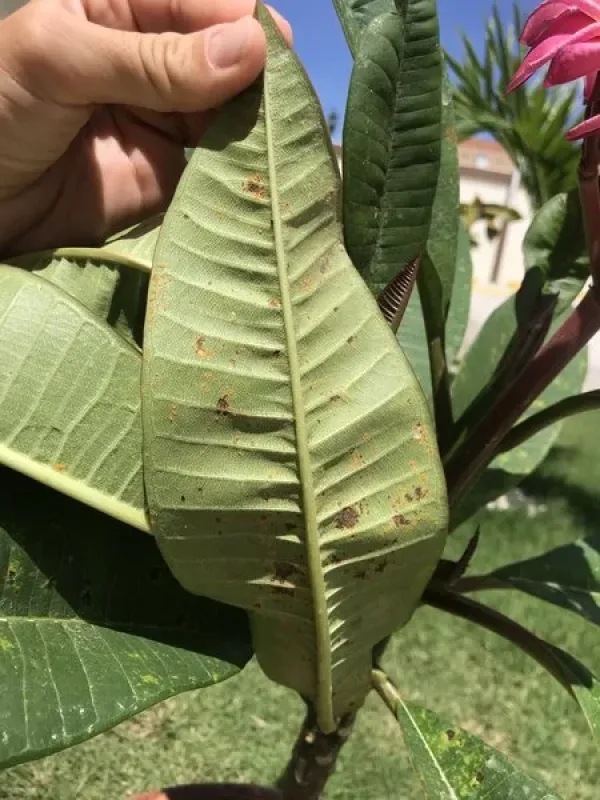
Description
Symptoms
The most distinctive symptom is the appearance of bright orange or yellow pustules on the underside of the leaves, representing fungal spore masses.
Yellow or chlorotic spots develop on the upper surface of the leaves directly above the spore-producing pustules on the underside.
As the infection progresses, these areas can turn brown or necrotic, causing the entire leaf to yellow and eventually die.
Severe infestations lead to premature defoliation, where the plant sheds its leaves long before the natural dormant season begins.
The presence of dusty, orange-colored powder on the undersides of leaves is the primary diagnostic feature used for field identification.
Pathogen
The disease is caused by the obligate parasitic fungus Coleosporium plumeriae, which is a member of the rust fungi order Pucciniales.
This pathogen specifically targets plants within the Apocynaceae family, with a primary focus on the Plumeria genus.
The fungus completes its reproductive cycle by producing urediniospores that are easily disseminated by wind to new, healthy foliage.
It acts as a biotroph, extracting essential nutrients directly from the living plant cells, which results in characteristic damage to the host.
Under favorable climatic conditions, the fungus can maintain a continuous presence, allowing it to cycle through multiple generations rapidly.
Conditions for development
Plumeria rust thrives in environments with high humidity and warm temperatures, which are common in tropical and subtropical regions.
Poor air circulation within dense canopies or enclosed greenhouse spaces significantly contributes to the rapid spread of the fungus.
Leaf wetness, caused by overhead irrigation, high humidity, or dew, is a critical factor required for spore germination and infection.
The pathogen spreads most effectively during periods of cloudy, humid weather when spores can remain viable on wet foliage for extended hours.
The lack of adequate space between plants prevents proper drying of the leaves, thereby creating a microclimate that favors fungal development.
Why it matters
The disease significantly reduces the total photosynthetic area of the plant, which hampers its ability to produce energy for growth and flowering.
Plants suffering from rust often fail to produce flowers, which drastically reduces their aesthetic value in garden and landscape settings.
Constant defoliation weakens the plant's overall vigor, making it more susceptible to other pests, environmental stresses, and secondary pathogens.
Young cuttings and nursery stock are at a high risk of failure if they lose their foliage prematurely, as they lack the reserves needed to survive.
Economically, the impact is felt through the loss of marketable plants and the recurring costs of labor and materials for chemical treatments.
Protection
Immediate sanitation is the first line of defense; infected leaves should be carefully removed and destroyed to prevent further spread of spores.
Transitioning from overhead irrigation to drip or soaker hose systems helps keep the foliage dry and reduces the chances of infection.
Chemical control involving systemic fungicides, particularly those containing tebuconazole or myclobutanil, is effective in managing active outbreaks.
Preventative measures include applying copper-based fungicides during the early part of the growing season to form a protective shield on the leaves.
Ensuring proper spacing and pruning for optimal air circulation helps create an environment that is less hospitable to the development of Coleosporium plumeriae.
Discussion
No discussions yet — be the first.