
Pine needle rust
Coleosporium crowellii
Description
Symptoms
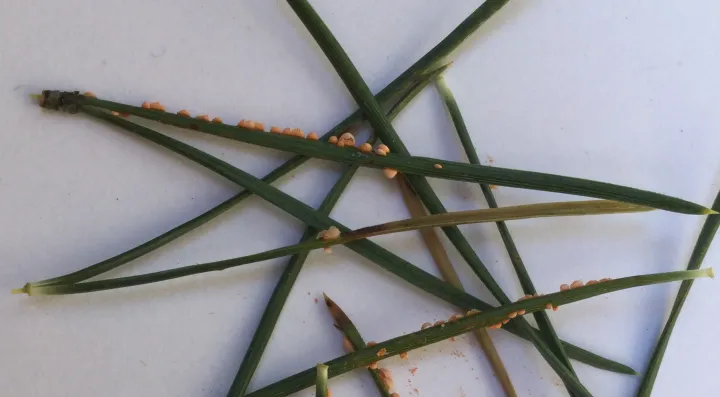
The primary symptom of the disease is the appearance of vibrant yellow to orange-colored blister-like structures known as aecia, which rupture the epidermis of the pine needles.
As the infection progresses, the infected needles exhibit chlorosis, gradually turning yellow or brown, and significantly losing their natural green pigmentation and healthy luster.
Premature needle cast is a common sign of advanced infection, often leading to sparse foliage, especially in the lower parts of the tree crown where humidity is higher.
Visual identification is facilitated by the presence of these distinctive orange bands on the needles, which appear in late spring or early summer during active spore production.
In severe cases, the needles may show signs of curling or structural deformation, which significantly reduces the tree's vigor and overall ornamental appearance.
Pathogen
The causative agent of this disease is the rust fungus Coleosporium crowellii, which belongs to the class of Basidiomycetes. This pathogen is heteroecious, meaning it requires two different host plants to complete its complex biological life cycle.
Pine trees serve as the primary host where the fungus overwinters and develops its asexual reproductive structures. During the growing season, the infection spreads to secondary herbaceous hosts such as Senecio or other wild plants.
Inside the plant tissue, the fungal mycelium colonizes the intercellular spaces, absorbing nutrients from the pine needles and physically disrupting the plant's metabolic pathways.
The fungus propagates through multiple types of spores, with urediniospores playing a key role in the rapid spread of the disease during favorable summer conditions through wind dispersal.
At the end of the life cycle, teliospores are formed, which are essential for the survival of the pathogen in harsh environmental conditions and the initiation of the next season's infection cycle.
Conditions for development
High relative humidity is the most critical factor influencing the germination of Coleosporium crowellii spores and their successful penetration into the pine needle tissue.
Temperatures ranging between 15°C and 22°C create an optimal environment for the metabolic activity of the fungus, leading to faster development and spread of the disease.
Dense planting schemes that prevent adequate air circulation trap moisture within the canopy, creating a perfect microclimate for the rapid colonization of fungal spores.
The presence of alternate herbaceous hosts in the immediate vicinity is a prerequisite for the completion of the rust fungus life cycle and the long-term persistence of the pathogen.
Poor site management, including lack of weed control and insufficient tree maintenance, significantly contributes to the susceptibility of pine trees to this fungal invasion.
Why it matters
The main impact of the disease is the impairment of photosynthesis due to the massive loss of functional needles, leading to a significant reduction in the tree's energy reserves.
Chronic infections cause stunted growth and a noticeable decrease in annual wood increment, as the tree struggles to maintain basic physiological processes.
Severely affected young trees may suffer from significant stress, making them highly vulnerable to secondary pests, such as wood-boring insects, and other opportunistic infections.
In landscape gardening, the cosmetic damage caused by yellowing and needle drop often necessitates the removal or replacement of the affected plants to maintain aesthetics.
Repeated yearly infections can weaken the trees to the point of structural failure or contribute to the slow decline and eventual death of the affected specimen.
Protection
The most effective long-term strategy is the elimination of alternate host weeds within a significant radius of the pine plantations to break the pathogen's life cycle.
Sanitation practices are essential, including the prompt collection and destruction of fallen needles, which serve as a primary reservoir for the fungus to persist from year to year.
Fungicidal applications, particularly those containing copper or triazole-based systemic agents, are highly recommended during the early spring to protect needles from infection.
Promoting tree health through proper fertilization and watering helps build the natural resilience of the tree, making it less susceptible to the negative effects of the fungus.
- Ensure proper spacing during planting to improve canopy airflow.
- Conduct regular monitoring of needles during the spring growth flush.
- Select rust-resistant pine varieties when establishing new plantings.
Discussion
No discussions yet — be the first.