
Pachysandra blight
Coccinonectria pachysandricola
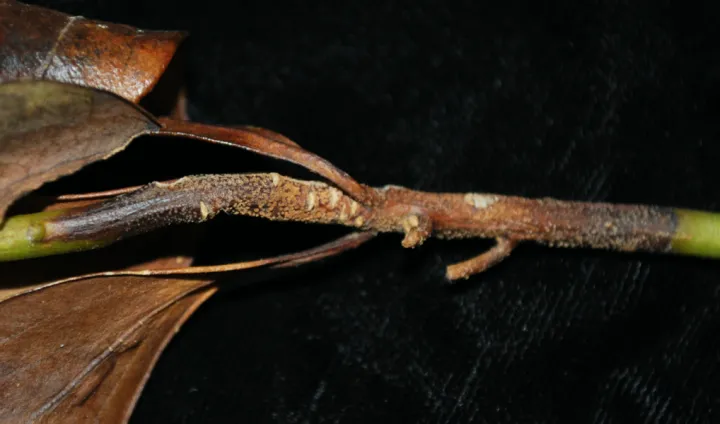
Description
Symptoms
The primary symptom of Pachysandra blight is the development of distinct spots on the leaves and stems of Japanese pachysandra. Initially, these appear as small, tan-to-brown lesions that rapidly expand in size.
Over time, the affected leaf tissue dies, often turning a grayish-white or straw color with a dark, prominent border. In severe cases, the necrosis spreads across the entire leaf, resulting in wilting and premature leaf drop.
On the stems, the pathogen causes sunken cankers or darkened streaks that disrupt the vascular system. This can lead to the sudden dieback of stems, starting from the tips and progressing downward.
Under humid conditions, the fruiting bodies of the fungus may appear on the leaf spots or stems. They typically manifest as small, coral-pink or reddish pustules, which is a diagnostic feature of this fungal agent.
The plant loses its aesthetic value as dense groundcover patches become thin and ragged. Without intervention, the infestation can result in total dieback of the affected colony.
Pathogen
The causative agent of this disease is the ascomycete fungus Coccinonectria pachysandricola (formerly known as Volutella pachysandricola). It is a specialized pathogen that specifically targets evergreen groundcovers.
The fungus reproduces through spores, which are disseminated by splashing water, rain, and wind. Upon contact with the host plant, these spores germinate and penetrate the tissues, initiating the infection.
The pathogen's life cycle is closely linked to plant debris. The fungus survives during dormant periods in fallen leaves and on infected stem tissue, serving as a primary reservoir for new outbreaks.
During the growing season, the fungus attacks both stressed and healthy plants. Infection often occurs through micro-wounds, insect damage, or mechanical injuries caused by pruning or lawn maintenance.
This fungus exhibits high host specificity, focusing primarily on Pachysandra terminalis. This makes it a significant concern for managed landscapes where this plant is used extensively.
Conditions for development
High moisture levels are the most critical condition for disease development. Frequent rainfall, heavy morning mists, and overhead irrigation create the wet environment necessary for spore germination.
Crowded plantings are highly susceptible to the blight. Poor air circulation prevents leaves from drying quickly, allowing the pathogen to thrive in the microclimate trapped between the plants.
The fungus is most active and aggressive at temperatures between +15°C and +25°C (59°F to 77°F). During these moderate to warm, humid periods, the disease can spread throughout a patch in a short time.
Improper site selection, such as planting in areas with excessive shade and poor soil drainage, can weaken the plant's natural defenses, making it more prone to fungal colonization.
The presence of old mulch, decaying foliage, and debris near the plants serves as a persistent source of inoculum. If this material is not managed, the disease will likely recur annually.
Why it matters
The greatest danger of Pachysandra blight is its rapid spread within a planting. Since pachysandra is a groundcover, the physical contact between leaves allows the fungus to move easily from plant to plant.
The disease destroys the visual appeal of the landscape. A healthy, uniform green cover is quickly ruined by the appearance of unsightly patches and brown, blighted stems.
Massive infection leads to the exhaustion of the plant's reserves. The energy diverted to combat the infection reduces the overall vigor, making the plants less capable of surviving harsh winters.
Plants weakened by the blight become targets for other pests and secondary pathogens, often leading to total degradation of the site, which eventually requires complete replanting.
Advanced infections are notoriously difficult to control. Once the fungus has deeply penetrated the woody stem tissues, topical fungicides may become less effective, necessitating more drastic management steps.
Protection
The foundation of control is good cultural practice. It is essential to prune or thin out thick plantings to improve air circulation and allow the foliage to dry rapidly after rain.
Sanitation is critical for disease suppression. All infected stems and fallen leaves must be carefully raked and removed from the site. This debris should be burned or disposed of away from the garden.
Avoid overhead watering to minimize spore splash. Switch to drip irrigation or ground-level watering to ensure the foliage remains dry, which significantly inhibits fungal development.
When the disease appears, applying a fungicide can help protect healthy growth. Products containing copper or systemic fungicides labeled for ornamental use are typically recommended.
Preventative applications should start at the beginning of the growing season or during periods of prolonged wet weather. Always follow label directions and rotate fungicide classes to avoid resistance.
Discussion
No discussions yet — be the first.