
Clavulinopsis umbrinella
Clavulinopsis umbrinella
Description
Symptoms
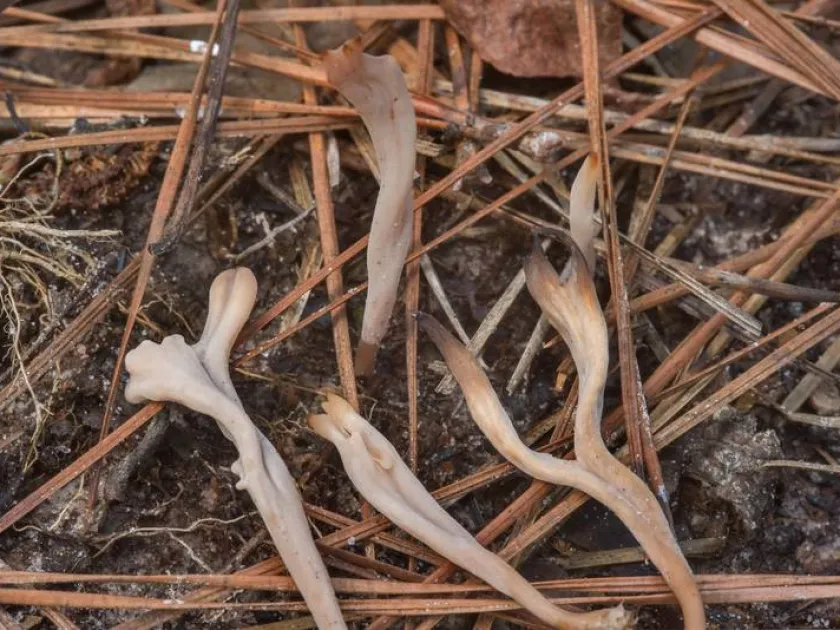
Clavulinopsis umbrinella is a small terrestrial fungus belonging to the club fungi group, characterized by its distinct club-shaped or cylindrical fruit bodies.
The fruit bodies display a color range from dull brown to ochre, which often allows them to blend into the surrounding leaf litter or sparse vegetation.
Typically reaching a height of 3 to 7 centimeters, these mushrooms have a firm yet brittle texture that breaks easily under pressure.
The surface of the fungus is generally smooth and lacks a distinct sheen, which is a diagnostic feature used in mycological identification.
These mushrooms usually occur in small groups or as solitary individuals, often found in open or semi-shaded areas with undisturbed soil.
Pathogen
From an agronomic perspective, Clavulinopsis umbrinella is not considered a plant pathogen; it does not parasitize living agricultural crops.
It functions primarily as a saprotrophic organism, meaning it derives its nutrients from decaying organic matter found in the soil surface.
The fungus plays no role in the development of plant diseases such as root rots, blights, or vascular wilts in agricultural settings.
Biologically, it contributes to the ecosystem by breaking down complex organic compounds, which facilitates the nutrient cycling process in the soil.
Since it lacks specialized structures for invading plant tissue, it presents no risk to the health or vitality of crops grown in the vicinity.
Conditions for development
Development of this fungus is highly dependent on high moisture levels and stable, moderate temperatures, typically occurring during autumn months.
The preferred habitat includes humus-rich soils, which are commonly found in pastures, grasslands, or neglected agricultural fields.
It thrives in areas that are well-lit but protected from direct, drying sunlight, allowing it to maintain the necessary humidity for growth.
Intensive agricultural management, including frequent tillage and the application of fertilizers, significantly suppresses the population of this species.
Changes in soil acidity, particularly through liming, create unfavorable environmental conditions that lead to the decline of its mycelial network.
Why it matters
Clavulinopsis umbrinella causes no direct harm to agricultural crops and is not a factor in reducing yield or product quality.
It does not produce toxins that could inhibit the development of root systems or negatively affect the growth of surrounding vegetation.
Any perceived impact on field crops is non-existent, making it irrelevant in the context of economic agricultural losses.
As a decomposer, its presence is often beneficial for soil structure, contributing to the overall health of the agricultural environment.
Farmers do not need to monitor for this fungus as it acts as an indicator of natural soil processes rather than a threat to production.
Protection
Specific protective measures or control strategies are not required for Clavulinopsis umbrinella, as it does not interfere with crop growth.
Standard field management practices, such as soil cultivation and proper drainage, naturally regulate its presence within the farm ecosystem.
The use of chemical fungicides is strictly unnecessary and not recommended, as there is no target disease to mitigate.
Adherence to crop rotation and responsible organic matter management helps maintain the desired balance of microorganisms in the soil.
No agricultural economic losses are associated with this species, so control efforts should be directed elsewhere toward actual pests or pathogens.
Discussion
No discussions yet — be the first.