
Clavulinopsis laeticolor
Clavulinopsis laeticolor
Description
Symptoms
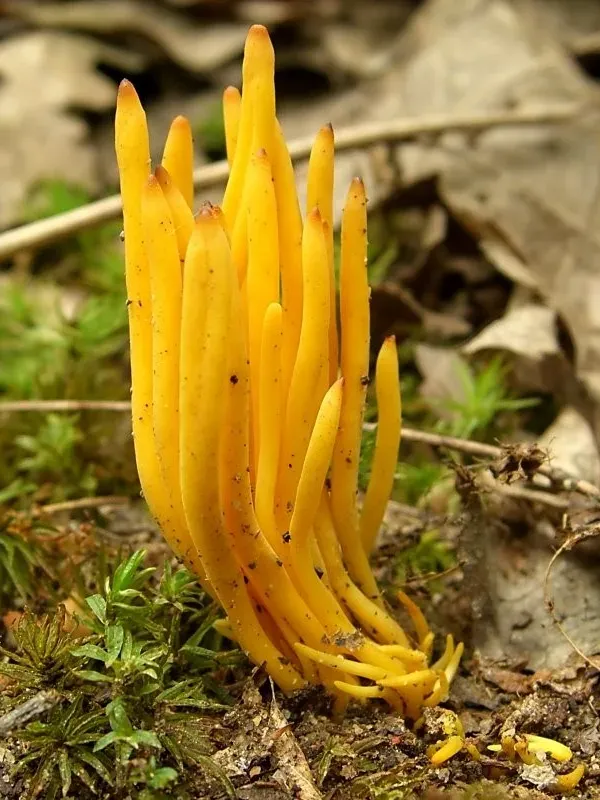
Clavulinopsis laeticolor is a distinct club-shaped fungus that typically appears as simple or sparingly branched upright structures.
The fruit bodies are characterized by their brilliant golden-yellow to deep orange coloration, making them stand out in grassy environments.
These mushrooms usually measure between two and seven centimeters in height, often growing in small clusters or scattered groups across meadows.
The texture of the fruit body is smooth and slightly waxy, remaining firm but fragile under typical weather conditions of their habitat.
They do not possess any distinct odor or significant taste, which helps distinguish them from other look-alike mushroom species in the field.
Pathogen
It is critical to note that this fungus is not a plant pathogen and does not cause any diseases in agricultural or garden plants.
The organism belongs to the group of saprotrophic fungi, which derive nutrients exclusively from decomposing organic matter in the soil.
As it lacks any parasitic capability, it cannot infect or damage the living tissues of crops, cereals, or ornamental plant species.
Its biological activity is focused on the breakdown of plant debris, contributing to the natural nutrient recycling processes in the ecosystem.
Therefore, it is classified as an ecologically beneficial or neutral organism rather than a disease agent requiring any agricultural intervention.
Conditions for development
The species thrives in environments with high moisture levels and soils rich in organic matter, such as pastures and grassy clearings.
The development of fruit bodies is highly dependent on humidity and temperature, typically occurring during late summer and autumn months.
It prefers undisturbed, well-drained soil areas where the mycelium can spread efficiently without excessive chemical interference from fertilizers.
Light levels are also important, as the fungus often appears in areas with short vegetation that allows warmth to reach the soil surface.
Clavulinopsis laeticolor is known to be a bio-indicator of healthy, unpolluted soil environments where natural fungal diversity is maintained.
Why it matters
This fungus is completely harmless to any agricultural system, posing no risk to crop health, plant growth, or food quality parameters.
Because it is a non-pathogenic saprotroph, there are no symptoms or signs of infection associated with its presence in agricultural fields.
Its existence is fundamentally linked to soil health, and it serves as a natural decomposer of leaf litter and dead grass stems.
There are no recorded instances of this fungus affecting crop yields, and it remains a safe component of the agricultural biodiversity.
The presence of this fungus is considered natural and is not a reason for concern, as it does not disrupt the integrity of cultivation plots.
Protection
As the fungus is not a pest or a disease, there is no need for chemical control, management strategies, or prevention protocols against it.
For those who prefer to keep their lawns free of these fungi, improving drainage and maintaining a regular mowing schedule is sufficient.
Reducing the moisture levels in the soil and preventing the accumulation of dense organic debris will naturally discourage the growth of fruiting bodies.
The application of fungicides for this purpose is strongly discouraged, as it is unnecessary and potentially harmful to the soil ecosystem.
Practicing standard cultural and agronomic methods is more than enough to maintain the balance and prevent unwanted growth of wild fungi.
Discussion
No discussions yet — be the first.