
Clavulinopsis helvola
Clavulinopsis helvola
Description
Symptoms
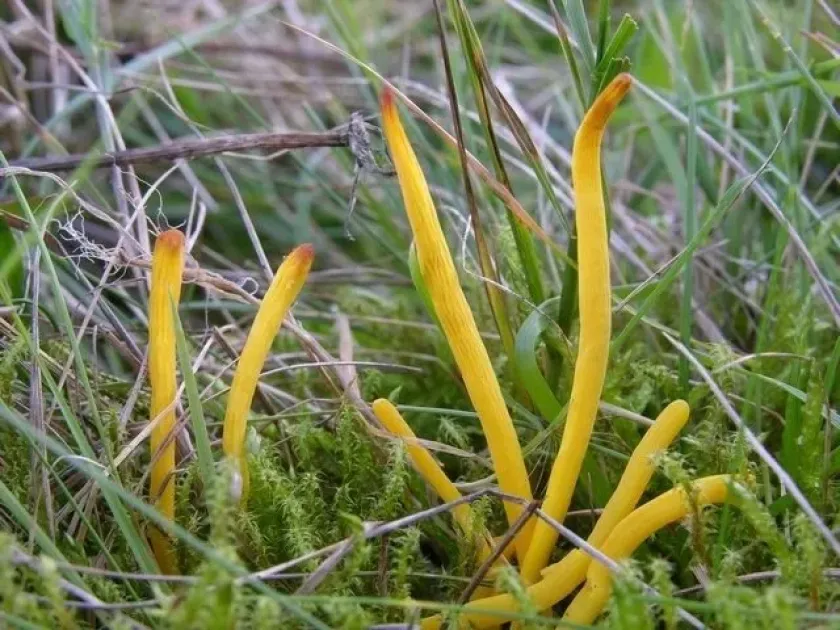
The yellow club fungus, Clavulinopsis helvola, produces small, distinctively bright yellow to orange club-shaped fruit bodies emerging from the soil.
These structures are typically found in clusters within meadows or grasslands, standing between 2 to 8 centimeters in height.
The fungus is characterized by smooth or slightly wrinkled surfaces, with fruit bodies often growing as solitary or sparsely branched cylinders.
While the visible part is easily recognized by its vibrant color, the primary fungal network is subterranean and spreads through the soil humus layer.
During the fruiting season, these fungi are most visible in damp, undisturbed grassy environments where they blend in with low-lying vegetation.
Pathogen
Clavulinopsis helvola is a saprotrophic fungus belonging to the Clavariaceae family, functioning as a vital decomposer in grassland ecosystems.
Unlike parasitic fungi that infect crops, this species consumes decaying organic matter, contributing to the cycle of soil nutrients.
Reproduction occurs through spore dispersal from the entire surface of the club-shaped fruiting body, facilitating colonization of surrounding suitable patches.
It occupies the upper soil horizon and relies on the breakdown of plant debris, making it a key component of natural soil health and fertility.
This fungus is not a pathogen; rather, its presence indicates an ecologically stable habitat that has not been heavily degraded by intensive agriculture.
Conditions for development
The fungus thrives under conditions of high soil moisture, making it most prevalent during cooler, rainy periods of late summer and autumn.
It prefers open, non-cultivated grasslands or pastures where the soil structure remains intact and free from heavy chemical applications.
A moderate temperature range, typically between 12 and 18 degrees Celsius, provides the ideal environment for its reproductive cycle.
The presence of dense turf or grass litter is essential, as it creates a stable microclimate that protects the mycelium from moisture loss.
Poor drainage or areas prone to waterlogging often create the optimal conditions for the emergence of its fruit bodies in natural settings.
Why it matters
Clavulinopsis helvola poses absolutely no threat to agricultural crops, as it lacks the mechanisms to infect living plant tissue.
It performs a beneficial role in the environment by breaking down organic matter, thereby facilitating the return of essential elements to the soil.
There is no economic damage associated with this species; it does not produce toxins or interfere with the growth of crops in any negative capacity.
Farmers and gardeners should view this fungus as a sign of natural biodiversity rather than an indicator of a plant disease outbreak.
No agricultural risk assessment is required for this species, as it is harmless to both economic crops and domestic plant life.
Protection
There is no necessity for management or control measures, as this fungus is an essential member of natural grassland and pasture biodiversity.
Should the presence of these fungi be unwanted for aesthetic reasons on lawns, improving soil drainage and aeration will naturally discourage their growth.
Regular mowing and the removal of excess grass clippings help to reduce the organic substrate and moisture levels required by the fungus.
The use of fungicides is strongly discouraged, as these chemicals would disrupt the soil microbiome and harm beneficial organisms beyond the target species.
The most effective strategy is to maintain balanced soil conditions through appropriate water management and minimal reliance on harsh chemical fertilizers.
Discussion
No discussions yet — be the first.