
Clavulinopsis fusiformis
Clavulinopsis fusiformis
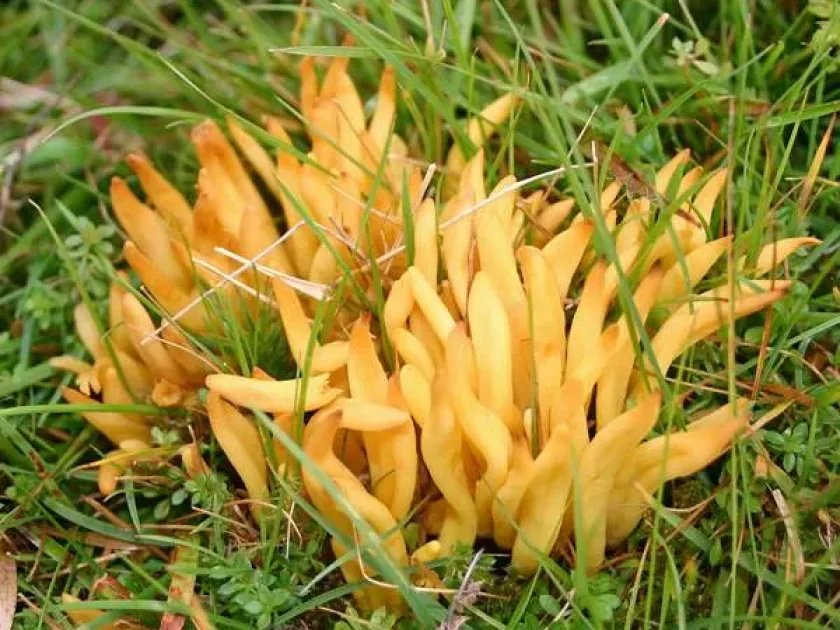
Description
Symptoms
The most distinctive symptom of C. fusiformis is the emergence of dense clusters of bright, golden-yellow, club-like fruiting bodies protruding from the lawn or grassy soil.
As the fungal colonies expand, they often cause the surrounding grass to lose its vigor. The affected area may show signs of chlorosis (yellowing) or thinning of the turf density.
In moist environments, the presence of the fungus may be accompanied by a slight compaction of the soil surface in the immediate vicinity of the fungal growth.
If left unmanaged, the fungal patches can create visible gaps in the turf, detracting from the uniformity and aesthetic quality of the lawn or meadow area.
- Bright yellow/orange club-shaped growths.
- Localized yellowing of turfgrass blades.
- Thinning of the grass canopy in patches.
- Increased moss or weed colonization in the affected area.
Pathogen
Clavulinopsis fusiformis, commonly known as the golden spindle, is a species of fungus in the family Clavariaceae. It typically thrives in grassy areas, appearing as bright yellow to orange, spindle-shaped fruiting bodies.
While often considered a saprotroph that decomposes organic matter in the soil, its presence in managed turfgrass can indicate unfavorable soil conditions or an imbalance in the local ecosystem.
The mycelium network of this fungus colonizes the soil profile, potentially interfering with the root systems of grasses by competing for available moisture and nutrients.
Unlike aggressive plant pathogens, C. fusiformis does not kill crops systemically; however, it alters the soil environment, creating localized stress for healthy vegetation.
It reproduces through spores produced on the surface of the fruiting bodies. These spores are easily dispersed by wind, water splashing, or mowing equipment, allowing the fungus to colonize adjacent areas.
Conditions for development
High soil moisture is the primary driver for the development of Clavulinopsis fusiformis. Poor drainage and waterlogged conditions are the most critical environmental triggers.
The fungus thrives in cool, damp weather, particularly during the transition months of late summer and autumn when humidity levels remain consistently high.
Shaded areas that prevent proper sunlight penetration and moisture evaporation create perfect microclimates for the growth of these fungi.
Neutral to slightly acidic soils with high organic matter content provide the necessary resources for the mycelium to establish itself and eventually fruit.
Lack of proper aeration in the soil leads to an accumulation of thatch, which acts as a rich substrate for the fungal mycelium to flourish throughout the year.
Why it matters
The primary concern regarding this fungus is its impact on the aesthetics of manicured landscapes, recreational lawns, and sports turf where visual uniformity is required.
By sequestering nutrients from the root zone, the fungus creates a localized competitive environment that weakens the grass, making it susceptible to secondary infections.
Spreading spores via mowing equipment can cause the infestation to move from one corner of a field to another, increasing the overall cost of turf management.
If the fungus is not suppressed, the weakened grass patches may die back, resulting in bare soil areas that are prone to colonization by invasive broadleaf weeds.
Although it does not pose a threat to human health or major agricultural crops, its persistence is a sign of poor drainage and unhealthy soil aeration practices.
Protection
The most effective long-term strategy for control is to improve soil aeration using core aerators to reduce thatch build-up and improve water drainage.
Adjusting irrigation schedules to ensure that the turf dries out during the night helps prevent the prolonged damp conditions that the fungus requires for fruiting.
Mechanical removal of the visible fungal fruiting bodies can limit the spore load. Ensure that collected fungi are disposed of properly, not composted on site.
For high-value areas, systemic fungicides labeled for soil-borne fungal suppression can be used as a last resort, combined with essential cultural practice improvements.
Maintaining a balanced soil pH and preventing excessive organic thatch build-up will create an environment that is naturally hostile to the development of C. fusiformis.
Discussion
No discussions yet — be the first.