
Clavulina coralloides
Clavulina coralloides
Description
Symptoms
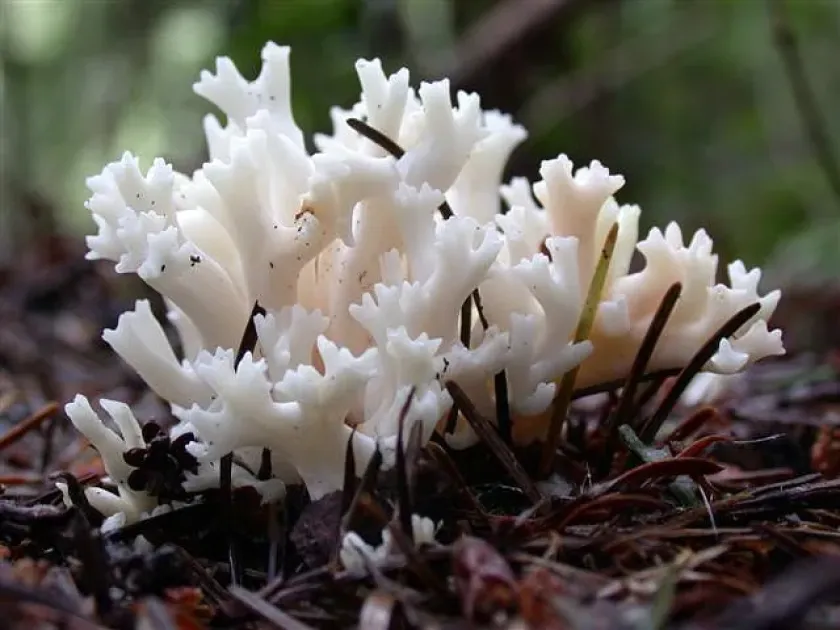
Clavulina coralloides is a coral-like fungus known for its highly branched, whitish to creamy-colored fruit bodies that grow in clusters on the forest floor.
The branches are distinct, often ending in delicate, comb-like tips, which gives the species its characteristic appearance during the sporulation phase.
These fruit bodies are brittle and can reach several centimeters in height, often standing out against the background of leaf litter and decaying organic matter.
The fungus typically grows in dense clusters, making it quite visible in damp, shaded environments where soil organic content is relatively high.
It is distinct from many other fungi due to its pure color and complex, dendritic branching structure, which does not involve any necrotic spots on nearby plants.
Pathogen
The organism, Clavulina coralloides, is a basidiomycete fungus and is purely a saprotroph, meaning it feeds on dead organic matter rather than living tissue.
It is not a plant pathogen; it does not infect plant roots, stems, or leaves, and it lacks the enzymatic machinery to degrade living plant cellular defenses.
The biological lifecycle of the fungus revolves around the decomposition of lignin and cellulose found in fallen branches, needles, and leaf litter.
Reproduction occurs via spores released from the branches, which travel through the air to colonize suitable damp substrates within the woodland habitat.
Its presence is an indicator of soil health and active decomposition, confirming that it is a beneficial part of the ecosystem rather than a disease agent.
Conditions for development
Clavulina coralloides thrives in environments with high moisture levels and constant shade, which are essential for the growth of its aerial fruit bodies.
It prefers forest ecosystems or garden areas with a thick layer of organic mulch and a slightly acidic to neutral soil environment.
Active growth of the fruit bodies usually peaks in late summer and autumn when temperature levels are cool and humidity remains consistent.
Excessive heat or prolonged drought periods will inhibit the growth of the fungus and cause existing fruit bodies to dry out and wither rapidly.
The fungus is rarely found in open, dry fields or intensively cultivated agricultural lands where organic debris is frequently removed or tilled into the soil.
Why it matters
There is no harm associated with Clavulina coralloides regarding crop health, as it does not participate in any disease process or cause root rot.
It serves as an important decomposer, helping to recycle nutrients back into the soil, which indirectly supports the vitality of local plant life.
Misidentifying this fungus as a plant disease can lead to unnecessary and potentially harmful chemical applications, which serve no purpose against this saprotroph.
The fungus does not compete with plants for nutrients in a way that would inhibit growth; rather, it transforms complex molecules into simpler, accessible forms.
No agricultural damage has ever been linked to this species, reinforcing its status as a benign organism within forestry and gardening environments.
Protection
No control measures are necessary for Clavulina coralloides as it poses no threat to vegetation and does not cause agricultural or horticultural damage.
If its presence is undesirable in ornamental settings, improving soil drainage and reducing organic mulch thickness will naturally limit its fruit body development.
Chemical intervention via fungicides is strictly discouraged as it is ineffective against this species and risks damaging the beneficial microbial community of the soil.
Mechanical removal of the fruit bodies is purely a cosmetic decision and does not eliminate the extensive underground mycelium or prevent future growth.
The best management practice is to observe and appreciate the fungus as a natural component of a healthy, productive soil ecosystem in shaded areas.
Discussion
No discussions yet — be the first.