
Clavulina cinerea
Clavulina cinerea
Description
Symptoms
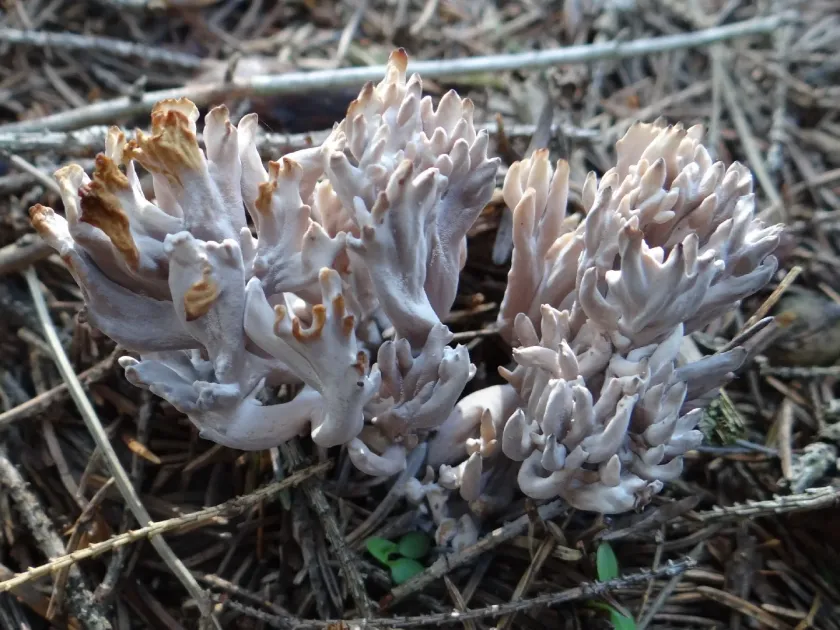
The most visible sign of this fungus is the appearance of multi-branched, coral-like fruiting bodies growing from the soil or rotten wood.
The coloration of the fruiting bodies ranges from light ash-grey to darker grey or brownish tones, depending on the age and environmental conditions.
The branches are often somewhat flattened or longitudinally wrinkled, and the base of the structure is usually solid and thickened.
In infested organic matter, mycelial mats or white rhizomorphs may be seen spreading through the soil or decaying wood tissue.
The texture of the fruiting bodies is firm and fleshy, and they often grow in dense clusters in damp, shaded environments.
Pathogen
Clavulina cinerea, commonly known as the grey coral fungus, is a species of fungus in the family Clavulinaceae. It is classified as a saprotrophic organism that primarily decomposes organic matter.
The fungus produces distinctive branching fruiting bodies that resemble coral reefs. It is not considered a plant pathogen, but rather a decomposer of forest litter and woody debris.
Its biological cycle involves the development of mycelium within the substrate, which secretes enzymes to break down complex lignin and cellulose structures.
Reproduction is achieved through the release of basidiospores that are dispersed by wind and water currents to colonize suitable environments.
The presence of Clavulina cinerea is usually an indicator of healthy, nutrient-rich soil with a high content of decomposing organic material.
Conditions for development
This fungus requires high moisture levels and cool temperatures to initiate the production of its fruiting bodies.
Optimal growth conditions are typically found in the late summer and autumn, often following periods of significant rainfall.
Clavulina cinerea thrives in shaded habitats where humidity remains stable throughout the day.
It prefers acidic to neutral soils with a significant amount of woody debris or leaf litter to provide the necessary carbon sources.
Extreme temperatures, such as drought or prolonged frost, inhibit the activity of the mycelium and prevent the development of fruiting bodies.
Why it matters
Clavulina cinerea poses no direct threat to healthy agricultural crops, as it does not possess the mechanisms to parasitize living plant tissue.
In agricultural settings, its presence is rarely problematic, as it does not compete with plants for nutrients required for growth.
It may occasionally colonize mulch or organic compost heaps, which can be an aesthetic concern for gardeners or landscapers.
In forestry nurseries, mass growth might indicate over-saturation of the soil or excessive accumulation of woody waste that needs attention.
Overall, the fungus is beneficial to the ecosystem by participating in the natural recycling of nutrients back into the soil profile.
Protection
No specific chemical control measures are required, as this fungus is not a pathogen for cultivated plants.
To reduce the presence of the fungus in managed areas, gardeners can improve drainage and reduce the thickness of organic mulch layers.
Proper garden sanitation, including the regular removal of excess dead wood, helps to limit the available substrates for fungal growth.
If the fungus appears on decorative wood chips, manual removal of the affected material is the most efficient and safe management strategy.
Promoting good soil aeration and a balanced moisture regime are the best preventative practices for managing soil-dwelling fungi.
Discussion
No discussions yet — be the first.