
Clavicorona taxophila
Clavicorona taxophila
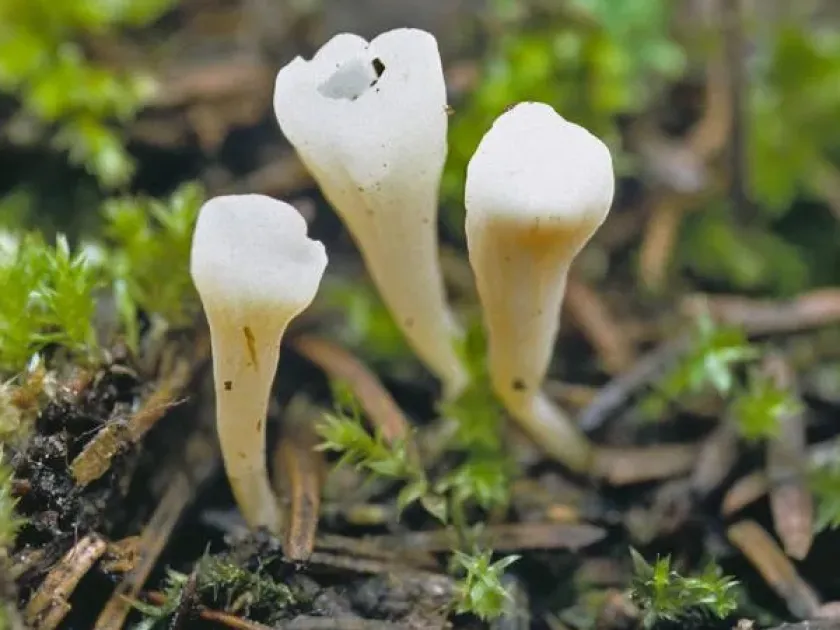
Description
Symptoms
The first external signs of Clavicorona taxophila infection include a noticeable loss of vitality in the tree, characterized by needle yellowing and eventual browning. This foliage decline often starts from the lower branches and moves upward.
Upon closer inspection, the presence of the pathogen is confirmed by small, cream-colored, antler-like fruiting bodies appearing on the lower trunk or near the root flare. These structures are the most diagnostic feature of the disease.
Peeling back the bark reveals a softened, fibrous, and discolored wood texture. In advanced stages, the infected area may emit a characteristic musty or fungal odor, signaling active tissue decomposition.
The tree’s vascular system becomes impaired, leading to a visible reduction in shoot growth. Over time, branches may die back completely, and the tree may lose its overall vigor, becoming thin and sparse.
In severe cases, the structural integrity of the base is compromised. This can make the tree susceptible to physical damage or windthrow, as the wood loses its capacity to support the weight of the crown.
Pathogen
Clavicorona taxophila is a basidiomycete fungus that specializes in the decay of yew (Taxus) wood. It acts as both a saprotroph, decomposing dead organic matter, and a weak parasite capable of colonizing living but stressed tissues.
The fungus produces a mycelium that spreads through the vascular system and inner bark of the tree. By secreting specific enzymes, it breaks down the structural components of the wood, causing a slow but irreversible degradation of the tree's internal architecture.
Fruiting bodies are distinctive, featuring coral-like branching structures. They emerge from the bark during favorable weather conditions, releasing countless spores into the air, which are then distributed by wind or rain splash.
Biologically, the fungus is highly adaptive. It can transition between states depending on the host's vitality, ensuring its survival even when immediate food sources are scarce or during periods of environmental stress.
Its life cycle is closely linked to humidity levels, which trigger the formation of reproductive structures. This makes the fungus particularly active in shaded, damp, and poorly ventilated garden or forest environments.
Conditions for development
High humidity and poor drainage are the primary environmental drivers for Clavicorona taxophila. The fungus thrives in microclimates where moisture is trapped against the bark for extended periods.
Physical injuries, such as those caused by improper pruning, lawnmower damage, or insect activity, provide entry points for the fungal spores to colonize the interior of the tree.
Temperatures ranging from 15 to 22 degrees Celsius (59–72°F) are optimal for mycelial growth. During warm and rainy seasons, the rate of colonization and infection significantly accelerates.
Overcrowded plantings that lack adequate sunlight and airflow prevent the bark from drying after rainfall. This persistent wetness creates a conducive environment for the establishment and spread of the pathogen.
Trees that are stressed by drought, soil compaction, or nutrient deficiencies are more prone to infection. The weakened physiological state of the host prevents it from mounting a successful defense against the invading mycelium.
Why it matters
The most severe impact is the destruction of the tree's conducting tissues, which prevents the transport of water and nutrients. This inevitably leads to a decline in tree health and potentially lethal consequences.
Structural decay caused by the fungus creates a risk of stem failure. Large, established yew trees may become hazardous in landscapes if the structural strength of their base is compromised by wood rot.
The infection is contagious within a stand. If one tree is heavily infected, it acts as a reservoir of spores, putting adjacent trees at risk of colonization if conditions are favorable.
Aesthetically, the disease is devastating to yew hedges and ornamental specimens. The loss of foliage and the presence of fungal fruiting bodies severely detract from the tree's landscape value.
Economic losses are often significant, especially in nursery settings where infected stock must be destroyed to contain the spread. Treatment is rarely curative once the heartwood has been thoroughly penetrated.
Protection
Effective management begins with proper site selection and planting practices. Ensure the soil is well-drained and avoid planting in depressions where water may collect around the root collar.
Pruning should be performed only with sanitized tools. Disinfect blades with isopropyl alcohol or a bleach solution between every cut to prevent cross-contamination between trees.
Regular inspections are vital for early detection. If small fruiting bodies are found, they should be removed and disposed of carefully to limit the immediate dispersal of fungal spores.
Apply preventive fungicides if the infection is detected nearby, specifically targeting the base and lower trunk. Follow manufacturer instructions regarding application intervals and safety precautions.
Severely infected trees should be removed, including as much of the root system as possible. The area should then be cleared of wood debris to minimize the ongoing risk of re-infection for surrounding vegetation.
Discussion
No discussions yet — be the first.